
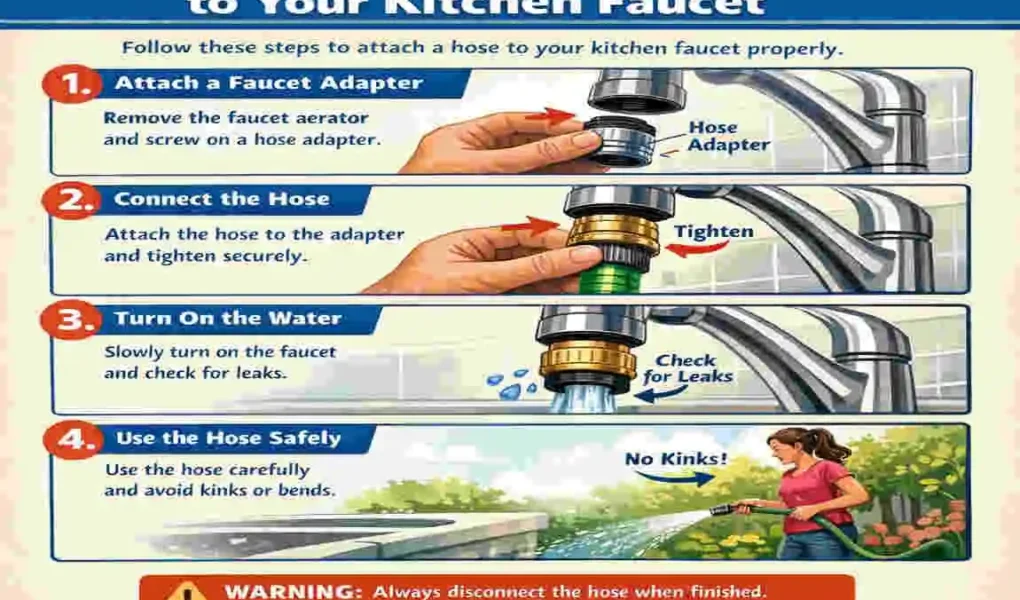
If you want to learn how to connect a water hose to a kitchen faucet, the good news is that it is usually a simple job. You need the right adapter, a careful setup, and a little patience.
Understanding Kitchen Faucet Hose Connections
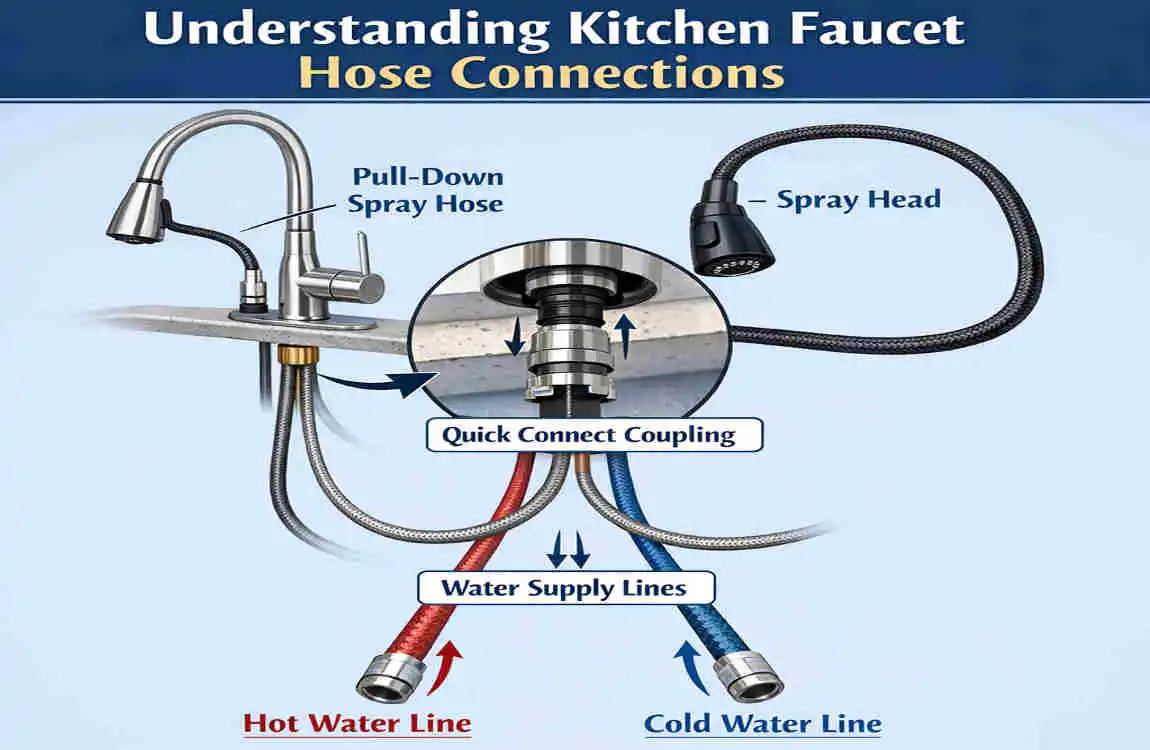
What a faucet hose connection is
A faucet hose connection links your kitchen faucet to a hose. It lets water flow from the faucet into the hose for cleaning, filling containers, or temporary water use.
This connection usually needs a faucet-to-hose connector or a garden hose adapter. Without the right piece, the hose will not fit well and may leak.
Common faucet types and connection points
Not every kitchen faucet is built the same. Some faucets have threaded ends, while others have hidden or pull-out aerators.
The connection point is usually at the faucet aerator. That is the small piece at the tip of the spout where water comes out.
Why the correct adapter matters
The right adapter creates a tight, secure connection. If the size or thread type is wrong, water can spray out or drip around the joint.
Using the correct adapter also protects your faucet from damage. Forcing the wrong fitting can strip the threads or crack the part.
Threaded vs quick-connect fittings
A threaded hose fitting screws onto the faucet. A quick-connect adapter snaps or locks in place more easily.
Threaded fittings are common and simple. Quick-connect fittings are easier to remove when you finish.
Tools and Materials You Need
Basic items to gather
Before you begin, keep these items ready:
- Faucet-to-hose adapter
- Appropriate hose
- Plumber’s tape
- Adjustable wrench
- Bucket or towel
- Washer, if needed
Choosing the correct adapter size
The most important part is size. Faucet threads can vary, so you need an adapter that matches your faucet exactly.
If you are unsure, compare the thread style and diameter before buying. A wrong-size adapter will not seal properly.
How to Connect a Water Hose to a Kitchen Faucet
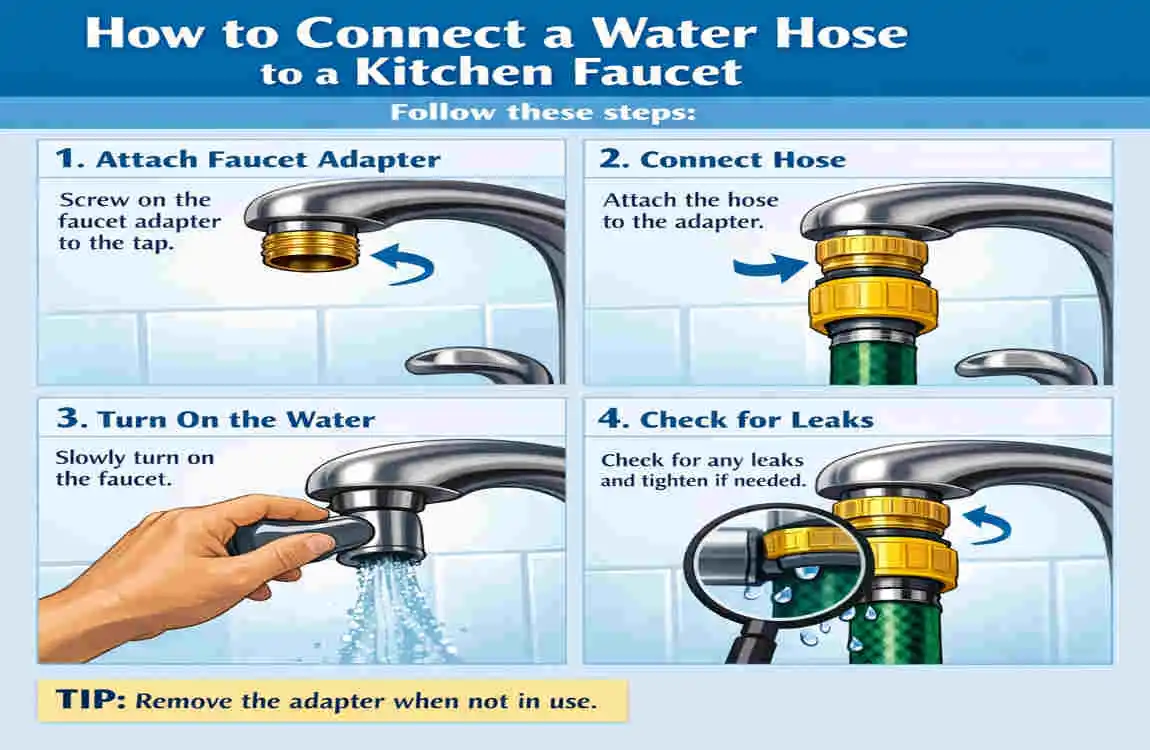
Turn off the faucet and clear the area.
Start with a dry sink area. Remove dishes, soap bottles, and anything that might get in the way.
Then turn the faucet off completely. This gives you a clean and safe space to work.
Remove the faucet aerator.
Carefully unscrew the aerator from the faucet end. Some come off by hand. Others may need a wrench.
If it is stuck, don’t force it. That can damage the faucet.
Check the faucet threads.
Look at the threads inside or outside the faucet opening. This helps you know what kind of adapter you need.
If the threads look worn or damaged, the connection may not seal well. In that case, replacing the washer or adapter may help.
Install the correct adapter.
Wrap a little plumber’s tape around the threads if needed. This helps create a tighter seal.
Then screw on the adapter by hand first. Once it feels snug, gently tighten it with a wrench.
Attach the hose securely.
Connect the hose to the adapter. Tighten it fully, but don’t over-tighten.
A snug fit is enough. Forcing it can damage the threads.
Turn the water on slowly.
Turn the faucet on slowly at first. This helps you check whether the connection is working properly.
If the water comes through smoothly, that is a good sign.
Check for leaks
Look closely around the adapter and hose connection. Use a towel or bucket underneath to catch any drips.
If you see leaks, turn off the faucet and adjust the connection. Sometimes a washer, tape, or adapter change solves the problem.
Choosing the Right Faucet Adapter
Aerator adapters
These fit where you removed the aerator. They are one of the most common choices for kitchen faucets.
Threaded hose adapters
These work best when the faucet already has matching threads. They create a direct screw-on connection.
Quick-connect adapters
These are useful if you plan to connect and disconnect the hose often. They save time and reduce hassle.
Universal faucet adapters
A universal adapter can fit more than one thread type. This helps when you are not sure of your faucet size.
Matching size and thread type
Always match:
- Thread size
- Male or female fitting
- Inside or outside thread
- Faucet style
A small mismatch can cause leaks or make the connection impossible.
Adapter TypeBest ForMain Advantage
Aerator adapter Most kitchen faucets Easy replacement of aerator connection
Threaded hose adapter Matching threaded faucets Strong and simple fit
Quick-connect adapter Frequent use Fast on-and-off connection
Universal adapter Uncertain thread size More flexible fit
Common Problems and How to Fix Them
Hose does not fit the faucet.
This usually means the thread size is wrong. Check the faucet opening and compare it with the adapter.
Water leaks around the adapter
Leaks often happen when the fitting is loose, the washer is worn, or the tape is missing.
Try tightening the connection gently. If that does not work, replace the washer or adapter.
Low water pressure
Low pressure can happen if the adapter is too narrow or partly blocked. It may also happen if the faucet aerator is clogged.
Loose or damaged threads
If the threads are stripped or bent, the connector won’t seat properly. In that case, replacing the damaged part is usually the best fix.
Faucet aerator will not come off.
If the aerator is stuck, use a cloth and wrench for a better grip. Turn slowly and avoid cracking the part.
When to replace a washer or adapter
Replace the washer if it looks flat, cracked, or worn. Replace the adapter if it no longer tightens well or shows visible damage.
Safety Tips for Using a Hose With a Kitchen Faucet
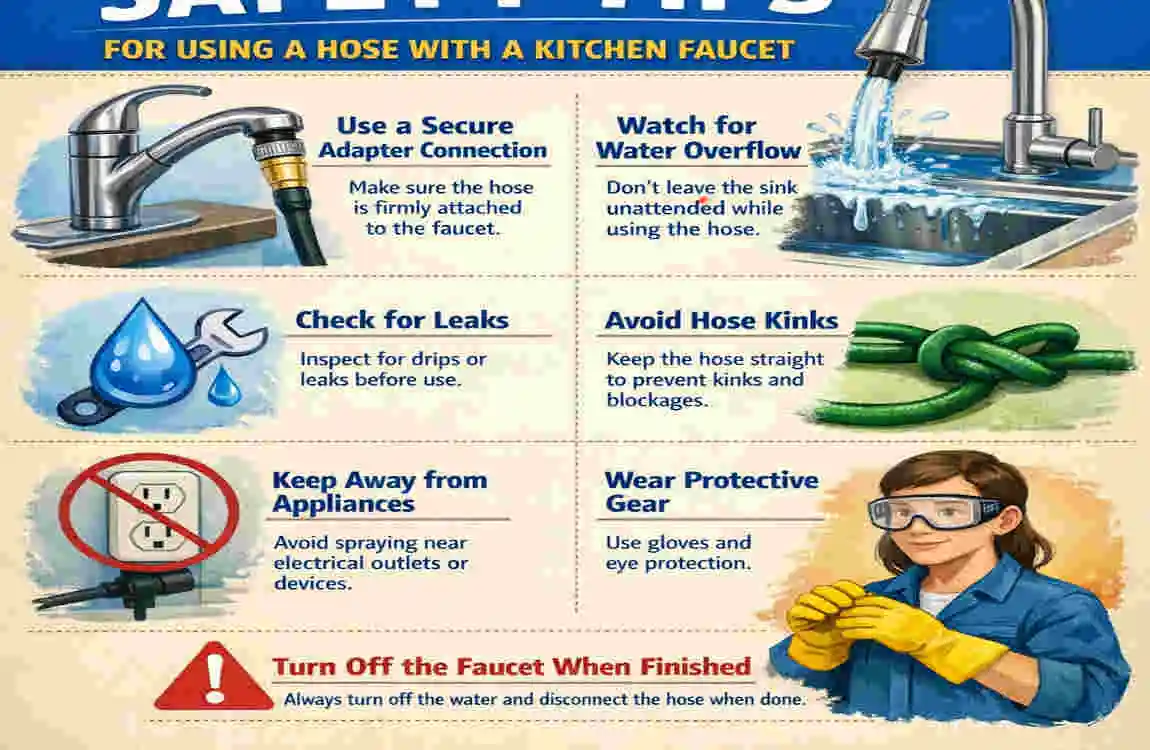
Avoid too much water pressure.
Do not open the faucet too quickly. A strong burst of water can loosen the connection or shift the hose.
Never force threaded connections.
If the parts do not line up, stop and check again. Forcing them can damage both the hose and faucet.
Prevent strain on the faucet.
Make sure the hose hangs naturally without pulling on the spout. Too much weight can stress the faucet.
Keep electrical items away from water.
If you are using the hose near appliances, keep the area dry. Safety should always come first.
Disconnect the hose when finished.
Once you are done, remove the hose and adapter. This helps protect the faucet and keeps the sink area clear.
Avoid contamination where needed
If you use the hose for special tasks, keep the setup clean. Prevent backflow if your use requires it.
Frequently Asked Questions
Can you connect a water hose directly to a kitchen faucet?
Usually, no. Most hoses need a faucet-to-hose adapter to fit correctly.
What adapter do I need to connect a hose to my kitchen faucet?
You need an adapter that matches your faucet’s thread type and size. An aerator adapter is often the most common choice.
How do I connect a garden hose to a kitchen faucet?
Remove the aerator, attach the correct garden hose adapter, and then screw the hose onto it.
Can I attach a hose without removing the faucet aerator?
Sometimes, but usually not. In most cases, you must remove the aerator for the adapter to fit.
Why is my faucet-to-hose connection leaking?
Leaks often happen because of loose threads, missing plumber’s tape, a worn washer, or the wrong adapter size.
Can connecting a hose damage my kitchen faucet?
It can, if you force the connection or use the wrong part. A proper fit keeps the faucet safe.
How do I remove a stuck faucet aerator?
Use a cloth for grip and turn it slowly with a wrench. If it still won’t move, don’t force it.
How can I make a temporary hose connection safely?
Use the right adapter, tighten it gently, test for leaks, and remove the hose when you are done.
| Step | What to Do | Safety Tip |
|---|---|---|
| Check the Faucet | Identify the faucet’s removable aerator or hose connection | Make sure the faucet supports a hose adapter |
| Turn Off Water | Close the faucet before attaching anything | Prevent sudden water flow or splashing |
| Remove Aerator | Unscrew the aerator carefully | Avoid damaging the faucet threads |
| Install Adapter | Attach the correct faucet-to-hose adapter | Use a compatible size and fitting |
| Add Washer | Place a rubber washer inside the connector | Helps prevent leaks |
| Connect Hose | Screw the hose onto the adapter by hand | Do not overtighten |