
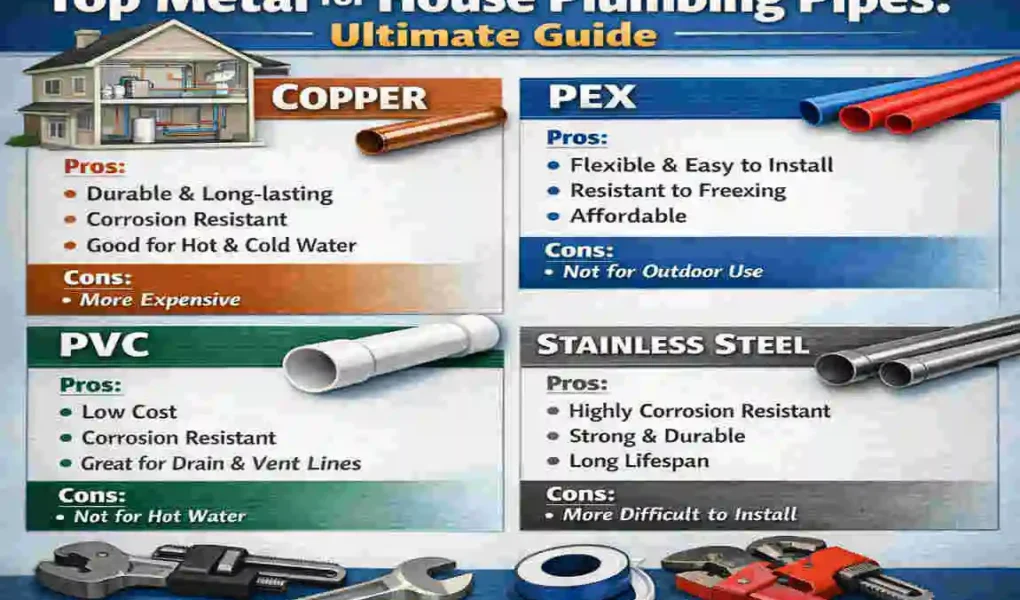
Imagine this: you wake up to a leaky pipe flooding your kitchen floor. You rush to find a solution, but then a question pops into your mind—“What metal is used for pipes in plumbing in a house?” Understanding the right material for your plumbing system can save you thousands in repair costs, not to mention prevent major headaches.
In modern homes, copper pipes have emerged as the gold standard for plumbing. They are durable, corrosion-resistant, and widely used in more than 60% of homes worldwide. But copper is not the only option. Materials like brass, galvanised steel, and stainless steel also have their unique strengths and weaknesses.
History of Plumbing Pipes in Houses
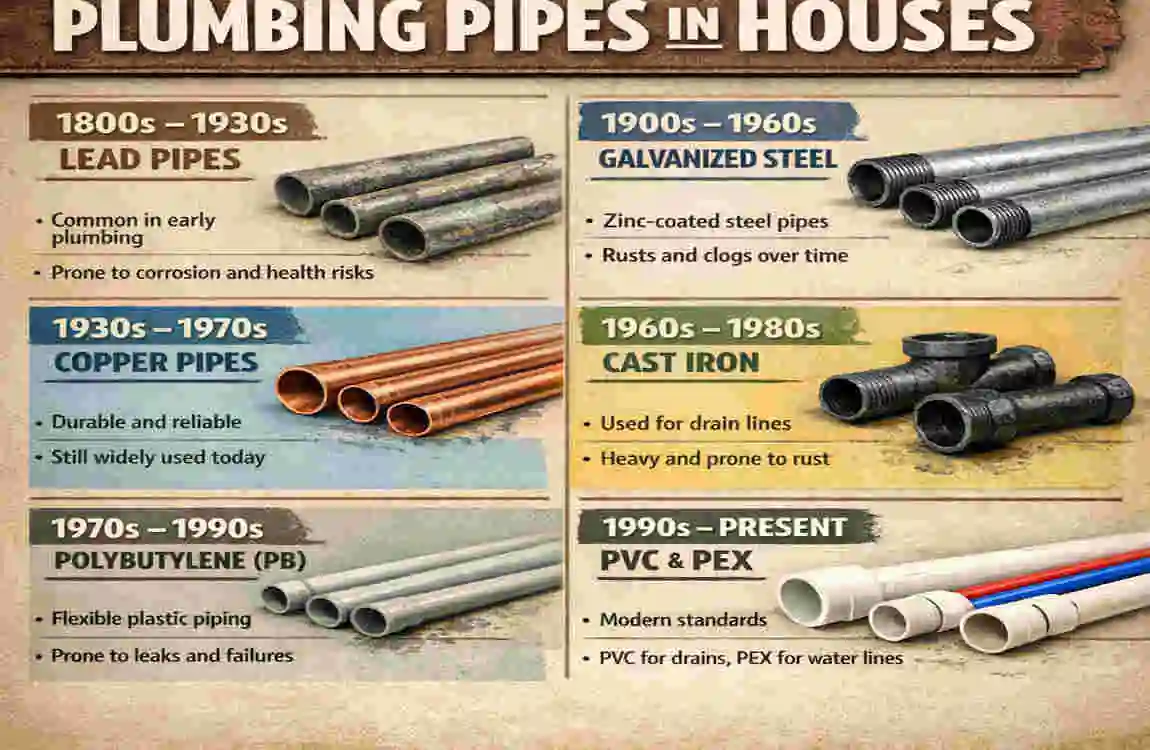
Plumbing technology has come a long way over the centuries. Let’s take a brief look at how plumbing pipe materials have evolved.
From Lead to Copper: A Brief Timeline
- Ancient Rome: Plumbing systems used lead pipes due to their malleability. However, lead was later banned due to its harmful health effects.
- 1900s: Galvanised steel became the norm for water supply lines in homes. Although strong, these pipes were prone to rust and corrosion over time.
- Post-WWII Era: Copper pipes gained popularity for their durability and corrosion resistance.
- Today: A hybrid approach is common, combining metals like copper for durability and plastics like PEX for flexibility.
The rise of copper as the go-to material for plumbing is no coincidence. Its ability to resist corrosion, handle both hot and cold water, and last for decades makes it an excellent choice for homeowners.
Common Metals for House Plumbing Pipes
When answering the question, “What metal is used for pipes in plumbing in a house?”, it’s essential to consider the most popular materials used today. Below, we’ll break these down in detail.
A Quick Comparison Table
Metal Lifespan Best For Cost (per ft, 2026 est.)Corrosion Resistance
Copper 50-70+ years Hot/cold water lines $5-10 Excellent
Brass 70+ years Fittings, hot water $6-12 Superior
Galvanised Steel 20-50 years Older drain systems $3-6 Moderate (prone to rust)
Stainless Steel 100+ years High-end installations $10-20 Best
Copper Pipes
Copper is the most widely used metal for plumbing in modern homes. It’s durable, recyclable, and naturally antibacterial, making it ideal for carrying drinking water. Copper pipes can withstand high temperatures and resist corrosion, making them suitable for both hot and cold water lines.
Advantages:
- Long lifespan (50–70 years or more).
- Resists bacteria, ensuring water quality.
- Recyclable and environmentally friendly.
Disadvantages:
- Higher cost compared to other materials.
- Vulnerable to theft due to its high market value.
Brass Pipes
Brass is an alloy of copper and zinc, known for its superior corrosion resistance. It’s often used for fittings and hot-water lines due to its malleability and high-temperature resistance.
Advantages:
- Extremely rust-resistant.
- Ideal for use in areas with aggressive water (acidic or hard water).
- Long lifespan (70+ years).
Disadvantages:
- Some brass pipes may contain lead, making them unsuitable for drinking water if not properly certified.
Galvanised Steel Pipes
Galvanised steel was a popular choice for plumbing in older homes. These pipes are coated with a zinc layer to prevent rusting. Still, over time, the coating can wear off, leading to internal corrosion.
Advantages:
- Strong and affordable.
- Suitable for non-potable water systems, such as drainage.
Disadvantages:
- Prone to rust and clogging over time.
- Not recommended for modern potable water systems.
Stainless Steel Pipes
For those seeking Premium durability, stainless steel pipes are the ultimate choice. They are corrosion-resistant, even in harsh environments, and are often used in high-end or industrial installations.
Advantages:
- Exceptional lifespan (100+ years).
- Resists corrosion even in extreme conditions.
Disadvantages:
- Expensive to purchase and install.
- Typically overkill for residential use unless aesthetics are a priority.
Pros and Cons of Each Metal
Here’s a detailed breakdown of the strengths and weaknesses of each material:
Copper
Pros:
- Heat-resistant and durable.
- Excellent for both indoor and outdoor plumbing.
- Recyclable and environmentally sustainable.
Cons:
- High initial cost.
- May require specialised labour for installation.
Brass
Pros:
- Long-lasting and resistant to wear.
- Easy to thread, making it ideal for fittings.
Cons:
- Lead content in lower-quality brass can be unsafe for potable water.
Galvanized Steel
Pros:
- Cost-effective solution for large-scale systems.
- Strong and sturdy.
Cons:
- Rust buildup can restrict water flow.
- Shorter lifespan compared to other metals.
Stainless Steel
Pros:
- Virtually indestructible.
- Corrosion-proof even in extreme environments.
Cons:
- High costs make it less feasible for standard applications.
Copper vs Brass vs Steel: Detailed Comparison
When deciding which metal to use for plumbing pipes in a house, consider factors like cost, durability, and water quality. Below, we expand on key considerations:
Durability and Lifespan
- Copper: Durable and long-lasting, with a lifespan of 50–70+ years.
- Brass: Even more durable than copper, often exceeding 70 years.
- Steel: Galvanised steel has a shorter lifespan due to rust, but stainless steel lasts over 100 years.
Cost Analysis
- Copper is a mid-range option that balances durability and affordability.
- Galvanised steel is the cheapest but may cost more in the long run due to maintenance.
- Stainless steel is the most expensive.
Trends
In 2026, copper remains the most popular choice for its resale value, especially in markets like Pakistan. Brass is gaining traction in areas with hard water, thanks to its superior corrosion resistance.
Installation and Maintenance Tips for Homeowners
Proper installation and maintenance are key to maximising the lifespan of your plumbing pipes. Here’s a step-by-step guide:
- Assess Your Water Quality: For acidic or hard water, consider brass or stainless steel.
- Hire a Certified Plumber: A professional can ensure proper installation and compliance with local regulations.
- Inspect Pipes Annually: Look for signs of corrosion, leaks, or clogs.
- Avoid Harsh Chemicals: Use gentle cleaners to prevent pipe damage.
Cost Breakdown: Metals for House Plumbing
The cost of plumbing varies depending on the material and the size of the project. Here’s a quick cost summary:
Material Cost Range (2026)Best ROI
Copper $5K–15K for full house High (long-term savings)
Galvanised Steel $3K–8K Moderate
Stainless Steel $10K+ High (for luxury homes)
Trends in House Plumbing Metals
In 2026, eco-friendly practices are shaping the plumbing industry. Copper recycling is becoming more popular, and brass is rising in areas with hard water due to its durability. Hybrid systems that combine metals with plastic piping (e.g., PEX) are also gaining traction.
Common Myths About Plumbing Pipe Metals
Let’s debunk some common myths:
- Myth: All metals rust equally.
- Truth: Copper and stainless steel are highly corrosion-resistant.
- Myth: Steel is always the cheapest long-term option.
- Truth: Maintenance costs for galvanised steel can outweigh its initial affordability.
FAQs
Q: What metal is used for pipes in plumbing in a house?
A: Copper is the most common choice for modern homes.
Q: Is brass safe for drinking water?
A: Yes, but ensure it’s certified lead-free.