
Picture this stressful scene: It is a Tuesday evening, and you have a hungry family of five waiting for dinner. You open your refrigerator to grab the chicken you prepped earlier, only to realize the internal light is dim, the air feels completely warm, and your milk has gone sour. Right in the middle of the dinner rush, your trusty fridge has completely given up the ghost. Now, instead of enjoying a peaceful family meal, you are frantically throwing out spoiled food and staring down a repair bill of $500 or more.
If this chaotic scenario sounds familiar to you, you are certainly not alone. Under normal, gentle conditions, you can expect your household appliances to last 10 to 15 years. However, the reality looks vastly different when you add kids, pets, and constant activity to the mix. In bustling households, these essential machines often fail two to three times faster due to constant, unavoidable overload.
You might find yourself wondering, why do major home appliances break down in growing families at such an alarming rate? What exactly is happening behind those shiny stainless steel doors?
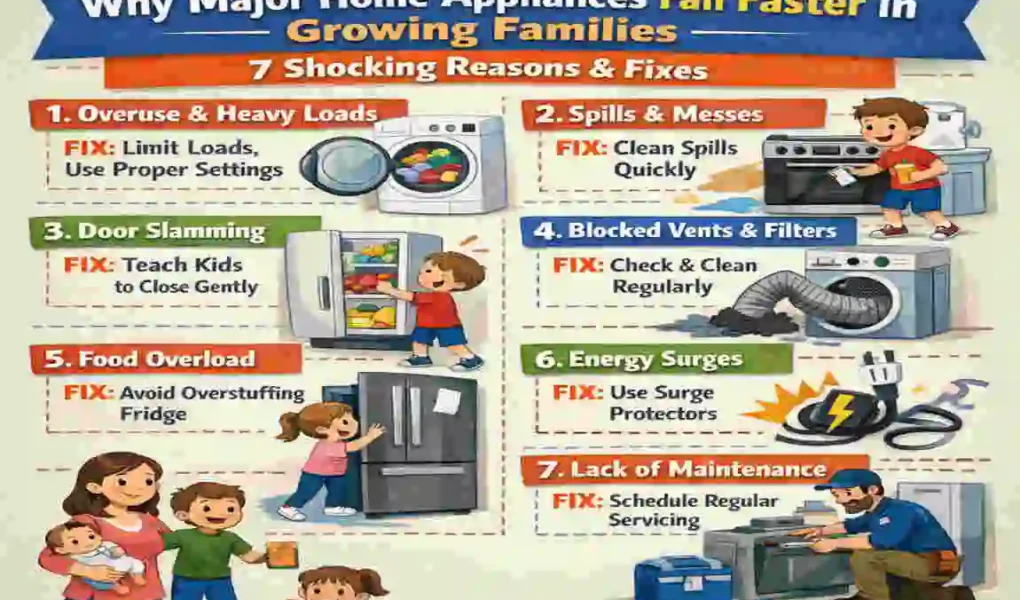
Overuse from Relentless Laundry & Meal Demands
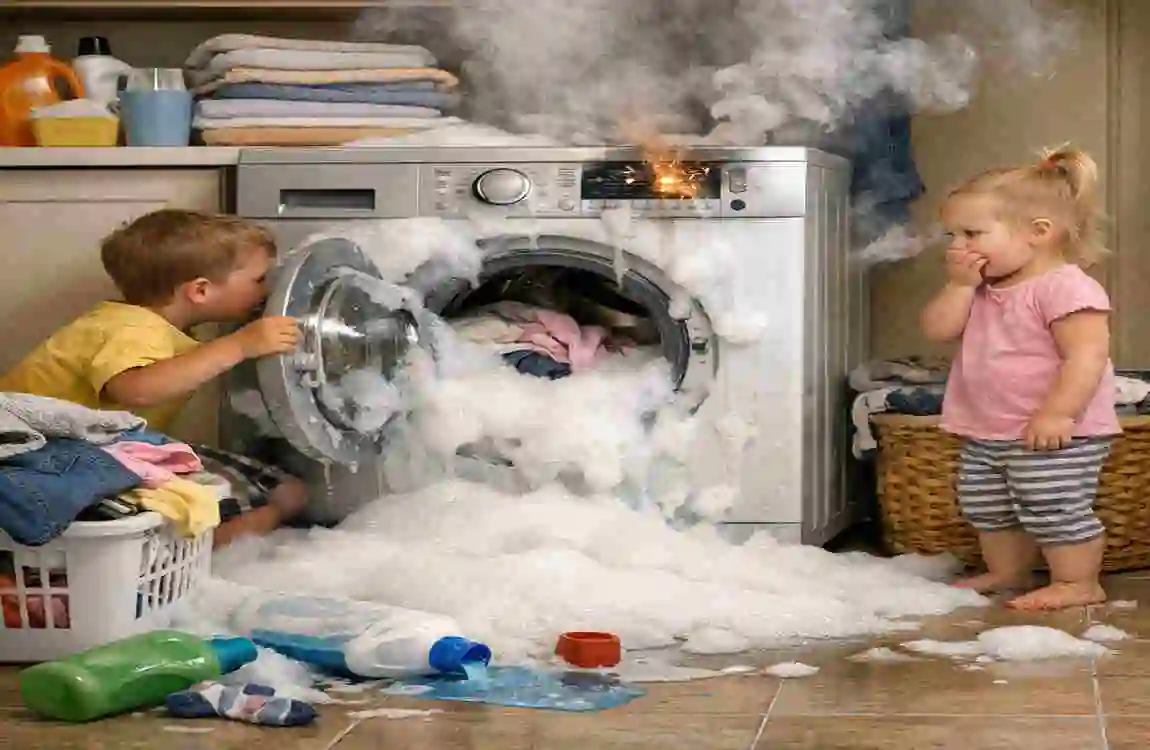
When your family grows, the sheer volume of chores grows right alongside it. Suddenly, you are no longer just washing a few light loads of office clothes on the weekend. You are running your washing machine and dishwasher every single day, sometimes multiple times a day.
The Heavy Toll on Appliance Motors
Think about the daily laundry demands in a busy home. You have muddy sports gear, school uniforms, heavy bath towels, and seemingly endless piles of baby clothes. This high-cycle washing puts immense physical strain on your washing machine’s internal motor and drive belts. When a machine runs constantly without a break, the motor heats up. Over time, this extreme, repetitive heat weakens the internal components.
Industry data paints a very clear picture of this problem. According to repair experts, washers in families with three or more children tend to fail 40% sooner than those in single-person households. The machines do not get enough time to rest and cool down between cycles.
The Hidden Danger of Cluttered Laundry Rooms
There is also a hidden house angle to consider here. In a busy home, the laundry room often becomes a dumping ground for sports equipment, winter coats, and pet supplies. This clutter creates a massive amount of dust and lint in the air. When your washer and dryer suck in this dusty air to keep their motors cool, that debris coats the internal electronics, accelerating wear and tear.
Symptoms and Real-Family Struggles
How do you know this overuse is destroying your machine? You will start to notice specific symptoms. Your washer might start making a loud, banging noise during the spin cycle, which indicates the suspension springs are wearing out from heavy loads. You might also spot small puddles of water leaking from the bottom due to worn-out pump seals.
Take the Miller family, for example. With three teenagers playing competitive soccer, their washing machine ran three times a day. By year four, the motor completely burned out. They realized too late that treating a standard residential washer like a commercial laundromat machine is a guaranteed recipe for a breakdown.
Kid-Related Wear & Tear and Accidental Damage
Let us be completely honest: kids are wonderful, but they are also tiny agents of chaos. No matter how closely you watch them, children will inevitably interact with your household appliances in ways the manufacturers never intended. This daily, accidental wear and tear on your kid-related equipment drastically shortens their lifespan.
Sticky Residues and Strained Seals
It happens in the blink of an eye. A toddler sneaks a crayon into their pocket, and it ends up in the dryer, melting a waxy coating all over the heating drum. A teenager spills a sticky cup of juice inside the fridge and shuts the door without wiping it up. These might seem like minor annoyances, but they cause major mechanical failures.
Sticky food residues act like glue on your refrigerator’s rubber door gaskets. When you pull the door open, the sticky seal tears the rubber. Once that seal breaks, cold air escapes, forcing the fridge’s compressor to run non-stop to keep the food cold. Eventually, the compressor burns out completely. Furthermore, kids frequently leave fridge doors slightly ajar as they walk away, straining those cooling systems to the limit.
Open-Plan Kitchens Amplify the Exposure
Modern home design also plays a sneaky role in this issue. Today, most families love the open-plan kitchen concept. While it looks beautiful and keeps the family connected, it means your appliances are right in the middle of the primary traffic zone. Your oven door becomes a backrest for kids playing on the floor. Your dishwasher door becomes a step-stool for a toddler trying to reach the counter. This physical weight bends door hinges and snaps delicate internal latches.
Child-Proofing Hacks to Save the Day
To prevent washer breakdowns in busy homes and protect your kitchen gear, you must play defense. Implementing simple child-proofing hacks makes a world of difference. Install appliance locks so toddlers cannot use dishwasher doors as climbing frames. Teach older kids the “pocket check” rule before putting anything into the washing machine to save your dryer from melted toys and sharp rocks.
Poor Maintenance Habits Amidst the Chaos
Between juggling school drop-offs, soccer practices, grocery shopping, and homework help, parents are stretched to the limit. When you are just trying to survive until bedtime, cleaning the hidden parts of your appliances falls to the very bottom of your priority list. Unfortunately, skipping these basic chores is exactly why major home appliances break down so often in growing families.
The Heavy Price of Forgotten Filters
Repair technicians estimate that a staggering 30% of all major appliance failures stem directly from neglected maintenance. When you skip cleaning out the filters, coils, and vents, you choke your machines. They have to work twice as hard to push air and water through clogged pathways.
Let us break down the specific risks. When a busy parent forgets to empty the dryer’s lint trap for a few weeks, the hot air cannot escape. Not only does this fry the dryer’s heating element, but it also creates a massive, terrifying fire hazard in your home. Similarly, when you constantly cook big family meals and never run the oven’s cleaning cycle, grease builds up over the temperature sensors. The oven thinks it is colder than it actually is, overworks the heating elements, and eventually shatters them.
The Forgotten Fridge Coils
The family factor plays a huge role in refrigerator deaths, too. Behind or beneath your fridge, you’ll find the condenser coils. In a home with kids and pets, these coils quickly become blanketed in a thick layer of dog hair and dust. If you do not vacuum them, the fridge cannot release heat, leading to a swift, expensive compressor death.
Your Simple Maintenance Checklist
You do not need to spend hours maintaining your machines. You need a routine. Print out this simple maintenance checklist table and stick it on your fridge to keep your household on track:
Appliance Crucial Maintenance Task Recommended Frequency
Washing Machine : Remove and clean the water pump drain filter once a month
Refrigerator: Vacuum the back/bottom condenser coils every three months (Quarterly)
Clothes Dryer: Empty the lint trap screen before every load
Overloading for Bigger Meals and Celebrations
As your kids grow into ravenous teenagers, the amount of food you need to cook grows exponentially. You trade in the small chicken breasts for massive roasts, and you start baking three dozen cookies at a time instead of just one. While feeding your growing family is a joy, constantly stuffing your oven to its absolute limits is a major cause of appliance failure.
The Threat of Thermal Stress
When you cram massive amounts of cold food into your oven, you create a phenomenon called thermal stress. Ovens are designed to heat air that circulates freely around your food. When you block that airflow with oversized roasting pans and multiple baking sheets, the heat gets trapped at the bottom.
The oven’s computer senses that the top of the oven is not heating enough. Hence, it forces the bottom heating element to run at maximum capacity for much longer than intended. This extreme, concentrated heat warps your metal oven racks, cracks the ceramic interior, and often causes the lower heating element to snap and spark physically.
The Harsh Reality of the Data
The repair data on this issue is quite shocking. Industry analysts note that ovens in multi-kid homes fail 25% faster, specifically due to thermal stress and broken heating elements.
The modern house tie-in makes this even more common. Today’s larger family kitchens feature double ovens or massive ranges that visually encourage bulk cooking. Because the oven looks big, we assume it can handle being stuffed to the brim.
Holiday Prep Disasters
Think about the classic Thanksgiving or Eid preparation disasters. You have a massive turkey taking up the main rack, two side dishes crammed underneath, and dinner rolls squeezed into the corners. The oven struggles to breathe, the temperature fluctuates wildly, and right before the guests arrive, the entire control board short-circuits from the heat trapped against the glass door. To save your oven, leave at least 2 inches of space around all your baking dishes for proper airflow!
Unpredictable Power Fluctuations in Busy Homes
We rarely think about the invisible electricity flowing through our walls, but it plays a massive role in appliance health. In a bustling, modern family home, the electrical demand is wildly unpredictable. This constant tug-of-war for power quietly destroys the delicate computer boards inside your major appliances.
The Modern Tech Drain
Think about the modern family environment in the year 2026. Every single family member has a smartphone, a tablet, and a laptop plugged into a charger. The kids have high-powered gaming consoles running in the living room. Meanwhile, the central air conditioner is blasting to keep everyone cool.
When you suddenly turn on the microwave or start a heavy load in the washing machine amidst all this activity, it creates a massive spike in electrical usage. Growing tech and endless toys drain your home’s power unevenly. This uneven draw causes tiny, micro-surges of electricity to shoot through your home’s wiring.
Frying the Delicate Circuits
Older appliances used simple, tough mechanical dials. Today’s modern appliances are basically large computers. They rely on incredibly delicate, highly sensitive circuit boards to run their digital screens and smart features. These micro-surges of power hit those circuit boards like tiny lightning strikes, slowly degrading the soldering and frying the computer chips over time.
Spotting the Symptoms
How do you know power fluctuations are harming your machines? You will notice very strange symptoms. Your dishwasher might stop halfway through a cycle for no reason. Your washing machine might intermittently refuse to start, or the digital display on your fridge might flicker when the air conditioner kicks on. You might even catch a faint, burnt plastic smell near the control panels.
The absolute best pro tip to fix this issue is to treat your appliances like your expensive computers. Install heavy-duty appliance surge protectors directly into wall outlets before plugging in your fridge or washer. This simple step acts as a shield, absorbing those dangerous power spikes before they fry your expensive machines.
Hard Water & Severe Mineral Buildup
If you are trying to figure out why major home appliances break down in growing families, you have to look closely at the water flowing through your pipes. Depending on where you live, your tap water could be a silent killer for anything that heats or pumps water, particularly your dishwasher and washing machine.
The Impact on Your Heating Elements
This scale acts exactly like a heavy winter coat wrapped tightly around your machine’s internal heating elements. Because the heating element is smothered in rock-hard minerals, it has to burn twice as hot and run twice as long to heat the water to the correct temperature.
The impact is devastating. A staggering 50% of premature dishwasher failures in hard water areas are directly caused by limescale snapping the heating element or clogging the water spray arms.
The Family Boost and Local Relevance
The family factor drastically boosts this problem. Because a large family runs more wash cycles, they push a significantly higher volume of hard water through the machines. More cycles equal much faster clogging. For families living in regions like Pakistan, where water quality and mineral content can fluctuate drastically and worsen during dry seasons, protecting appliances from scale is a constant, uphill battle. If you do not actively fight this mineral buildup, your machines will quite literally choke to death on chalk.
Improper Storage & Poor Installation Choices
As your family expands, your physical living space suddenly feels much smaller. You need room for baby strollers, extra bulk groceries, and larger dining tables. To free up precious square footage, many families decide to shuffle their appliances around, shoving them into tight spaces where they were never meant to go. This innocent attempt to organize your home often leads directly to appliance failure.
Blocking the Breathable Airflow
Appliances generate a tremendous amount of heat when they run. To survive, they need to “breathe.” They require space around their sides and backs to allow that hot air to escape and dissipate.
When expanding families push a massive chest freezer tightly into a cramped pantry closet, or shove a dryer directly against the laundry room wall to make room for laundry baskets, they block that vital airflow. Without ventilation, the machines literally bake themselves to death in their own trapped heat. The compressors overheat, the motors stall, and the internal wiring melts.
The Trap of Basement and Garage Conversions
We see this house focus issue constantly with basement and garage conversions. To get extra space, families will move an older refrigerator out into the uninsulated garage or put a washing machine in a damp, unfinished basement corner.
These conversions completely backfire. Garages face extreme temperature swings. In the summer, the sweltering garage heat forces the fridge compressor to run continuously until it dies. Basements are often highly humid environments. That constant moisture seeps into the washing machine’s electronic panels, rusting the metal frame from the inside out. Furthermore, placing a high-spin washing machine on an uneven concrete basement floor can cause violent vibrations. These severe vibrations literally shake the machine apart, loosening critical bolts and snapping internal belts.
Shocking Fixes & Prevention Strategies to Save Your Sanity
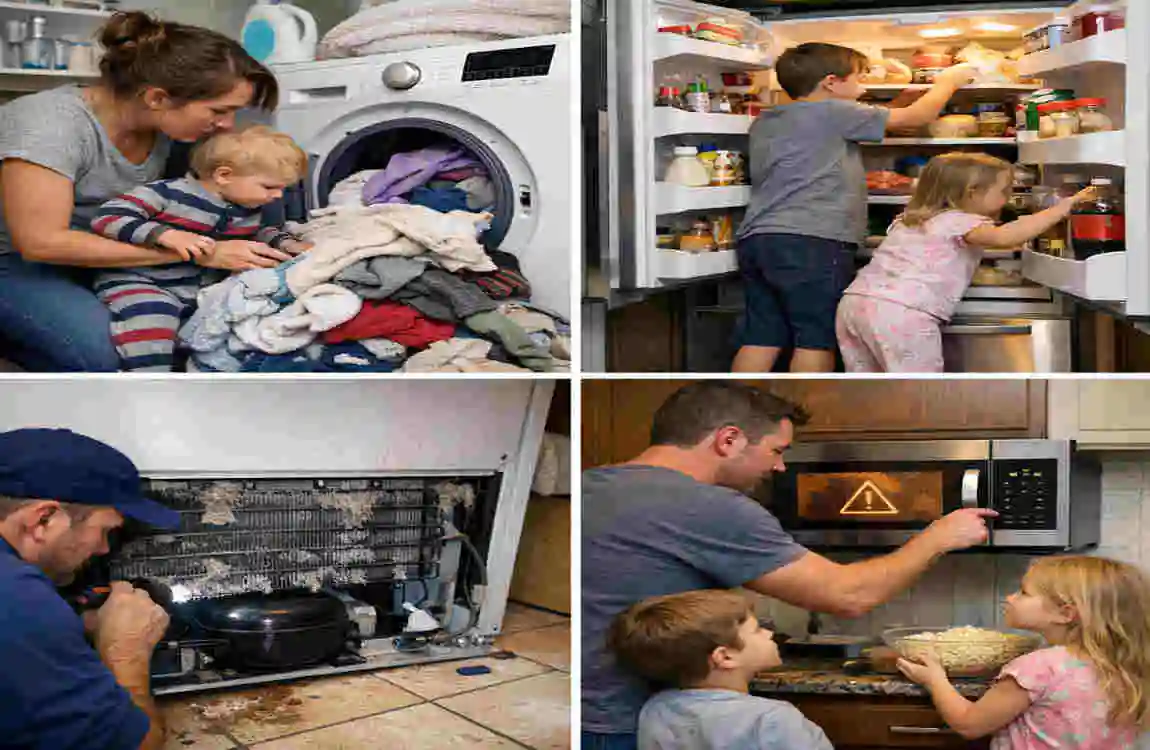
Now that we have thoroughly explored exactly why major home appliances break down in growing families, it is time to take your power back. You do not have to accept constant breakdowns and expensive repair bills as the norm in parenting. By implementing a few holistic prevention strategies, you can easily add five or more years to the lifespan of your machines.
Here are the most effective, step-by-step strategies you can start using today:
Schedule Bi-Annual Pro Tune-Ups. You take your family car in for regular oil changes, right? You need to do the same thing for your major appliances. Do not wait for a machine to break down before you call a professional. By scheduling a professional maintenance tune-up every six months, a technician can spot worn belts, clear hidden clogs, and lubricate motors before they snap. (If you want to keep your home running smoothly, strongly consider booking one of our comprehensive service tune-ups!)
Upgrade to Family-Sized, Energy-Efficient Models Sometimes, you cannot fix a machine that is too small for your family’s needs. If you are washing five loads of laundry a day in a compact apartment washer, it will break. When it is time to replace a dead machine, invest upfront in large-capacity, commercial-grade residential models, look for heavy-duty drums and energy-efficient motors designed specifically to handle the relentless volume of a large household.
Master Daily Defensive Habits. Your daily habits dictate your appliance’s lifespan. Run empty cleaning cycles in your washer and dishwasher once a month, using specialized descaling tablets to fight hard-water buildup. Check and empty the dryer lint screen religiously. Wipe up sticky fridge spills immediately before they dry like cement on the rubber door gaskets.
Your Quick Reference Fix Guide
To help you tackle these common family-related issues head-on, we have compiled this handy comparison table. It shows you the quick, immediate fixes you can do today, alongside the long-term solutions you should plan for:
The Root Issue, Quick DIY Fix, The Long-Term Solution
Severe Overuse: Strictly enforce load limits (never fill the washer past 3/4 full). Invest in a larger capacity, heavy-duty appliance.
Accidental Kid Damage: install child-proof locks and protective screen covers. Purchase extended, comprehensive warranty plans.
Poor Maintenance: Buy cheap online DIY vent-and-coil cleaning brush kits. Sign up for recurring, professional service contracts.
By taking these proactive steps, you can easily prevent well over $1,000 in unexpected repair costs each year. You will save money, reduce your daily stress, and keep your family dinner times peaceful and uninterrupted.
Frequently Asked Questions (FAQ)
Q: Why do major home appliances break down in growing families faster than in single homes?
A: Appliances in large families endure two to three times the normal workload. This constant overuse causes motors to overheat, while extra kids and pets introduce more dust, accidental damage, and daily wear and tear that quickly degrades delicate machine parts.
Q: How can I prevent my washing machine from breaking down with so much laundry?
A: Never overstuff the drum—leave it at least 25% empty so the clothes can tumble. Additionally, clean the drain filter monthly, empty all pockets to prevent debris from damaging them, and leave the door open after washing to prevent harmful mold buildup.
Q: Does hard water really destroy dishwashers?
A: Yes, absolutely. Hard water deposits, including thick calcium and limescale, accumulate directly on the internal heating elements. This forces the machine to work twice as hard to heat the water, eventually causing the heating element to crack and fail.