
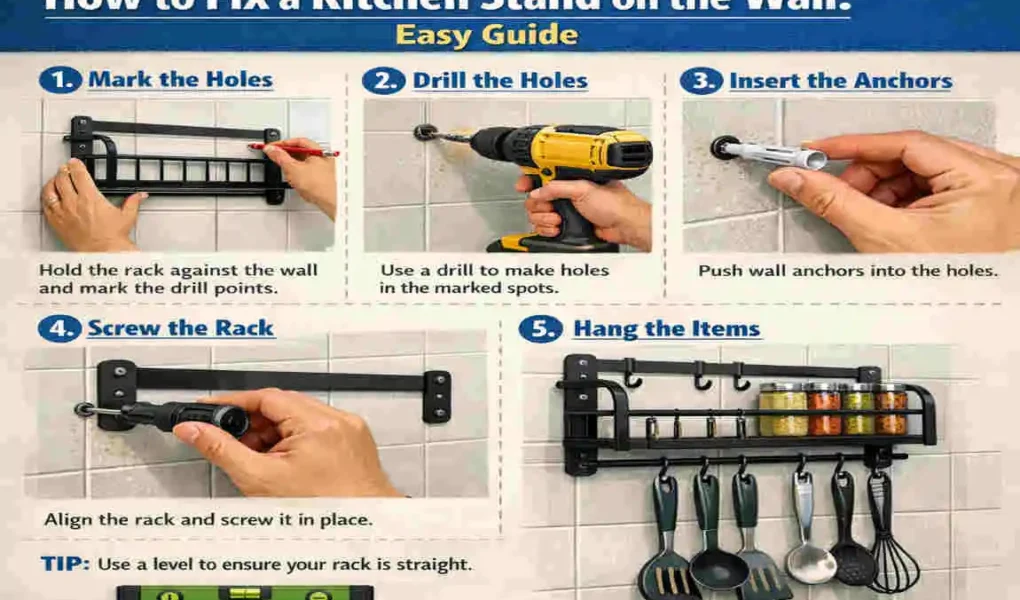
If you want to learn how to fix a kitchen stand to the wall, the good news is that the job is very manageable when you follow the right steps. A wall-mounted kitchen stand, shelf, or cabinet must be properly fixed because it supports weight every day. If the fixing is weak, the stand can loosen, tilt, or even fall.
Understand the Wall and Kitchen Stand Before Installation
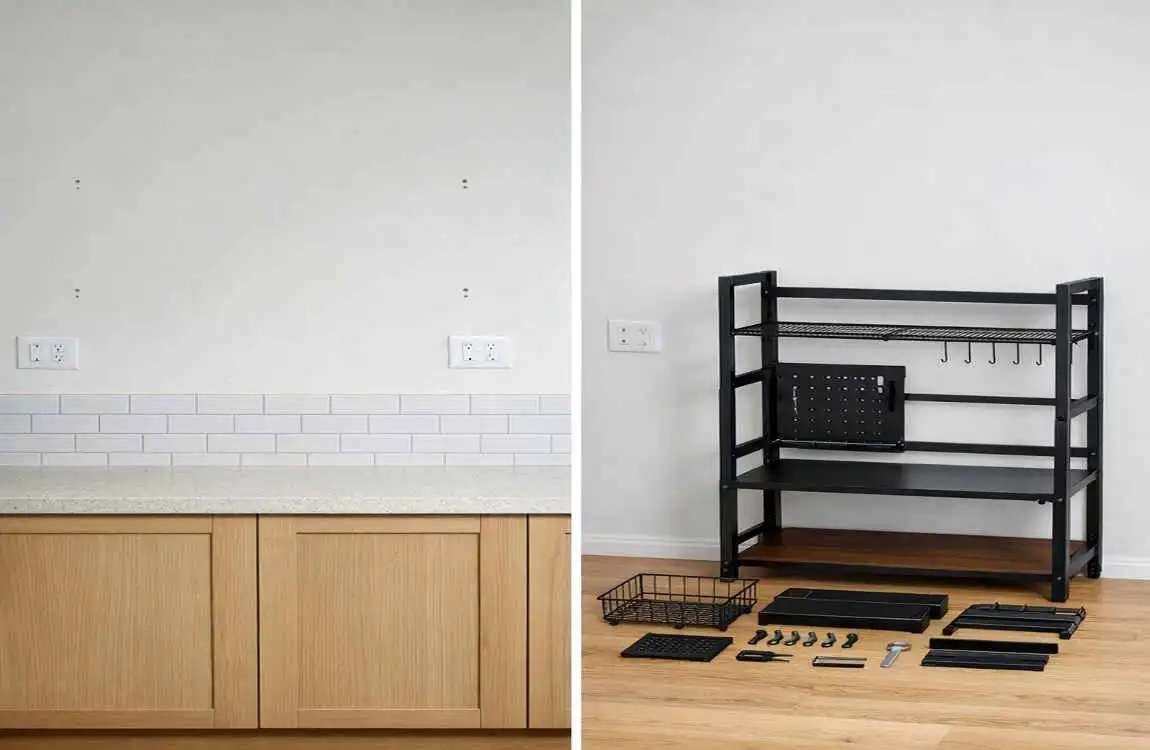
Before you drill a single hole, take time to understand what you are fixing into. This is one of the most important steps because different walls need different fixing methods.
Check the Wall Type
Not every wall can hold weight in the same way. Some are strong and solid, while others need extra support.
Here are the most common wall types:
Wall Type Best Fixing Method Notes
Drywall / Plasterboard Studs or heavy-duty anchors Avoid relying only on the board.
Brick Wall Masonry plugs or anchors Use a masonry drill bit
Concrete Wall Strong masonry fixings Very secure when installed correctly
Stud / Wooden Frame Wall Screws into studs Usually the strongest option
If you are unsure about your wall type, check carefully before starting. This helps you choose the right anchor and avoid damage later.
Inspect the Kitchen Stand
Look closely at the kitchen stand itself. Make sure it is not cracked, bent, or weak. Check the mounting brackets, screw holes, and frame.
Also measure its:
- Width
- Height
- Depth
These measurements help you decide where and how the stand should sit on the wall. A damaged stand should be repaired or replaced before installation.
Find Suitable Fixing Points
The safest fixing points are usually wall studs, brick, or concrete. Avoid weak or damaged areas of the wall.
Before drilling, check for:
- Hidden electrical wires
- Water pipes
- Weak plaster or crumbling areas
This step protects both your home and your safety.
Gather the Tools and Materials You Need
Having the right tools ready makes the job smoother and safer. You do not need fancy equipment, but you do need the correct basics.
Essential Tools
You will usually need:
- Measuring tape
- Pencil
- Spirit level
- Drill and drill bits
- Screwdriver
- Stud finder
- Wrench or socket set
These tools help you measure accurately, drill clean holes, and tighten the fixing properly.
Recommended Fixings
The fixing hardware matters just as much as the tools.
Use:
- Wall plugs
- Heavy-duty screws
- Mounting brackets
- Anchors suited to the wall type
A common mistake is thinking a larger screw is always better. It is not. The right wall anchor matters more than a larger screw because the anchor is what holds the load within the wall material.
Safety Equipment
Always protect yourself while working.
Use:
- Safety glasses
- Gloves
- Dust mask if drilling creates a lot of dust
Simple safety steps can prevent avoidable injuries.
Measure, Mark, and Level the Kitchen Stand
This step controls how neat and stable the final result will be. If your measurements are wrong, the stand may sit crooked or block other fittings.
Measure the Installation Height
Decide where the kitchen stand should sit. Think about:
- Countertop height
- Other cabinets nearby
- Door opening space
- Drawer clearance
The stand should be easy to use and not interfere with daily kitchen movement.
Mark the Wall
Use a pencil and spirit level to mark the wall carefully. Mark:
- The top edge
- The bottom edge
- The fixing points
- The stud locations if available
A straight reference line helps keep everything aligned.
Double-Check Your Measurements
Before you drill, pause and check everything again.
Make sure:
- The stand fits the available space
- Nearby sockets and pipes are clear
- Doors and drawers can open properly
- The line is still level
This extra check saves time and avoids mistakes.
How to Fix Kitchen Stand on Wall Step by Step
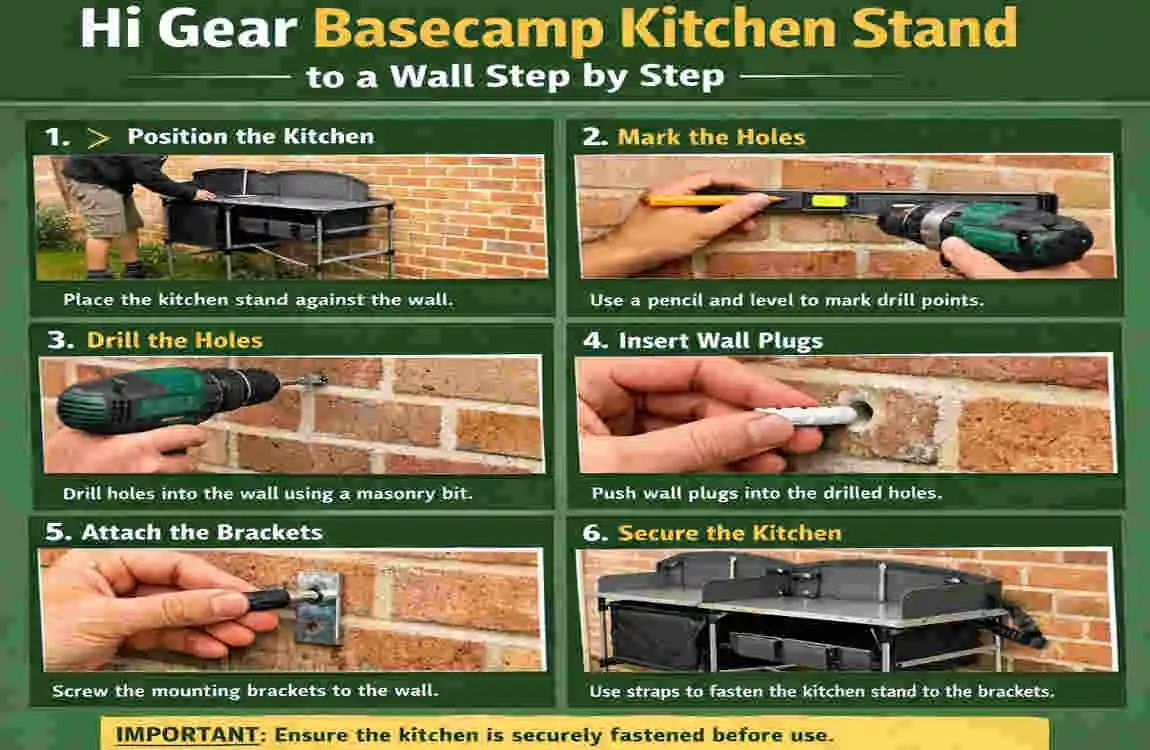
Now that everything is measured and marked, you can start the fixing process.
Position the Mounting Brackets
Hold the brackets against the wall at the marked points. Make sure they are level and lined up correctly.
If the brackets are uneven, the stand will be uneven as well. Take your time here.
Drill the Pilot Holes
Choose a drill bit that matches your wall material.
- Use a masonry bit for brick or concrete
- Use the correct bit for drywall or wood studs
Drill carefully to the right depth. Do not rush. Also, avoid drilling where hidden wires or plumbing may be present.
Install Wall Anchors or Plugs
Insert the correct wall anchors or plugs for your wall type. These help the screws grip properly.
For example:
- Drywall may need special heavy-duty anchors
- Brick needs masonry plugs
- Concrete needs strong concrete fixings
If the anchor is loose, the stand will not be secure.
Secure the Brackets
Drive the screws into the wall and tighten them firmly. Do not overtighten, because that can damage the wall or strip the fixing.
The brackets should feel solid and should not wobble.
Attach the Kitchen Stand
Lift the kitchen stand into place carefully. If it is heavy, ask someone to help you.
Then attach it to the brackets or fixing points. Check that it sits flat against the wall and does not lean forward.
Check Stability
Use the spirit level again.
Then gently test the stand for movement. If it shifts, tighten the fixings and check the anchor points again.
A secure stand should feel firm, level, and stable.
Common Mistakes to Avoid When Fixing a Kitchen Stand
Many problems arise from small mistakes during installation. Avoid these and your stand will last much longer.
Using the Wrong Wall Plugs
Standard plugs are often too weak for heavy cabinets. They may work for light shelves, but not for a loaded kitchen stand.
Always match the plug to the wall and the weight.
Fixing Only Into Drywall
Drywall alone usually cannot safely support much weight. Whenever possible, fix into studs or use proper heavy-duty anchors.
Skipping the Level Check
If the stand is even slightly crooked, doors and drawers may not work well. A small tilt can become a big problem later.
Overloading the Stand
Do not place too much weight in one spot. Extra pressure can strain the brackets and loosen the wall fixings over time.
Drilling Without Checking for Utilities
This is a serious mistake. A hidden wire or pipe can cause damage, injury, or expensive repairs.
Using Damaged Hardware
Bent brackets, rusty screws, or worn anchors should be replaced. Weak hardware can fail when you least expect it.
How to Make a Wall-Mounted Kitchen Stand Strong and Secure
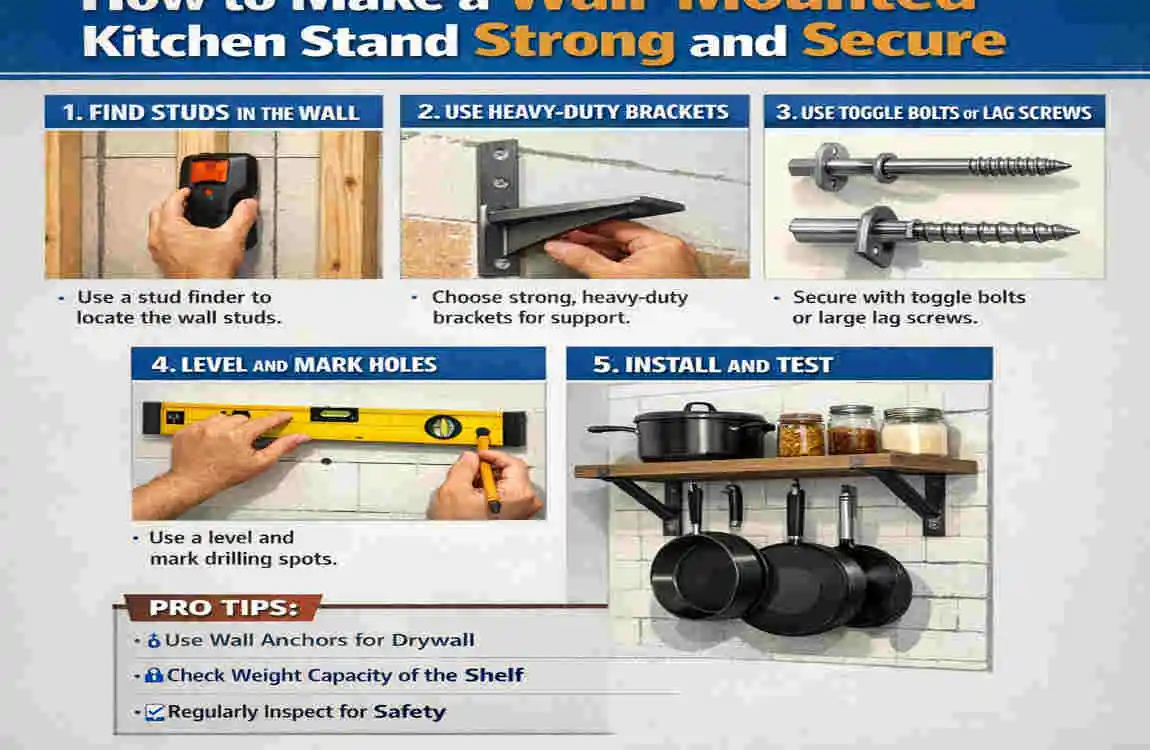
A good installation is not just about fixing the stand once. It is also about making it last.
Choose the Right Fixing Method
Different walls need different support systems:
- Stud mounting for wooden-frame walls
- Masonry anchors for brick or concrete
- Heavy-duty drywall anchors for plasterboard
- Mounting rails or brackets for better weight distribution
The best method depends on the wall and the cabinet weight.
Distribute the Weight
Try not to place all heavy items in one area. Spread the weight evenly inside the stand.
This helps reduce stress on the fixings and keeps the cabinet balanced.
Inspect the Fixings Regularly
Every so often, check the stand for:
- Loose screws
- Cracks near fixing points
- Sagging or movement
- Moisture damage
Catching small problems early can prevent bigger ones later.
When to Call a Professional
A professional installer is the safer choice when:
- The wall is damaged
- The stand is very heavy
- You cannot find a safe fixing point
- Electrical or plumbing lines may be nearby
- Structural support is needed
If the job feels uncertain, it is better to ask for help.
FAQ
Can I fix a kitchen stand directly to a drywall wall?
Yes, but only in some cases. Light stands may work with the right drywall anchors, but heavier ones usually need studs or stronger support.
What screws are best for fixing a kitchen stand to a wall?
The best screws depend on the wall material, the stand weight, and the anchor system. Always use screws that match the fixing hardware.
How do I fix a kitchen stand to a brick wall?
Use a masonry drill bit, then insert suitable wall plugs or masonry anchors before tightening the screws.
How do I know if my kitchen stand is securely fixed?
Check that it is level, the brackets are tight, and the stand does not move when you gently test it.
Can I fix a heavy kitchen cabinet without studs?
Yes, sometimes you can use heavy-duty anchors or a proper mounting system, but the setup must be strong enough for the load.
Why is my wall-mounted kitchen stand coming loose?
Common reasons include weak anchors, overloaded shelves, loose screws, or poor-quality wall material.
Should I use a professional to install a wall-mounted kitchen stand?
Yes, if the stand is heavy, the wall is uncertain, or hidden wiring and plumbing may be present. A professional can reduce risk.
| Step | What to Do | Helpful Tip |
|---|---|---|
| Check the Wall | Inspect the wall for studs, pipes, and wiring. | Use a stud finder before drilling. |
| Measure the Stand | Mark the correct height and position. | Use a level to keep it straight. |
| Choose Anchors | Select screws and wall anchors suitable for the wall type and load. | Heavy stands need strong anchors or stud mounting. |
| Drill Holes | Drill pilot holes at the marked points. | Avoid drilling near hidden pipes or electrical cables. |
| Attach the Stand | Position the stand and secure it with screws. | Tighten screws firmly without damaging the wall. |