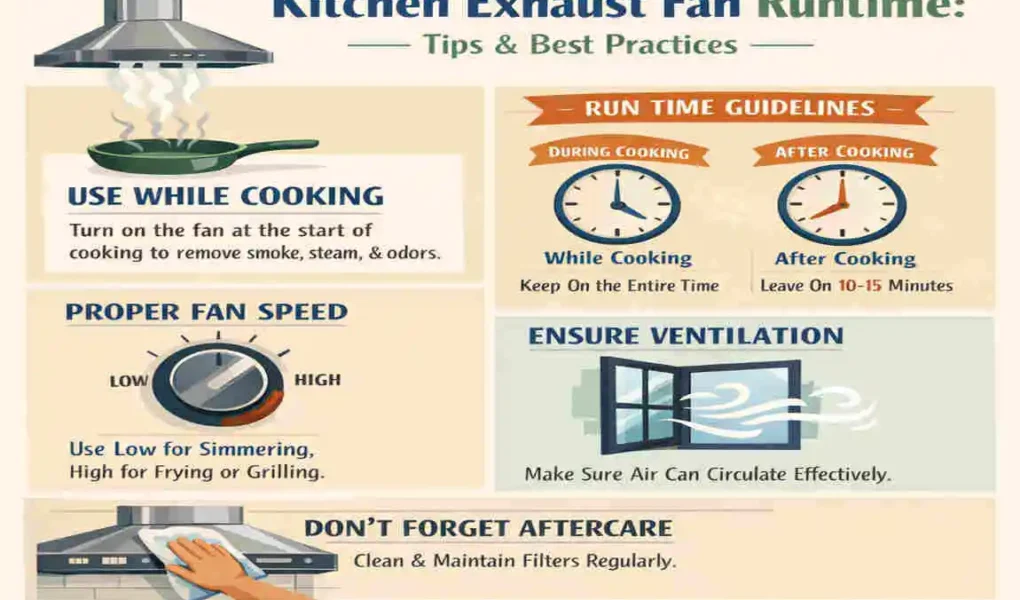
If you have ever wondered how long you can run a kitchen exhaust fan, the simple answer is: as long as needed to clear smoke, steam, heat, and odours. For most everyday cooking, that usually means during cooking and for 10 to 20 minutes after. For heavier cooking, you may need a little longer.
A kitchen exhaust fan helps keep the air cleaner and the room more comfortable. It removes extra moisture, smoke, grease, and strong smells before they spread through your home. That is why using it at the right time matters.
How Long Can You Run a Kitchen Exhaust Fan?
Basic purpose of the fan
A kitchen exhaust fan pulls unwanted air out of the kitchen. It helps reduce:
- Smoke from frying or grilling
- Steam from boiling water
- Grease particles from cooking
- Strong odours from food
This keeps your kitchen fresher and helps protect walls, cabinets, and ceilings from buildup over time.
General runtime guide
For most homes, you can follow this simple rule:
- Light cooking: run the fan during cooking and for a few minutes after
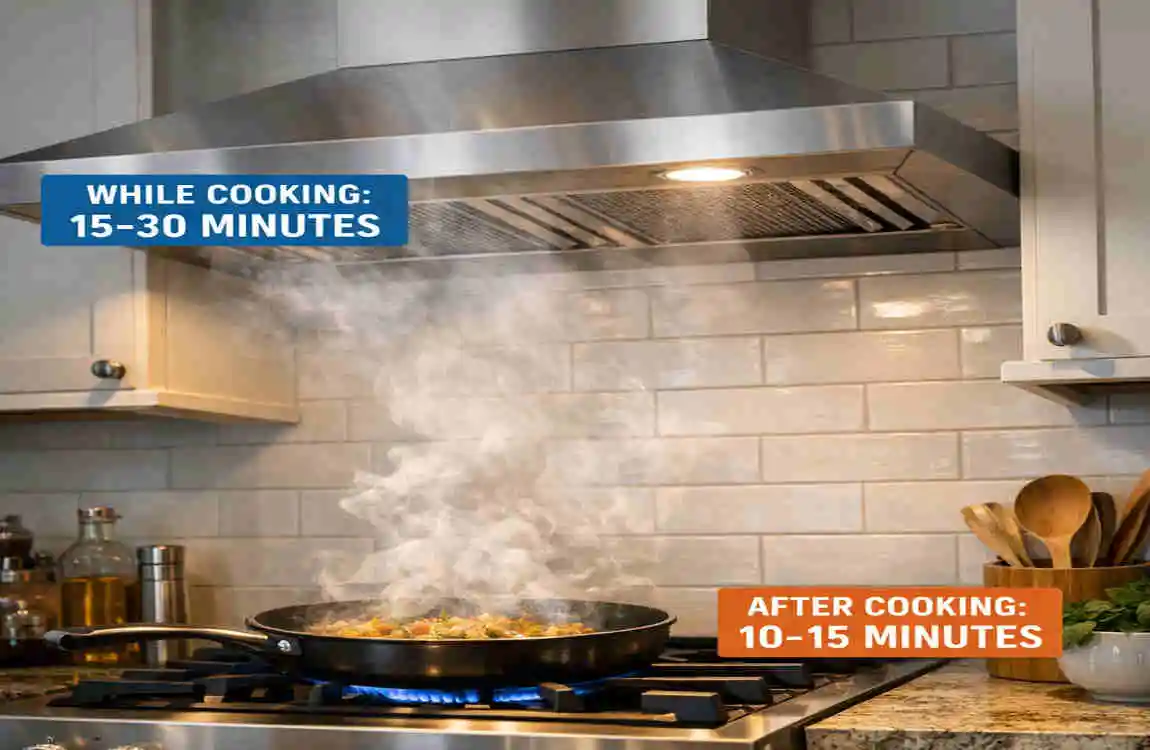
- Heavy cooking: run it longer, often 15 to 30 minutes after
- Very smoky cooking: keep it on until the air feels clear again
The exact time depends on your fan strength and how much cooking smoke or steam is in the air.
Why ventilation matters
Good ventilation is not just about comfort. It also helps improve indoor air quality. When you cook, tiny particles can stay in the air and settle on surfaces. A fan helps remove them faster.
How Long Should You Run It While Cooking?
Everyday cooking
For simple meals like reheating, sautéing, or light baking, turn the fan on as soon as you start cooking. In many cases, the fan does not need to run at full speed.
Frying and grilling
Frying and grilling produce more smoke, grease, and odour. In these cases, run the fan the entire time. You may also want to keep it on longer after cooking ends.
Boiling and steaming
Boiling pasta or steaming vegetables creates a lot of moisture. Even if there is not much smell, the fan helps reduce humidity and condensation.
Strong-smelling foods
Foods like fish, onions, curry, and garlic can leave odours behind. Run the fan during cooking and longer afterwards if needed.
How Long Should You Leave It On After Cooking?
Typical post-cooking time
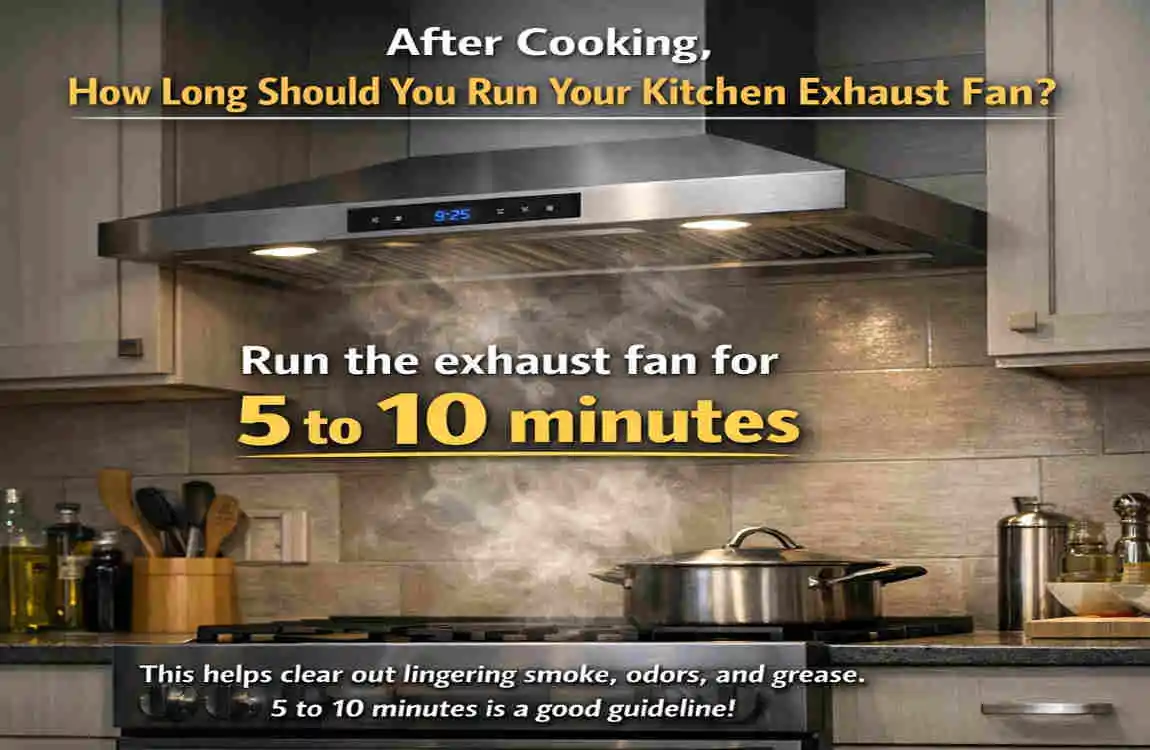
A good starting point is 10 to 20 minutes after cooking. This gives the fan time to remove leftover steam, odour, and heat.
When to run it longer
You may need more time if:
- You fried food
- The kitchen is small
- The room feels hot or sticky
- Odours are still strong
- Smoke is still visible
If the kitchen still smells like cooking, the fan likely needs more time.
Factors That Affect Fan Runtime
Fan size and airflow
A stronger fan clears air faster. Fan performance is often measured by CFM, which means how much air it moves. A higher CFM usually means better ventilation.
Kitchen size and layout
A small closed kitchen clears faster than a large open-plan kitchen. High ceilings and connected dining spaces may also need longer fan use.
Type of cooking
Light cooking needs less ventilation than frying or grilling. The more smoke, steam, or grease you create, the longer you should run the fan.
Ducted vs recirculating fans
A ducted fan sends air outside, so it usually works better for strong cooking smells and moisture.
A recirculating fan filters air and sends it back into the room. It helps, but it may not clear the air as quickly.
Weather and fresh air supply
If fresh air is limited, the fan may take longer to clear the room. In cold or very hot weather, homeowners may also be less likely to open windows, which can affect ventilation.
Can You Run It for Several Hours?
Yes, you can usually run a kitchen exhaust fan for several hours, especially if the fan is in good condition and the manufacturer allows it. But in normal cooking situations, that is usually not necessary.
Running it for too long can:
- Use more electricity
- Pull out conditioned indoor air
- Put extra wear on the motor
- Create pressure issues in tightly sealed homes
So while long runtime is possible, use it only when needed.
Is it safe to leave it on overnight?
In most cases, no, not for normal cooking. If the fan is noisy, damaged, overheating, or vibrating, turn it off and check it. Always follow the manufacturer’s instructions.
How to Use a Kitchen Exhaust Fan Efficiently
Best habits to follow
- Turn it on before or as soon as cooking starts
- Keep it running during cooking
- Leave it on after cooking until the air clears
- Use the right speed for the job
- Clean filters regularly
- Keep ducts and vents clear
Simple maintenance tips
Clean grease filters often, especially if you fry food a lot. Check for dust, grease buildup, or blocked vents. A dirty fan does not move air as well and may run louder or overheat.
Ways to improve ventilation
If it is safe and comfortable, open a window a little while the fan is running. This can help bring in fresh air and improve airflow. Just make sure the fan still has a proper path to remove air.
Kitchen Exhaust Fan Runtime by Cooking Type
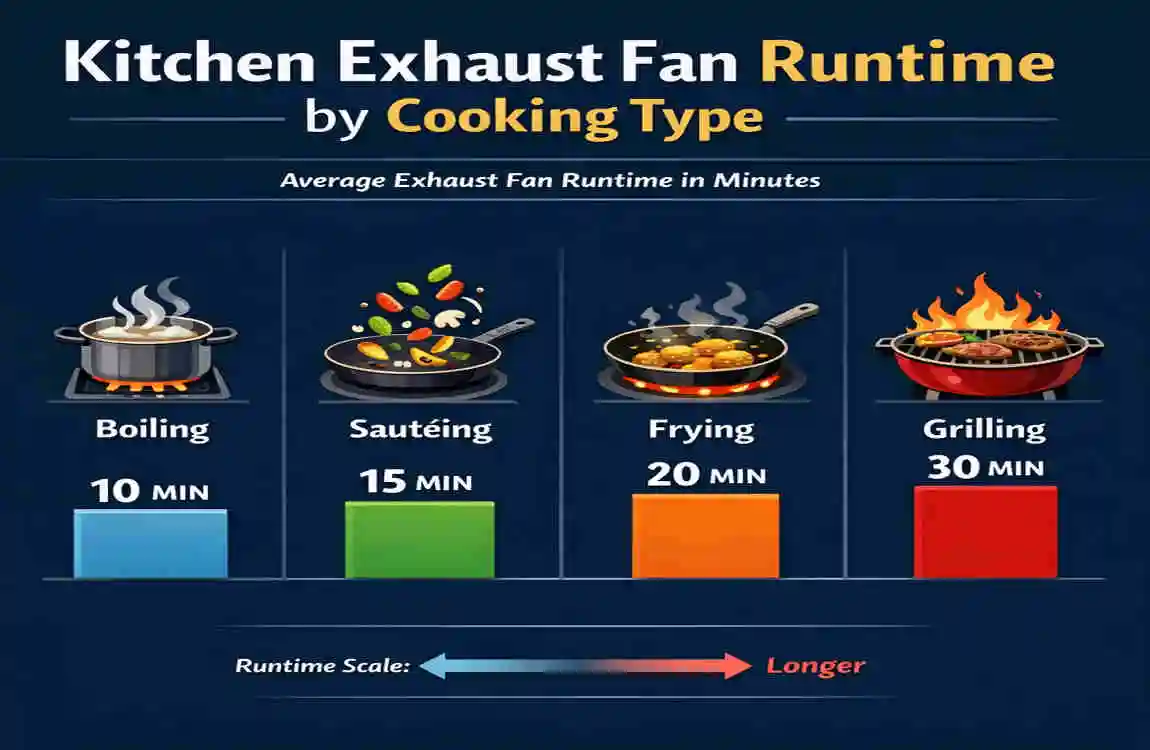
Cooking Activity Suggested Fan Use Main Reason
Light cooking During cooking and briefly afterwards Removes normal odours and light moisture.
Boiling During cooking and afterwards Controls steam and humidity
Frying During cooking and longer afterwards Reduces grease and odours
Grilling Throughout cooking and afterwards Removes smoke and heat
High-heat cooking Continuous during cooking Handles more smoke and temperature
Strong-smelling foods During cooking and afterwards Helps clear lingering odours
Common Mistakes to Avoid
Turning the fan on too late
If you wait until the kitchen is full of smoke, the fan has more work to do. Turn it on early for better results.
Turning it off too soon
Many people shut the fan off the second cooking ends. That often leaves steam and smell behind.
Ignoring dirty filters
A clogged filter blocks airflow and reduces performance. Clean it on a regular schedule.
Using a weak fan for a big kitchen
If your fan is too small for the space, it may not clear the air fast enough.
- Don’t assume all exhaust fans work the same
- Don’t leave a damaged fan running
- Don’t ignore unusual noise or heat
FAQ
How long can you run a kitchen exhaust fan?
You can usually run it as long as needed to remove smoke, steam, and odours. For most cooking, that means during cooking and 10 to 20 minutes after.
Can I leave my kitchen exhaust fan on for hours?
Yes, in many cases you can, but it is usually not necessary for normal cooking. Extended use may increase energy use and wear.
Should I leave the exhaust fan on after cooking?
Yes, especially after frying, boiling, or cooking strong-smelling foods. Post-cooking ventilation helps clear the air.
Does running a kitchen exhaust fan use a lot of electricity?
Usually not much, but it depends on the fan size, speed, and runtime. Longer use means more energy use.
How do I know when to turn it off?
Turn it off when smoke, steam, heat, and odours have mostly cleared, and the kitchen feels comfortable again.
| Topic | Short Information |
|---|---|
| Typical Runtime | Run the exhaust fan during cooking and for about 10–20 minutes afterward. |
| Light Cooking | Around 10 minutes after cooking is often enough for minor steam and odors. |
| Heavy Cooking | Use the fan for 15–30 minutes after cooking when there is more smoke, grease, or steam. |
| Gas Stove Use | Keep the fan running while cooking to help remove combustion byproducts and odors. |
| Steam Removal | A longer runtime helps clear moisture and reduce condensation on walls and cabinets. |
| Odor Control | Continue running the fan after cooking until strong food smells have reduced. |
| Energy Use | Modern exhaust fans generally use modest electricity, but avoid unnecessary continuous operation. |