
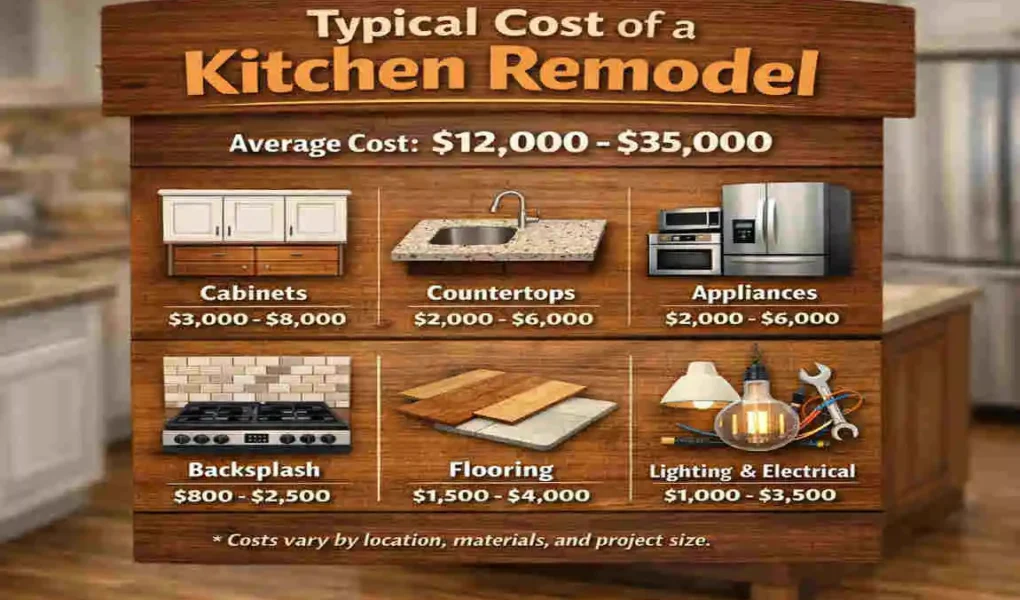
If you are asking how much it costs to remodel a kitchen, the honest answer is: it depends. A kitchen remodel can be a small update or a full rebuild, and the price changes with every choice you make.
That is why cost planning matters so much. When you know the likely expenses early, you can make better decisions, avoid stress, and keep the project under control. A clear budget also helps you choose where to spend more and where to save.
Kitchen Remodel Cost by Project Type
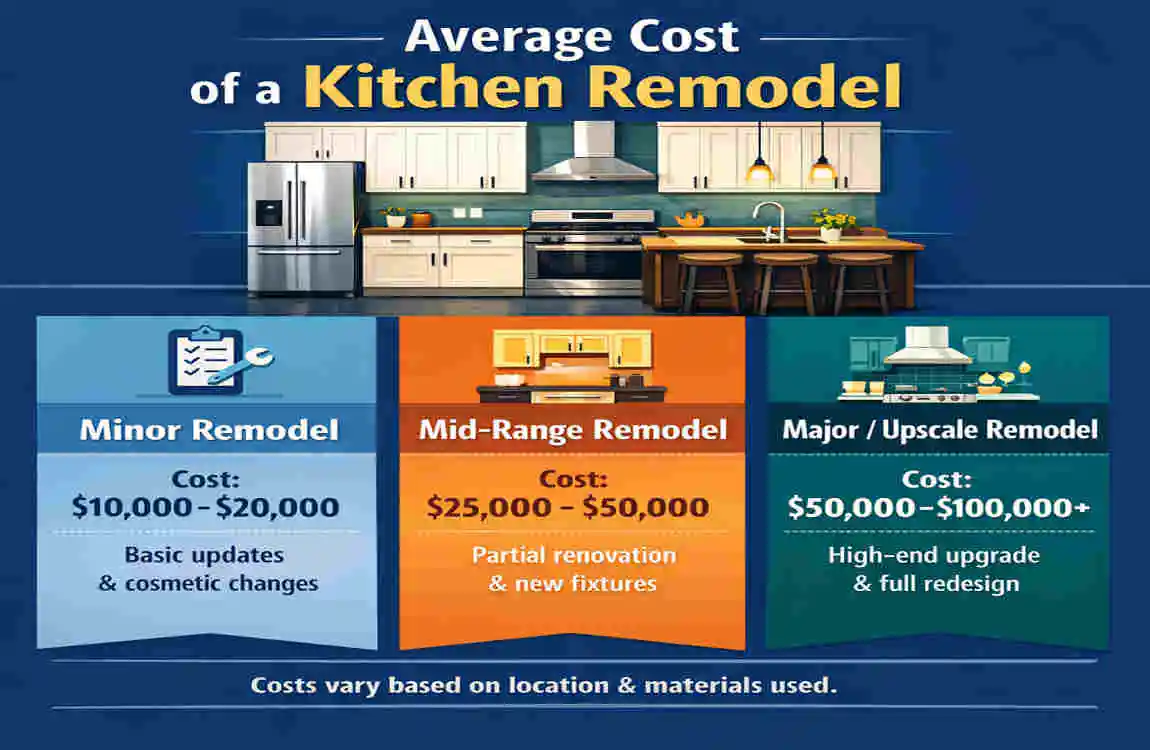
Small kitchen remodel
A small kitchen remodel is usually the most affordable option. It focuses on improving the space’s look and function without changing the structure.
Common updates include:
- Cabinet painting or refacing
- New hardware
- Better lighting
- Fresh wall paint
This remodel works well if your kitchen already functions well but looks tired or dated.
Mid-range kitchen remodel
A mid-range remodel is the most common choice for homeowners. It usually balances style, function, and cost.
This may involve:
- New cabinets
- New countertops
- New flooring
- Updated appliances
This level gives you a noticeable transformation without the high cost of a full redesign.
Major kitchen remodel
A major remodel is the most expensive type. It often changes the layout and may involve structural work.
This can include:
- Removing walls
- Moving plumbing
- Upgrading electrical systems
- Installing custom cabinetry
- Using premium finishes
If you want a complete transformation, costs rise quickly at this level.
Major Kitchen Remodelling Expenses
Cabinet costs
Cabinets are often one of the biggest expenses in a kitchen remodel. They affect both the style and the storage of the space.
You usually have three choices:
- Stock cabinets: More affordable, limited sizes
- Semi-custom cabinets: More flexible, mid-range price
- Custom cabinets: Built to fit your kitchen, highest cost
Installation also adds to the total, especially if you need to remove the old cabinets first.
Countertop costs
Countertops can change the whole look of the kitchen. Your material choice strongly affects the price.
Common options include:
- Quartz: Durable and popular, often mid-to-high price
- Granite: Natural stone with a premium feel
- Laminate: Budget-friendly and practical
- Other surfaces: Prices vary by style and quality
If you want a stylish look without overspending, quartz or laminate may be worth a careful comparison.
Appliance costs
Appliances can take a large share of your budget, especially if you replace several at once.
The biggest appliance costs often include:
- Refrigerator
- Oven and range
- Dishwasher
- Microwave
Basic models are cheaper, but smart features, built-in designs, and premium brands raise the price fast.
Flooring costs
Kitchen flooring needs to handle heavy foot traffic, spills, and frequent cleaning. That makes material choice important.
Common flooring options include:
- Tile: Durable and water-resistant
- Vinyl: Budget-friendly and easy to maintain
- Hardwood: Warm and attractive, but usually more expensive
The best option depends on your budget and how much wear your kitchen gets.
Lighting and electrical costs
Good lighting improves both safety and appearance. In many remodels, homeowners add task lighting, under-cabinet lighting, or new ceiling fixtures.
You may also need electrical work if you add appliances or change the layout. This can increase labour costs, especially in older homes.
Plumbing and sink costs
If you move the sink, add a dishwasher, or change the layout, plumbing costs can rise quickly. Even small changes may require new pipes or updated fittings.
This is one reason layout changes are expensive. Plumbing isn’t just about materials; it also requires skilled labour.
Backsplash and wall finishes
A backsplash protects the wall and adds style. Tile is a common choice, but the price varies based on size, design, and installation.
Paint and wall finishes are cheaper, but a backsplash often gives the kitchen a more finished look.
Labour and installation expenses
Labour is a major part of any remodel. Skilled workers are needed for demolition, carpentry, plumbing, electrical work, flooring, and installation.
In many projects, labour can take up a large share of the budget. If your remodel is complex, labour costs may rise even more.
Factors That Can Increase or Reduce Costs
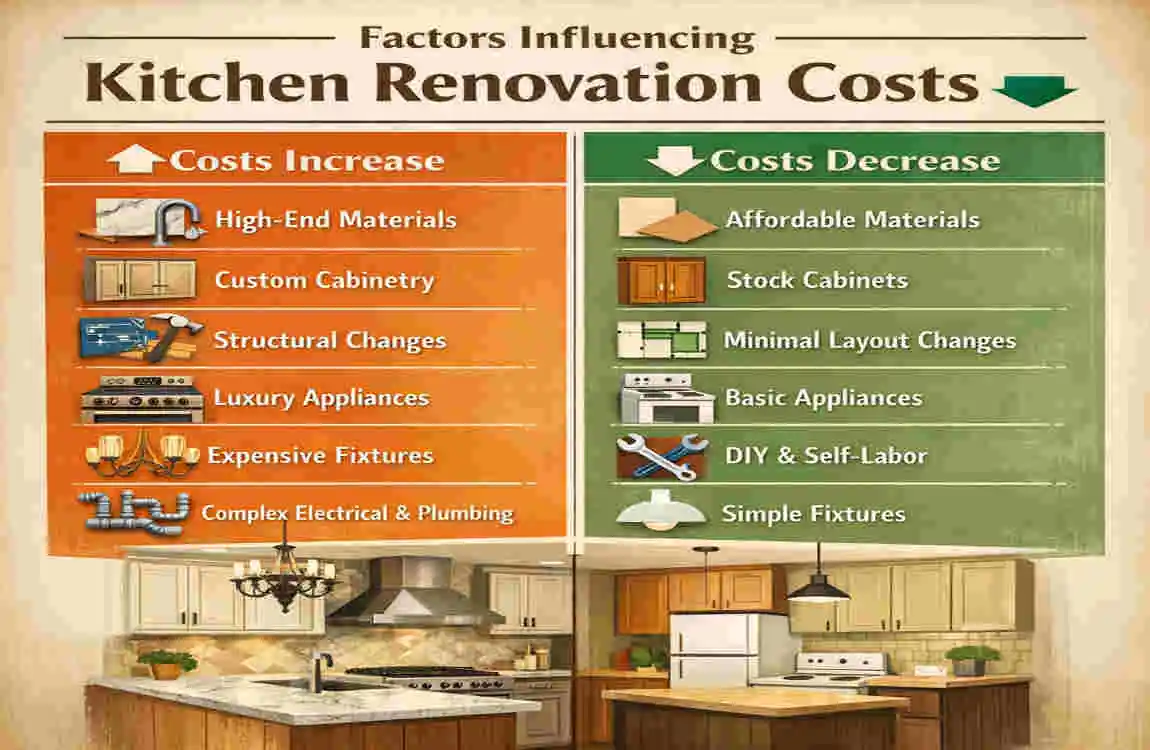
What makes a remodel more expensive?
Some choices almost always increase the price:
- Changing the layout
- Moving plumbing or electrical lines
- Choosing custom materials
- Hiring high-cost contractors
- Finding hidden damage during demolition
Older homes often reveal surprises behind the walls, floors, or cabinets. That is why many projects go over budget.
What can help lower the price?
You can reduce costs by making smart choices early.
Here are a few simple ways:
- Keep the existing layout
- Use standard cabinet sizes
- Choose mid-range materials
- Avoid major plumbing changes
- Do simple cosmetic tasks yourself
A few small decisions can save a lot of money overall.
Why location matters
Where you live affects both material and labour pricing. In some areas, contractor rates are much higher. Delivery costs and permit fees can also vary.
So, the same remodel may cost very differently from one home to another.
Why you need a contingency budget
Always set aside 10–20% extra for unexpected costs. This gives you room for repairs, delays, and small changes without breaking the project.
A contingency budget is not optional. It is one of the smartest parts of planning.
How to Create a Kitchen Remodelling Budget
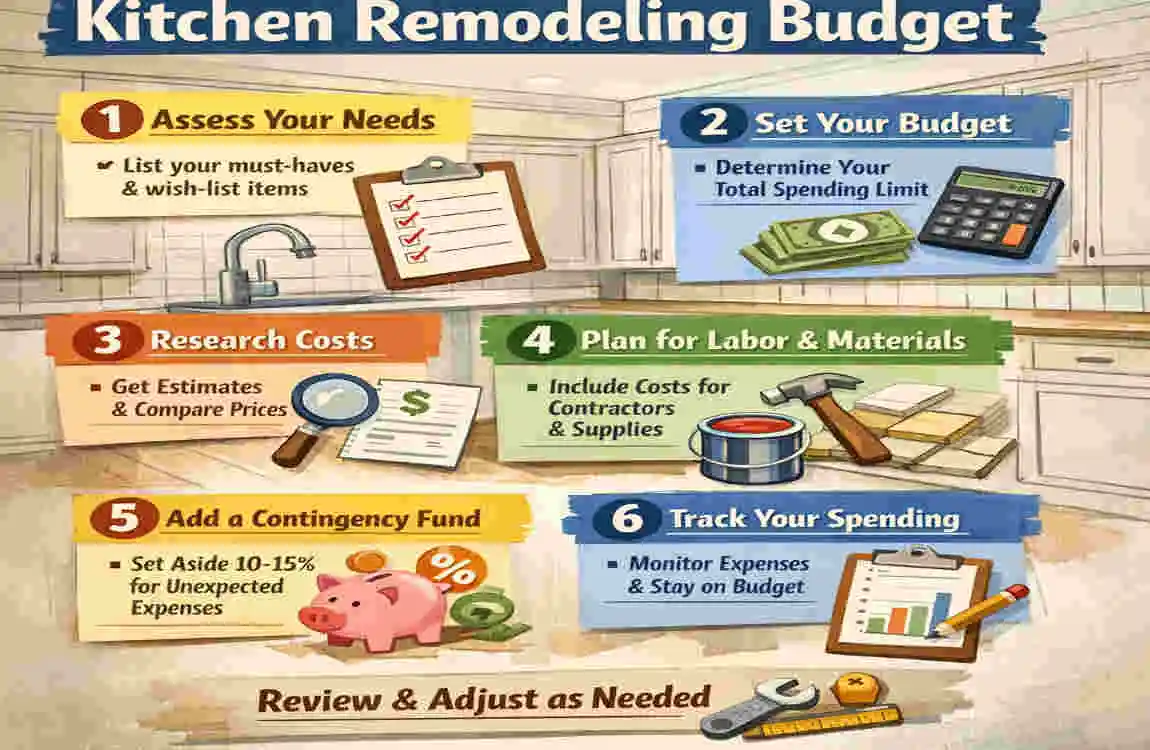
Start with a realistic total.
Before you begin, decide what you can truly spend. Be honest about your limit. A realistic budget helps you avoid overspending and makes every choice easier.
Split the budget into parts.
Do not think of the kitchen remodel as one big number. Break it into categories like cabinets, counters, flooring, labour, and appliances. This gives you better control.
Focus on priorities
Ask yourself what matters most. Do you need more storage? Better function? A fresh look? Start with your most important needs.
Compare contractor quotes
Always get more than one estimate. Written quotes help you compare price, scope, and timing. They also make it easier to spot unusually high or low bids.
Example kitchen remodelling budget table
Category Estimated Share
Cabinets 25%
Countertops 10%
Appliances 15%
Flooring 10%
Lighting 5%
Plumbing 10%
Labour 20%
Permits 3%
Contingency 2%
This is only a general guide, but it shows where the money often goes.
Ways to Save Money on a Kitchen Remodel
Keep the layout if possible.
The fastest way to save money is to avoid moving walls, sinks, or major appliances. If the current layout works, keep it. That lowers plumbing and electrical costs.
Repaint or reface cabinets.
If your cabinets are still strong, you may not need to replace them. Repainting or refacing can give them a fresh look for much less money.
Choose affordable materials
You do not always need the most expensive options. Laminate countertops, vinyl flooring, and stock cabinets can still look good if you choose them carefully.
Do simple work yourself
If you are comfortable, you may handle tasks like painting or removing old hardware. Just avoid DIY work for plumbing, electrical, or structural changes unless you have the right skills.
Buy smart
Look for sales, clearance items, and package deals. Small savings on appliances or fixtures can add up quickly.
Kitchen Remodelling Cost FAQ
How much does it cost to remodel a kitchen?
The cost depends on kitchen size, materials, labour, layout changes, appliances, and finish quality. A small update costs far less than a full renovation.
What is the most expensive part of a kitchen remodel?
Usually, cabinets, labour, and appliances take the biggest share. Structural changes can also add a lot to the total.
How much does a small kitchen remodel cost?
A small remodel costs less because it focuses on cosmetic updates like paint, lighting, and cabinet improvements. The final price still depends on materials and labour.
Is it cheaper to remodel a kitchen or replace everything?
A partial remodel is usually cheaper. Replacing everything costs more because it often includes cabinets, counters, flooring, and installation all at once.
How much should I budget for kitchen cabinets?
Stock cabinets cost less, semi-custom cabinets cost more, and custom cabinets cost the most. Your budget should match your kitchen size and design goals.
How can I remodel my kitchen on a budget?
Keep the layout, refinish cabinets, choose budget-friendly materials, and avoid unnecessary structural changes. Planning also helps you save.
Does a kitchen remodel increase home value?
It can improve home value, especially if the kitchen looks fresh and functions well. Still, the return depends on your market and how much you spend.
How long does a kitchen remodel usually take?
It can take several weeks or longer, depending on the project size, material delivery, inspections, and the amount of work involved.
Should I hire a kitchen remodelling contractor?
Yes, especially if your remodel involves plumbing, electrical work, permits, or structural changes. A contractor can help keep the project safe and organised.
What unexpected costs should I prepare for?
Common surprises include hidden water damage, old wiring, plumbing issues, subfloor repairs, permit changes, and material delays.
| Cost Factor | Typical Cost Range | What It Includes |
|---|---|---|
| Cabinets | $5,000–$20,000+ | Stock, semi-custom, or custom cabinets |
| Countertops | $2,000–$7,000+ | Quartz, granite, laminate, or other materials |
| Flooring | $1,500–$5,000 | Tile, vinyl, hardwood, or laminate |
| Appliances | $3,000–$10,000+ | Refrigerator, oven, dishwasher, and range |
| Lighting | $500–$2,500 | Fixtures, recessed lights, and under-cabinet lighting |
| Plumbing & Electrical | $1,000–$5,000+ | Repairs, upgrades, and layout changes |
| Labor | 20%–40% of project cost | Installation and construction work |
| Permits | Varies by location | Required permits and inspections |
| Total Remodel | $15,000–$50,000+ | Depends on kitchen size, materials, and scope |