A 1930’s kitchen has a timeless appeal that many homeowners still love today. It feels warm, practical, and full of character. Even in a modern home, this style can bring a sense of comfort and charm that never goes out of style.
What makes this design so special is its balance. It is simple yet elegant, vintage yet useful, and classic yet easy to adapt. If you want a kitchen that feels welcoming and full of personality, the 1930s style is a wonderful place to start.
What Is a 1930’s Kitchen?
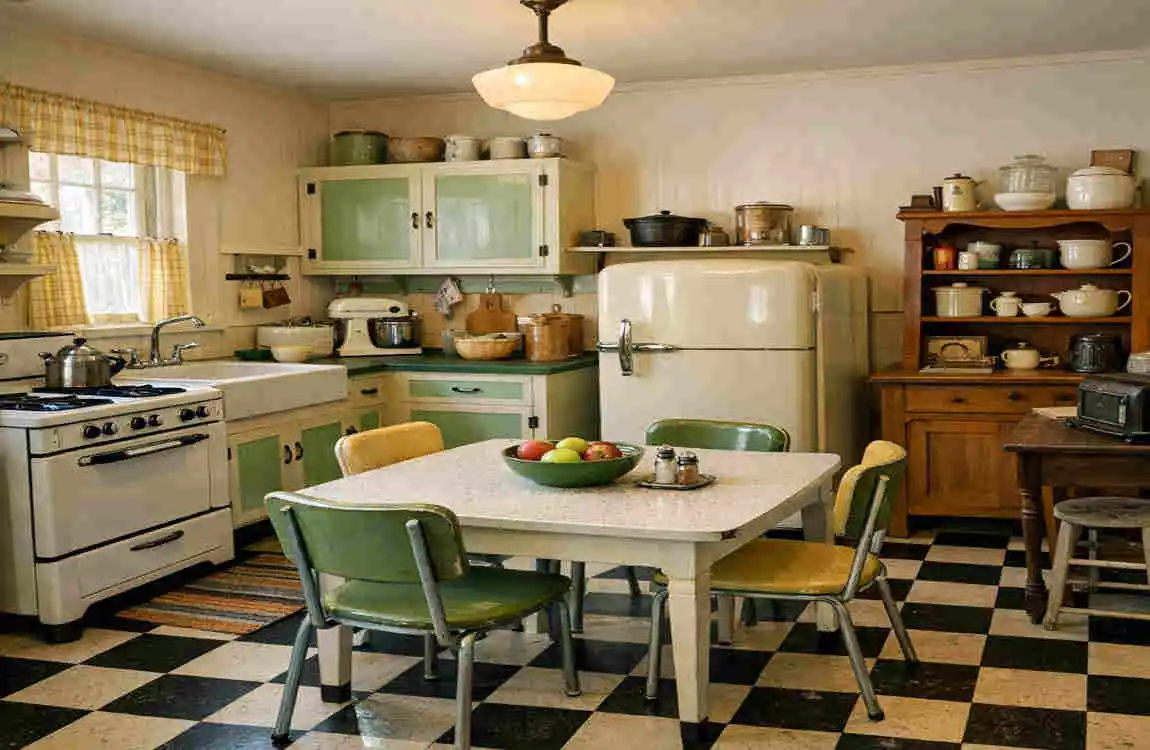
A 1930’s kitchen was built around function first. Homes during this time needed kitchens that were practical, easy to clean, and efficient for daily use. At the same time, designers added soft colors, neat finishes, and charming details that made the room feel inviting.
History of 1930s Kitchen Design
The 1930s were shaped by practicality. Because of economic pressure, people wanted kitchens that were durable, simple, and cost-effective. This led to features like built-in cabinets, compact work areas, and easy-to-maintain surfaces.
Kitchens were designed to make housework smoother. Every inch mattered. That is why the layout often focused on saving time and keeping everything close at hand.
Key Characteristics
A typical 1930’s kitchen often includes:
- Compact layouts
- Built-in storage
- Bright, cheerful colors
- Durable surfaces
- Classic hardware and finishes
These features remain popular because they work so well in modern homes, too.
Essential Features of a Traditional 1930’s Kitchen
Cabinets
Cabinets are one of the most important parts of the look. Painted wood cabinets were common, often in white, cream, pale green, or soft blue. Glass-front doors also appeared in many kitchens because they helped the room feel lighter.
Open shelving can also fit the style nicely. It gives the kitchen an airy, lived-in feel while letting you display pretty dishes or vintage pieces.
Countertops
Countertops in the 1930s were usually simple and practical. Tile countertops were common, as were wood surfaces like butcher block. Today, you can recreate the same feeling with materials that are easier to maintain.
Good choices include:
- Butcher block
- Quartz with a vintage look
- Ceramic tile
- Soapstone
- Marble
These options keep the charm while adding modern strength.
Flooring
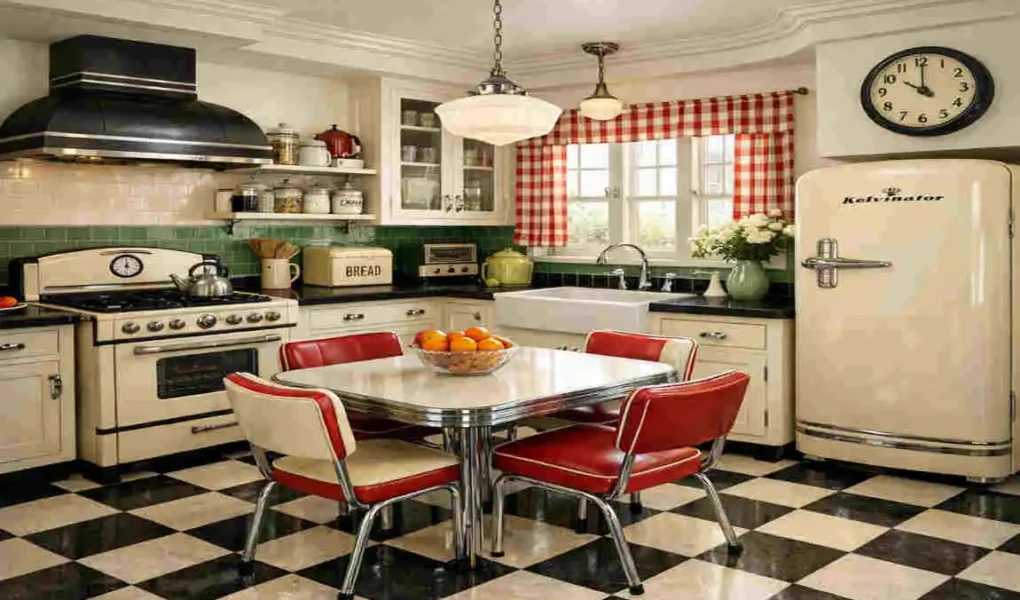
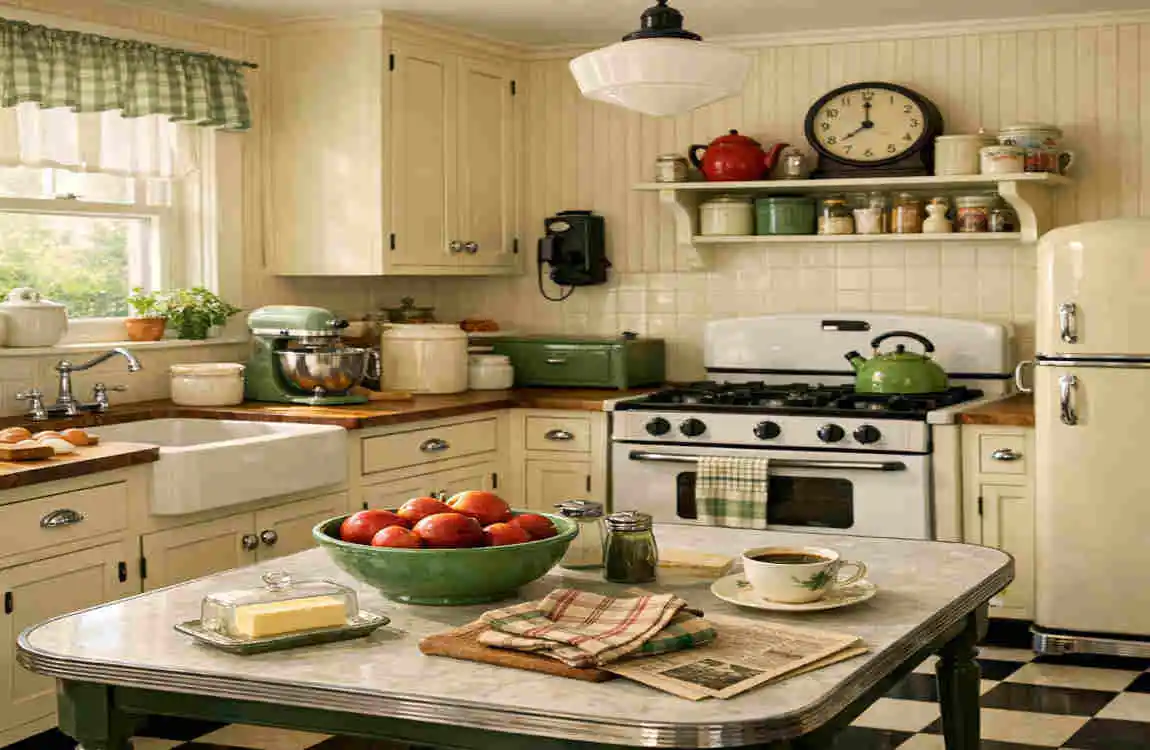
Flooring can completely change the mood of the room. The classic black-and-white checkerboard floor is one of the most recognizable features of a 1930’s kitchen. Hardwood and linoleum-inspired flooring also fit the period beautifully.
Walls
Walls were often kept clean and simple. Subway tile, painted plaster, and beadboard panels all work well. These finishes help the kitchen feel fresh and bright without looking too busy.
Popular 1930’s Kitchen Color Schemes
Color plays a huge role in creating the right mood. The 1930s used soft, welcoming shades that made kitchens feel cheerful and practical at the same time.
Color Scheme Feel It Creates Best Use
Classic White Clean and timeless Small or bright kitchens
Mint Green Fresh and vintage Cabinets or accents
Butter Yellow Warm and sunny Family kitchens
Powder Blue Soft and calm Cabinets or walls
Soft Gray with White Trim Simple and elegant Modern vintage homes
Color Pairing Tips
If you want the look to feel balanced, pair a soft color with white trim or light walls. For example, mint green cabinets work beautifully with white tile and chrome hardware. Butter yellow feels lovely with warm wood tones. Powder blue looks best when you keep the rest of the space light and simple.
Best Paint Finishes
A satin or semi-gloss finish is usually the best choice. It gives a soft shine, looks fresh, and is easier to clean than flat paint. This is especially helpful in a busy kitchen.
Modern Ways to Recreate a 1930’s Kitchen
You do not have to build a replica to enjoy this style. In fact, many homeowners prefer a mix of old and new.
Keep the Vintage Look
Start with the details that matter most: cabinet style, flooring, color, and lighting. These are the features people notice first.
Add Modern Appliances
You can use modern appliances and still keep the vintage feel. Choose appliances with simple lines or retro-inspired finishes. You can also hide some appliances behind cabinet panels to keep the room looking traditional.
Upgrade Storage
Older kitchens were not always known for storage. Modern pull-out drawers, corner solutions, and hidden organizers can make a big difference without changing the style.
Improve Lighting
Bright kitchens were a big part of 1930s design. Today, you can improve that with layered lighting, such as ceiling lights, sconces, and under-cabinet lighting.
Increase Energy Efficiency
This is one of the best parts of blending old and new. You can enjoy the charm of a 1930’s kitchen while using energy-saving appliances and long-lasting materials.
Choosing the Right Cabinets for a 1930’s Kitchen
Cabinets set the tone for the whole room. The best styles for this look are Shaker cabinets, inset cabinet doors, and painted wood finishes.
Hardware matters too. Think about:
- Glass knobs
- Cup pulls
- Antique brass handles
- Simple chrome knobs
These small details help the kitchen feel authentic. If you want a softer look, choose painted cabinets in white, cream, green, or pale blue.
Best Countertop Materials
Countertops should be both pretty and practical. Here are some of the best choices for a vintage-inspired kitchen:
- Butcher block for warmth and charm
- Quartz for easy care and a classic appearance
- Marble for a more elegant touch
- Ceramic tile for a true old-fashioned feel
- Soapstone for a soft, historic look
If you want the space to feel authentic, butcher block and tile are especially strong choices.
Flooring Ideas Inspired by the 1930s
Flooring can instantly bring back vintage charm. Some of the best options include:
- Checkerboard vinyl
- Ceramic tile
- Hardwood flooring
- Hexagon tile
- Retro patterned flooring
If you are decorating on a budget, checkerboard vinyl can give you the look without the higher cost of real tile.
Vintage Lighting Ideas
Lighting should feel soft, useful, and classic. In a 1930’s kitchen, the right lights can become part of the design.
Great Lighting Choices
- Schoolhouse pendant lights
- Milk glass fixtures
- Wall sconces
- Brass-finished lights
- Under-cabinet lighting
These fixtures help the room feel warm and lived in. They also make everyday tasks easier, which fits the spirit of the original design.
Decorating a 1930’s Kitchen
Decor is where you can add personality without overwhelming the space.
Vintage Accessories
A few simple items can make the kitchen feel more authentic:
- Bread boxes
- Enamel cookware
- Wall clocks
- Ceramic canisters
Keep the decor both useful and pretty. That is part of what makes this style so charming.
Window Treatments
Soft fabric works best. Try café curtains, Roman shades, or floral fabrics in gentle colors. These add warmth and softness without blocking too much light.
Furniture
If your kitchen has room, add a farmhouse table, metal dining chairs, or a built-in breakfast nook. These pieces help create a cozy, welcoming feeling.
Small 1930’s Kitchen Design Ideas
A 1930’s style actually works very well in smaller kitchens because the original design was built around efficiency.
To make a small space feel bigger and more useful, focus on:
- Light colors
- Open shelving
- Corner cabinets
- Fold-down tables
- Smart storage solutions
Keeping the room bright and simple will make it feel larger and more open.
Common Renovation Mistakes to Avoid
When creating a vintage-inspired kitchen, it is easy to go too far or lose the charm entirely.
Avoid These Mistakes
- Removing all original character
- Using too many modern finishes
- Ignoring good lighting
- Forgetting storage needs
- Mixing too many styles at once
The best results usually come from balance. Keep the charm, but make sure the kitchen still works for your daily life.
Budget-Friendly Ways to Get the Look
You do not need a full remodel to enjoy this style. Small changes can make a big impact.
Easy Low-Cost Updates
- Paint existing cabinets
- Replace cabinet hardware
- Add vintage-style lighting
- Use peel-and-stick checkerboard flooring
- Display retro-inspired accessories
These updates can help your kitchen feel fresh and period-inspired without a large budget.
Is a 1930’s Kitchen Right for Your Home?
This style fits many different types of homes. It works especially well in:
- Traditional homes
- Farmhouses
- Cottage-style homes
- Transitional interiors
- Modern homes with vintage touches
If you like warmth, charm, and practical design, this style may be a great match for you.
Maintenance Tips
A beautiful kitchen should also be easy to care for.
- Clean painted cabinets gently
- Wipe tile countertops regularly
- Protect wood surfaces from water
- Check vintage-style hardware for wear
Simple care will keep the kitchen looking lovely for years.
Frequently Asked Questions
What defines a 1930’s kitchen?
A 1930’s kitchen usually includes painted cabinets, checkerboard flooring, subway tile, vintage-style hardware, and a practical layout.
What colors were popular in a 1930’s kitchen?
Popular colors included white, mint green, butter yellow, powder blue, cream, and soft gray.
Can I create a 1930’s kitchen with modern appliances?
Yes. You can use modern appliances while keeping the vintage look by choosing simple designs or hiding them behind cabinetry. What flooring works best for a 1930’s kitchen?
Good options include checkerboard tile, vinyl, ceramic tile, hexagon tile, and hardwood.
Are 1930’s kitchens suitable for small homes?
Yes. They were originally designed for efficiency, so they often work very well in smaller spaces.
How can I make my kitchen look vintage on a budget?
Try painting cabinets, changing hardware, adding retro lighting, and using affordable checkerboard flooring or vintage-style decor.
| Design Element | 1930s Style | Modern Update |
|---|---|---|
| Color Palette | Soft white, mint green, butter yellow, pale blue | Pair vintage colors with neutral walls and matte finishes |
| Cabinets | Painted wood cabinets with simple recessed doors | Add soft-close hardware while keeping the classic look |
| Countertops | Porcelain, linoleum, or early laminate | Use quartz or solid-surface countertops in retro colors |
| Backsplash | White subway tiles with dark grout | Extend subway tiles to the ceiling for a fresh appearance |
| Flooring | Black-and-white checkerboard linoleum | Install durable vinyl, porcelain tile, or luxury vinyl plank |
| Lighting | Glass pendant lights and schoolhouse fixtures | Choose LED versions with vintage-inspired designs |
| Sink | Large porcelain farmhouse or apron-front sink | Combine a farmhouse sink with a modern pull-down faucet |
| Hardware | Chrome or nickel knobs and handles | Use brushed nickel or polished chrome for a timeless finish |
| Appliances | Freestanding stove and icebox | Select retro-style appliances with modern energy efficiency |
| Open Shelving | Display shelves for dishes and jars | Mix open shelving with closed cabinets for practicality |
| Dining Area | Cozy breakfast nook with built-in seating | Update with upholstered benches and a compact table |
| Decor | Floral curtains, enamelware, vintage clocks | Add antique-inspired décor while keeping the space uncluttered |