The kitchen in the 1930s was built for daily life, hard work, and family connection. It was not just a place for cooking. It was the centre of the home, where meals were prepared, stories were shared, and practical furniture made every task easier.
That is one reason 1930’s kitchen furniture still feels so appealing today. It has a warm, useful, and honest look that many modern kitchens often miss. The style is simple, but it also has charm. It feels old-fashioned in a good way, with strong lines, smart storage, and a welcoming feel that fits beautifully in vintage homes.
What Defines 1930’s Kitchen Furniture?
The Design Style
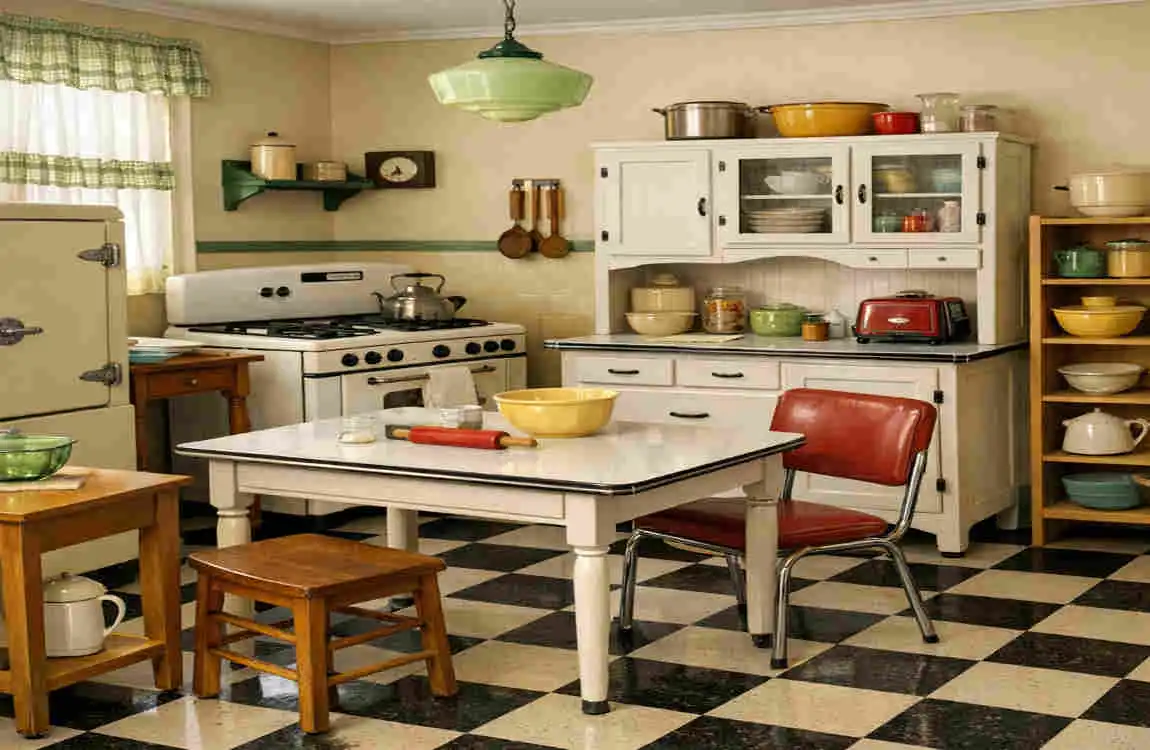
1930’s kitchen furniture was practical first, but it still had style. That balance is what makes it so special. People wanted furniture that could handle everyday use, but they also wanted their kitchens to look neat and pleasant.
A lot of 1930s kitchen design was influenced by Art Deco, which brought clean lines, smooth shapes, and a touch of elegance. At the same time, many homes kept a more farmhouse-inspired feel, especially in rural areas. This mix created furniture that was both useful and attractive.
You will often notice that 1930s pieces feel sturdy and simple. They do not rely on heavy decoration. Instead, their beauty comes from their shape, material, and function. That is why these pieces still fit well into many homes today.
Common Furniture Pieces
Several items were common in a 1930s kitchen. Each one played a clear role and helped keep the space organised.
Some of the most common pieces included:
- Kitchen cabinets
- Hoosier cabinets
- Kitchen tables
- Dining chairs
- Utility cupboards
A Hoosier cabinet was one of the most useful pieces. It often combined storage, workspace, and built-in containers for flour, sugar, and other pantry basics. A farmhouse kitchen table was also important because it served as the main eating and working area. Simple wooden dining chairs usually matched the table and added to the cozy, lived-in feel.
These pieces were made to last, and that durability is one reason people still seek them out for old-fashioned kitchen furniture collections and home décor projects.
Popular Materials Used in 1930’s Kitchen Furniture
Solid Wood
Wood was one of the most common materials in 1930s furniture. It was strong, easy to work with, and gave kitchens a warm, natural look. Many surviving pieces remain in good condition due to the quality of the wood and craftsmanship.
The most common woods included oak, maple, and pine.
- Oak was loved for its strength and visible grain.
- Maple had a smoother look and felt clean and classic.
- Pine was lighter and often more affordable, which made it a practical choice for many homes.
Wood furniture from this era often feels solid and dependable. Even with some wear, that wear can add to its charm rather than take away from it.
Metal Features
Metal also played a role in 1930s home style. It appeared in cabinet frames, table legs, drawer pulls, and small accent details. The most popular finishes were chrome and painted steel.
Chrome added a bright, modern touch that fit the growing interest in streamlined design. Steel cabinets were also common in some homes because they were durable and easy to clean. This made them especially useful in busy kitchens.
Metal details helped balance the softness of wood. Together, the two materials created a kitchen that felt both practical and stylish.
Porcelain and Enamel Finishes
Another major feature of antique kitchen cabinets and kitchen work surfaces was porcelain or enamel coating. These finishes were popular because they were smooth, neat, and simple to wipe clean.
That mattered a lot in a busy kitchen. People needed surfaces that could handle spills, flour, grease, and everyday mess. Enamel also gave furniture a polished look that felt fresh and cheerful.
Today, these finishes still appeal to people who want vintage kitchen ideas with real character. They offer both function and beauty, which is exactly what makes 1930s design so timeless.
Material Why It Was Popular Common Use
Oak Strong and long-lasting Cabinets, tables, chairs
Maple Smooth and classic Cabinets, shelves, storage pieces
Pine Light and affordable Tables, cupboards, painted furniture
Chrome Bright and modern-looking Hardware, trim, table legs
Steel Durable and easy to clean Cabinets, work surfaces
Enamel/Porcelain Simple to maintain Countertops, cabinet finishes
Classic Colours of 1930’s Kitchens
White Cabinets
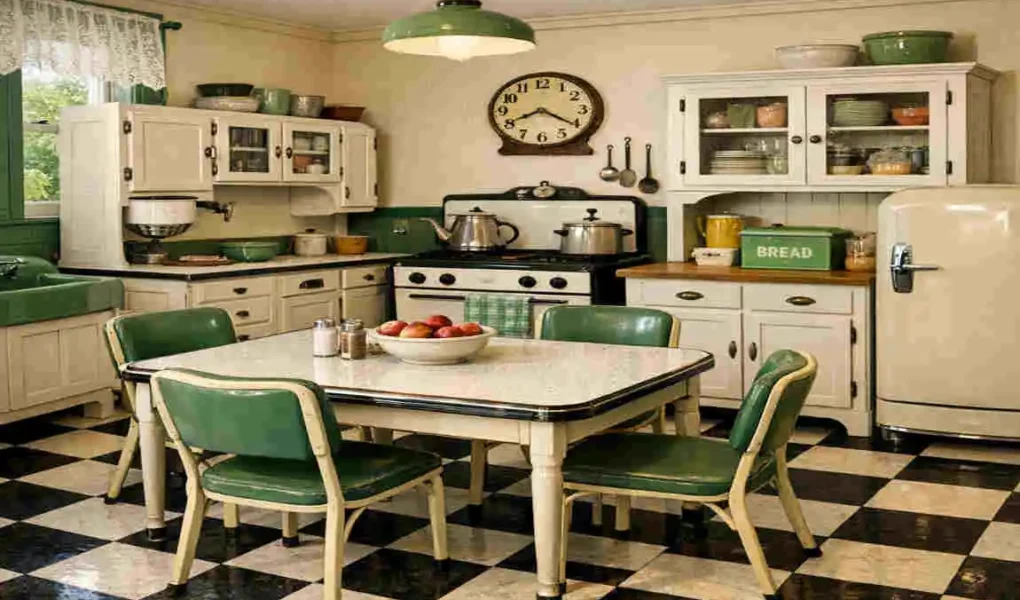
White was one of the most popular colours in 1930s kitchens. It made the space feel clean, bright, and orderly. At a time when natural light was important, white helped kitchens look larger and more open.
White cabinets also worked well with almost any accent colour. That made them easy to pair with wood furniture, metal details, and colourful accessories. Even today, white remains a strong choice for people who want a classic kitchen design.
Mint Green
Mint green is one of the most recognisable colours of the era. It gave kitchens a fresh and cheerful mood without feeling too bold. Many people still love it because it feels nostalgic but still light and easy to live with.
If you want a gentle way to bring in a retro feeling, mint green is a beautiful option. It works especially well with white trim, chrome hardware, and pale wood.
Soft Yellow
Soft yellow was another favourite. It added warmth and made the kitchen feel sunny, even on cloudy days. This colour worked well in homes seeking a friendly, welcoming mood.
Unlike stronger yellow shades, the softer versions felt calm and pleasant. They brought life to the room without overwhelming it. That balance is one reason they remain popular in retro kitchen furniture design today.
Pale Blue
Pale blue gave kitchens a quiet, clean look. It felt cool and calm, which made it a nice choice for walls, cabinets, or small decorative touches.
Blue was often used to soften the strong lines of cabinets and tables. It could make the room feel peaceful while still keeping that vintage flavour. For homeowners who want a light and airy look, pale blue is a strong choice.
Black-and-White Accents
The black-and-white combination was a classic part of 1930s kitchen design. It often showed up in flooring, tile, cabinet details, and small accessories. This look created strong contrast and gave the room a crisp, polished feel.
Black and white also worked well with nearly every other colour used in the era. It remains a simple way to add structure and visual interest to a vintage-inspired kitchen.
Must-Have 1930’s Kitchen Furniture Pieces
Hoosier Cabinet
The Hoosier cabinet is one of the most famous pieces of 1930’s kitchen furniture. It was more than a cabinet. It was a kitchen workstation, storage unit, and organising tool all in one.
Many Hoosier cabinets included flour sifters, spice drawers, enamel worktops, and small bins for ingredients. This made cooking more efficient before modern built-in kitchens became common. Today, a Hoosier cabinet can become the focal point of a room because it carries so much history and charm.
If you want just one piece that clearly reflects the era, this is one of the best choices.
Farmhouse Kitchen Table
A farmhouse kitchen table was the heart of the room. It was used for meals, food prep, schoolwork, sewing, and conversation. Its job was to be useful and dependable.
These tables were usually made of solid wood and had a sturdy, simple shape. They were not meant to be showpieces. Instead, they were made for real family life. That everyday honesty is what makes them so appealing now.
A farmhouse table fits beautifully in both traditional and mixed-style homes. It brings warmth without trying too hard.
Wooden Dining Chairs
Wooden dining chairs completed the kitchen set. In many 1930s homes, chairs were plain, solid, and comfortable rather than decorative. Their simple design helped the whole room feel balanced.
You may see spindle backs, ladder backs, or turned legs. These details were common and easy to maintain. Matching chairs were popular, but mismatched vintage chairs can also look great when they share a similar shape or wood tone.
Built-in Cabinets
Built-in cabinets became more common in the 1930s as kitchens became more organised. These cabinets helped homeowners store dishes, dry goods, and cookware more efficiently.
They often had a clean, fitted appearance that made the kitchen feel more structured. In many homes, built-ins were painted in light colours to keep the room bright. Today, they remain one of the best ways to capture the feel of traditional kitchen cabinets from the era.
Buffet and Hutch
A buffet and hutch added extra storage and display space. The lower section could hold plates, linens, or serving items, while the upper section displayed dishes, glassware, or special pieces.
This type of furniture brought both function and charm. It also gave homeowners a way to showcase beautiful items while keeping the kitchen organised.
Vintage Storage Cupboards
Storage cupboards were another everyday staple. These pieces came in many sizes and styles, but they all served the same purpose: to keep the kitchen tidy.
Some had glass doors, while others were solid wood. Some were painted, while others showed the natural grain. No matter the style, they helped define the practical spirit of antique wooden kitchen furniture.
How to Decorate with 1930’s Kitchen Furniture
Mix Vintage with Modern
One of the easiest ways to use 1930’s kitchen furniture today is to mix it with modern pieces. This approach gives you the charm of the past without giving up convenience.
For example, you might use a vintage table with newer appliances. Or you could pair old cabinets with modern lighting. The key is balance. Let the vintage pieces stand out, but keep the room functional for everyday life.
This mix works especially well in homes that want a classic kitchen design with a clean, practical feel.
Choose Authentic Hardware
Small details matter. If you want your kitchen to feel real and grounded, use authentic hardware where possible. Metal pulls, simple knobs, and classic hinges can make a big difference.
Chrome, brass, and porcelain-look hardware can all support the vintage style. These details may seem small, but they help tie the whole room together. When the hardware feels right, the furniture feels even more believable.
Add Retro Lighting
Lighting is another easy way to support the look. Pendant lights, schoolhouse-style fixtures, and simple glass shades can all echo the feel of a 1930s kitchen.
You do not need anything flashy. In fact, simple lighting often works best. It should brighten the room while keeping the overall mood soft and welcoming.
Decorate with Vintage Accessories
Accessories bring personality into the room. Things like enamel containers, patterned tea towels, old ceramic bowls, glass jars, and bread boxes can all support the vintage look.
Try not to overcrowd the kitchen. Choose a few meaningful pieces instead of filling every shelf. That way, the room feels thoughtful rather than cluttered.
Here are a few easy accessory ideas:
- Enamel canisters
- Glass storage jars
- Vintage-style dish towels
- Ceramic mixing bowls
- Old-fashioned wall clocks
Select Traditional Flooring
Flooring can make a big difference in how the room feels. In the 1930s, many kitchens used linoleum, checkered tile, or simple wood floors. Today, you can recreate that feeling with similar patterns or materials.
Black-and-white tile is a classic choice. Wood floors also work well if you want a warmer look. The goal is to support the rest of the room without stealing attention.
Benefits of Choosing 1930’s Kitchen Furniture
There are many reasons people still love 1930’s kitchen furniture.
First, it has timeless style. The look never feels too trendy, so it ages well. Second, it often offers durable craftsmanship. Many pieces were made from solid wood and built to last.
It is also a sustainable decorating choice. Using vintage pieces means reusing furniture instead of buying everything new. That is good for the home and better for the environment.
Another major benefit is character. Modern furniture can sometimes feel too uniform. Vintage pieces bring warmth, history, and personality into the kitchen. They help the room feel lived in and loved.
Finally, this style can increase home appeal. Many buyers and guests enjoy a kitchen that feels unique, welcoming, and thoughtfully designed.
Buying Guide: How to Find Authentic 1930’s Kitchen Furniture
Antique Stores
Antique stores are one of the best places to start. They often carry real vintage furniture, and the staff may know the history of each piece. You can inspect the furniture in person and check the structure, finish, and hardware.
This is helpful when you want to find a genuine Hoosier cabinet or an original farmhouse kitchen table.
Estate Sales
Estate sales are another strong option. These sales can offer well-kept furniture that has stayed in one home for many years. You may find pieces that are still in great condition and priced more fairly than in antique shops.
Online Vintage Marketplaces
Online vintage marketplaces give you more choice, but you need to be careful. Look closely at photos, measurements, and descriptions. Ask questions about damage, repairs, and originality before buying.
Restoration Tips
Some vintage pieces need light restoration. That may mean cleaning, tightening joints, touching up paint, or replacing missing hardware. Try to keep as much original material as possible.
The best restorations improve function without erasing history. That is especially important if you want to preserve the charm of antique kitchen cabinets and other original pieces.
Budget Considerations
Prices can vary a lot. Rare or well-preserved items usually cost more. If your budget is limited, start with smaller pieces like chairs, cupboards, or accessories. Over time, you can build your kitchen around them.
A smart approach is to decide what matters most to you: originality, condition, size, or style. That makes shopping easier and keeps you focused.
Caring for Vintage Kitchen Furniture
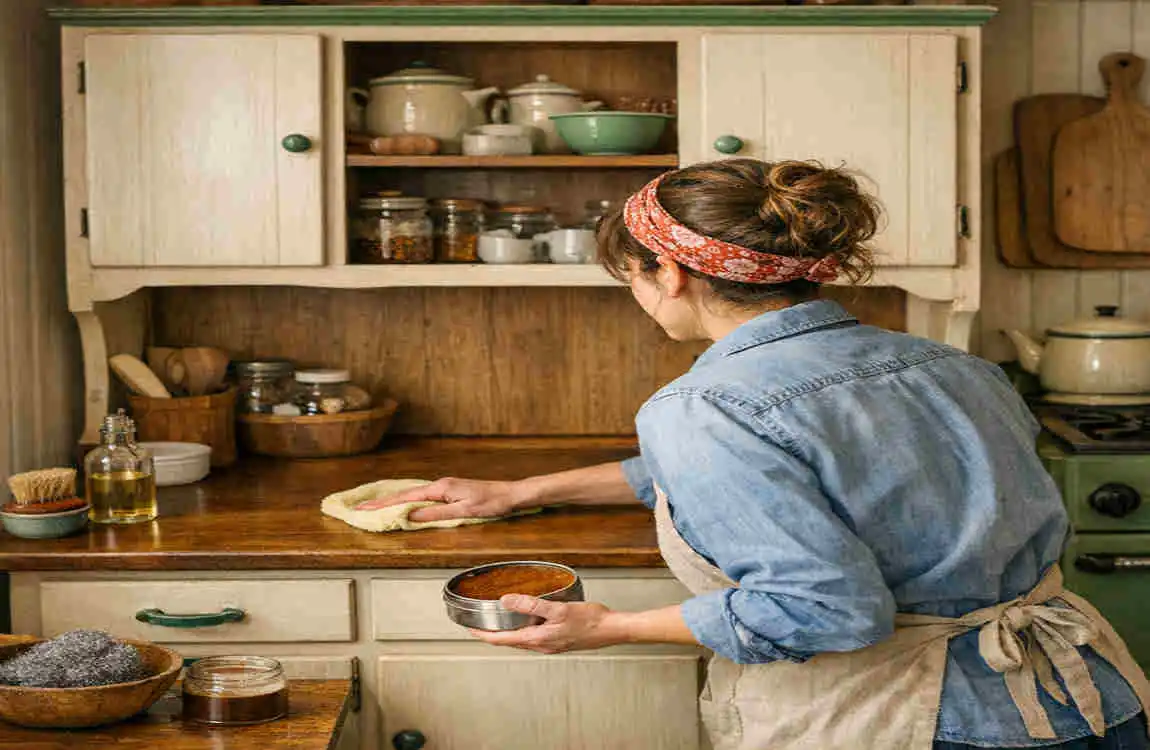
Vintage furniture lasts longer when you care for it properly. Start by gently cleaning wood surfaces with a soft cloth and a mild cleaner. Avoid soaking the wood because moisture can cause damage over time.
For enamel or porcelain finishes, use non-abrasive cleaners. Harsh scrubbing can dull or scratch the surface. If a piece has chips or worn areas, handle it with extra care.
Keep furniture away from excess moisture, especially near sinks or windows. Regular maintenance matters too. Tighten loose screws, check joints, and repair small problems early before they become bigger ones.
Simple care helps preserve the beauty of old-fashioned kitchen furniture for years to come.
Common Mistakes to Avoid
One common mistake is over-restoring antique furniture. If you strip away too much paint, replace too many parts, or make the piece look brand new, you may lose the character that makes it special.
Another mistake is mixing too many design styles. A little blending can work well, but too much can make the room feel confused. Try to keep the vintage theme clear.
Also avoid using harsh cleaning chemicals. They can damage finishes and reduce the value of the furniture.
Finally, never ignore structural repairs. A piece may look pretty, but if it is weak or unstable, it will not serve you well in daily use.
Frequently Asked Questions
What is 1930’s kitchen furniture?
1930’s kitchen furniture includes vintage cabinets, Hoosier cabinets, farmhouse tables, wooden chairs, and storage cupboards commonly found in homes during the 1930s.
What wood was commonly used in 1930s kitchen furniture?
Oak, maple, pine, and birch were among the most common woods because they were durable and had attractive grain patterns.
What colours were popular in 1930s kitchens?
Popular colours included white, mint green, pale blue, butter yellow, cream, and black-and-white combinations.
Is original 1930’s kitchen furniture valuable?
Yes. Authentic, well-preserved pieces can be valuable because of their craftsmanship, history, and growing interest from collectors and home decorators.
Can 1930’s kitchen furniture work in a modern home?
Absolutely. Many homeowners pair vintage furniture with modern appliances to create a kitchen that is both functional and full of charm.
How do I identify authentic 1930’s kitchen furniture?
Look for solid wood construction, original hardware, dovetail joints, enamel or porcelain surfaces, and signs of age that match the period.
| Feature | Details |
|---|---|
| Style | Functional, vintage, and Art Deco-inspired with simple lines and practical layouts. |
| Popular Materials | Solid oak, maple, pine, enamel-coated steel, porcelain, and chrome accents. |
| Common Furniture | Hoosier cabinets, farmhouse tables, freestanding cupboards, built-in hutches, and pantry cabinets. |
| Color Palette | White, cream, pale green, butter yellow, light blue, and black-and-white combinations. |
| Countertops | Porcelain enamel, wood butcher block, and early laminate surfaces. |
| Cabinet Design | Shaker-style or flat-panel cabinets with glass-front display doors. |
| Hardware | Chrome or nickel handles, porcelain knobs, and decorative metal pulls. |
| Flooring | Linoleum with checkerboard patterns, hardwood, or ceramic tile. |
| Lighting | Schoolhouse pendant lights, milk glass fixtures, and simple ceiling lamps. |
| Decor Elements | Vintage canisters, floral curtains, enamel cookware, open shelving, and colorful dishware. |
| Key Design Features | Efficient storage, built-in workspaces, durable materials, and bright, airy interiors. |
| Modern Update Ideas | Preserve vintage cabinetry while adding energy-efficient appliances and quartz countertops for a classic-meets-modern look. |