
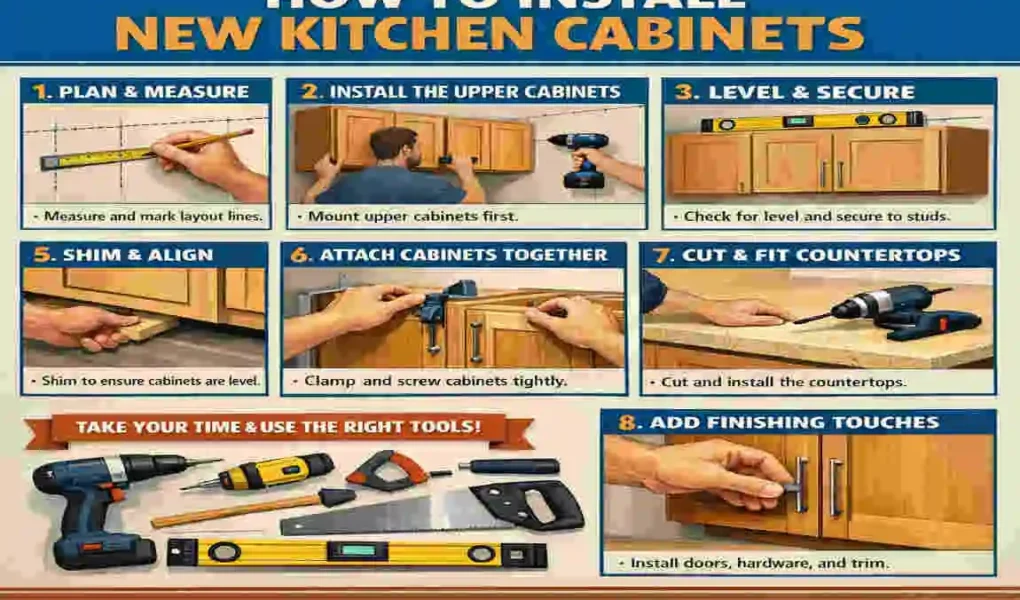
Kitchen renovations can be incredibly rewarding. According to recent surveys, 70% of UK homeowners opt for DIY improvements, especially in kitchens, to save costs and add a personal touch. But let’s face it—upgrading your cabinets can be daunting. From measurements to regulations, there’s a lot to consider.
If you’re wondering, here’s your answer: DIY can save you between £2,000 and £5,000 compared to hiring professionals. Plus, it gives you complete control over your kitchen’s layout and style. However, you need proper planning, the right tools, and a step-by-step approach to ensure success.
| Step | Action | Key UK Tips |
|---|---|---|
| Prepare | Remove old cabinets, clear debris, find wall studs, draw level lines at 900mm (base top) and 145cm (upper bottom). | Check for pipes/wires; use stud finder. Level floors with compound if uneven. |
| Gather Tools | Drill, spirit level, tape measure, clamps, screws (2.5″), shims, jigsaw. | Source from B&Q/Wickes; wear safety gear. |
| Install Uppers First | Hang ledger board, position corner unit, level/shim, screw to studs, clamp adjacent units. | Height: 15-18cm above worktop for appliances. |
| Install Bases | Place corner unit, level with legs/shims, clamp/screw sides, fix to wall studs. | Leave 5mm gaps for appliances; add plinths last. |
| Finish | Fit worktops (cut for sink/hob), doors/handles, seal gaps, connect services. | Gas Safe for gas; Part P for electrics. |
Tools and Materials
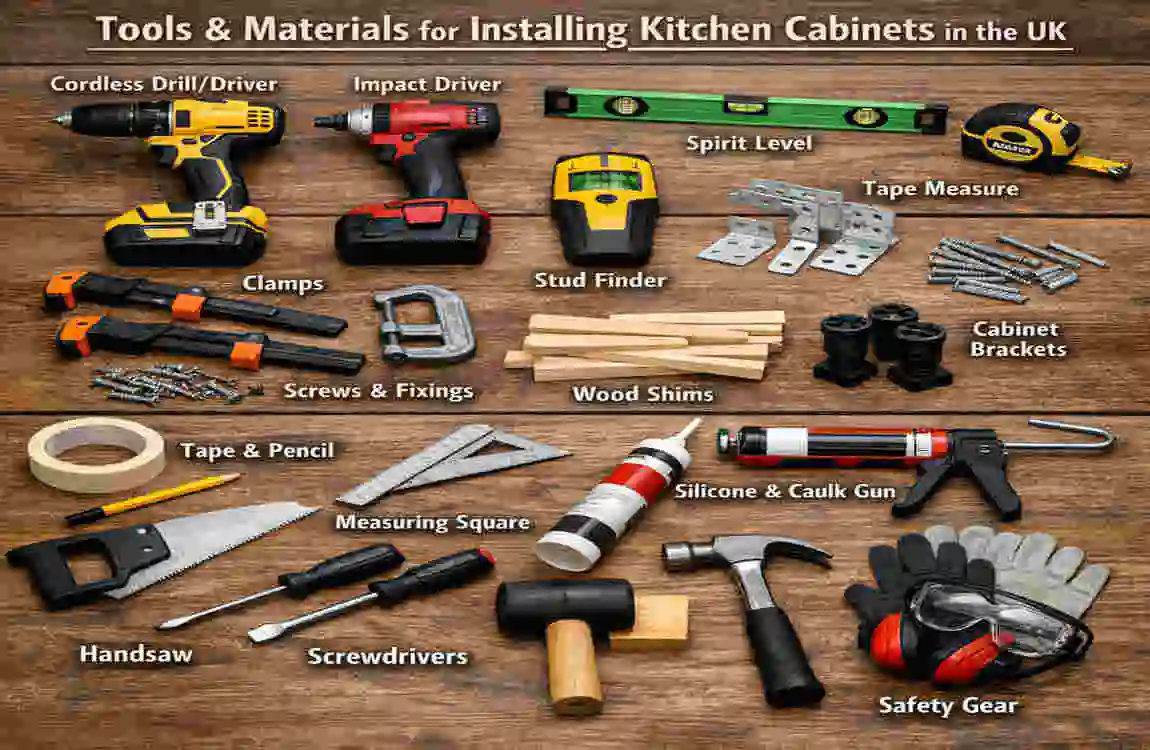
Before diving into the installation process, gather the right tools and materials. Here’s a complete list of essentials, along with where to source them in the UK.
CategoryItemsUK SourceApprox Cost
Power Tools Cordless drill, jigsaw, circular saw Wickes, Screwfix £150-300
Measuring/Level Spirit level, tape measure, laser level B&Q £50
Fixing Tools 2.5″ screws, wall plugs, shims, Screwfix £20
Safety Gear Gloves, goggles, dust mask, Amazon UK £15
Tips for Tools
- Rent vs. Buy: If you don’t plan on using tools frequently, consider renting them from stores like HSS Hire.
- Special Equipment: A pipe-and-cable detector is a must-have to avoid accidents when drilling into walls.
- Safety First: Always wear protective gear, especially when using power tools.
Preparation Steps
Proper preparation is the foundation of a successful kitchen cabinet installation. Here are the steps to get your kitchen ready:
Measure Your Kitchen
Start by measuring your kitchen space accurately. Create a detailed layout diagram, ensuring you account for:
- Corner units.
- Appliance gaps (e.g., cooker spacing of 5mm as per UK standards).
- Space for wall and base cabinets.
Remove Old Cabinets
If you’re replacing existing cabinets, remove them carefully:
- Turn off the power and water supply before starting.
- Check for asbestos if your home was built before the year 2000. Consult a professional if needed.
Prepare the Walls
- Locate Studs: Use a stud finder to identify strong points for securing cabinets.
- Check Levels: Use a spirit level to ensure your walls are plumb and even.
- UK Regulations: Comply with Building Regulations Part A (structure) and Part P (electrical safety).
plan the Layout
Start your layout planning by placing corner cabinets first. This will ensure the remaining cabinets align perfectly. Leave designated spaces for appliances like fridges and ovens.
Installing Upper Cabinets
Professionals often suggest starting with upper cabinets to avoid working around base units. Here’s how to do it:
Step-by-Step Guide
- Mark the Height: Use a tape measure to mark a line 145-150cm from the floor. This is the height for the bottom of the upper cabinets.
- Install a Ledger Board: Fix a temporary wooden board along the line to support the cabinets during installation.
- Find Studs: Mark the studs on the wall and drill pilot holes.
- Mount the First Cabinet: Position the first cabinet, shim it to ensure it’s level, and secure it to the wall studs using screws.
- Join Cabinets Together: Clamp adjacent cabinets together, drill pilot holes, and use screws to join them securely.
- Adjust Hinges and Doors: Align doors and hinges for a polished look.
Pros and Cons of Starting with Upper Cabinets
ProsCons
Easier access without base units in the way. Requires precise wall measurements.
Minimizes risk of damaging base units. Slightly more time-consuming
Installing Base Cabinets
Once the upper cabinets are installed, move on to the base cabinets. Proper leveling is key here.
Step-by-Step Guide
- Level the Floor: If your floor is uneven, use a self-leveling compound to create a solid foundation.
- Begin with the Corner Unit: Position the corner cabinet first and adjust its height using shims.
- Secure to the Wall: Drill pilot holes into the studs and secure the cabinet with screws.
- Add Kickboards: Attach kickboards at the base for a seamless look.
- Leave Appliance Gaps: Ensure there are proper gaps for appliances, such as 5mm for cookers.
Countertops and Finishing Touches
Once the cabinets are in place, it’s time to install the countertops and add finishing details.
Countertop Options
- Laminate: Affordable and easy to install.
- Quartz: Durable and stylish, but more expensive.
Installation Tips
- Secure countertops using brackets or adhesive.
- Seal edges to prevent water damage, especially in the damp UK climate.
- Add finishing touches like backsplashes, cabinet handles, and soft-close hinges.
UK Regulations and Safety
When installing kitchen cabinets in the UK, it’s essential to follow safety and building regulations.
Key Regulations
- Weight Limits: Upper cabinets should not exceed 15-20kg per unit.
- Gas and Electrical Work: Hire a Gas Safe engineer for gas pipes and a NICEIC-certified electrician for wiring.
- Insurance: Check your home insurance policy to ensure DIY work is covered.
Ignoring these regulations can lead to fines, safety hazards, or voided insurance claims.
Costs and Timeframe
Here’s a cost breakdown for DIY installation versus hiring professionals:
Item DIY Cost Pro Cost
Cabinets (10 units) £1,500 £1,500
Tools and Materials £300 £800 (labour)
Total £1,800 £3,000+
Timeframe: Most DIY installations take 2-4 days, depending on your experience.
Common Mistakes and Tips

Common Mistakes
- Skipping Levels: Uneven cabinets can ruin the entire look. Always double-check with a spirit level.
- Ignoring Electricals: plan for sockets and wiring before securing cabinets.
FAQs
How long does it take to install kitchen cabinets in a UK house?
Typically, DIY installation takes 2-4 days, depending on your skill level and the size of your kitchen.
Should I install base cabinets or wall cabinets first?
It’s recommended to install wall cabinets first to avoid working around the base units.
What tools do I need for DIY kitchen cabinet installation?
You’ll need a cordless drill, a jigsaw, a spirit level, a tape measure, screws, and safety gear.
How much does DIY cabinet installation save?
DIY can save you £2,000-£5,000 compared to hiring professionals.
Are there specific UK regulations for cabinet installation?
Yes, you must comply with building regulations for safety and structural integrity, especially for gas and electrical work.