Picture this: It is 7:30 AM on a Tuesday. You are rushing to get the kids to school, you cannot remember if you have enough milk for cereal, the toast is burning, and you are frantically searching for your keys. We have all experienced the chaotic morning rush in a traditional kitchen. Now, imagine a different scenario. You walk into your kitchen, and the lights gently turn on to a soft, morning glow. Your coffee maker has already brewed your favorite blend. A screen on your fridge kindly reminds you that you need milk, and with a simple voice command, you add it to your digital grocery list.
This is not a scene from a sci-fi movie; this is the reality of a smart home kitchen design in 2026.
The way we interact with our homes is changing rapidly. In fact, recent Statista reports show a massive 40% rise in Internet of Things (IoT) kitchen adoption over the last few years. Homeowners are no longer just looking for beautiful countertops and fresh paint. They want spaces that actively work for them, anticipating their needs and simplifying their daily routines.
As experts in home redesign consultations, we have seen firsthand how integrating the right technology can turn a frustrating cooking space into a seamless, joyful hub for the whole family. If you are ready to bring your house into the future, you are in the right place.
| Voice-Activated Appliances | Ovens, fridges, and faucets controlled via Alexa or Google Assistant. | Hands-free operation; inventory tracking via fridge cams . | Samsung Family Hub fridge. |
| IoT Lighting Systems | Smart bulbs like Philips Hue with app/mood syncing. | Energy savings up to 30%; zoned ambiance for cooking . | Motion-sensor LED strips. |
| Automated Storage | Drawers with weight sensors and auto-inventory apps. | Maximizes space in urban homes; reduces clutter . | Pull-out smart cabinets. |
| Touchless Sinks | Motion faucets with temp presets. | Hygiene boost; water conservation . | Delta touchless taps. |
| AI Recipe Hubs | Wall screens suggesting meals from fridge stock. | Personalized cooking; waste reduction . | LG ThinQ displays. |
Why Smart Home Kitchen Design is the Must-Have
You might be wondering, “Do I really need a kitchen that talks to me?” The short answer is: once you experience it, you will never want to go back.
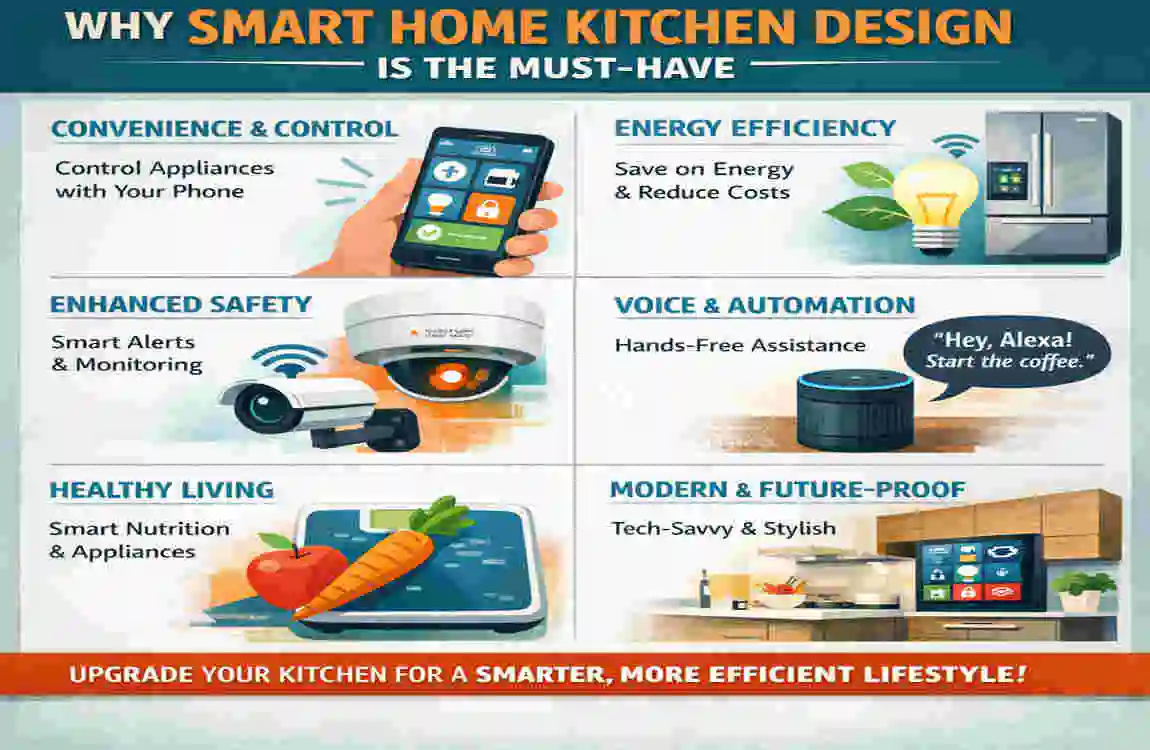
Upgrading to a smart home kitchen design is no longer just a trendy luxury; it is becoming a standard expectation for modern living. Here is a closer look at why these tech-forward spaces are the absolute must-have upgrades for 2026.
The Real-World Benefits
- Massive Energy Savings: Smart appliances are incredibly efficient. By optimizing power usage and water flow, a fully integrated smart kitchen can reduce your energy bills by up to 30%.
- Ultimate Time Efficiency: Imagine preheating your oven on your drive home from work or having your fridge automatically order groceries when you run low. These small conveniences add up to hours of saved time every month.
- Increased Resale Value: Buyers in 2026 are actively searching for turnkey, tech-ready homes. A modern, app-integrated kitchen significantly boosts your property’s market value.
The Trends Taking Over
If you looked at the highlights from the 2026 Consumer Electronics Show (CES), you saw one major theme: artificial intelligence is taking over the culinary world. We are seeing a huge surge in voice-controlled cooking features and app-integrated appliances. Your kitchen is becoming a highly trained sous-chef.
Common Pitfalls to Avoid
Of course, jumping into a smart kitchen remodel requires careful planning. The most common mistake homeowners make is buying random, disconnected gadgets that do not communicate with each other. This creates app fatigue, where you have to open six different applications to make dinner. Another pitfall is ignoring the aesthetic; a smart home kitchen design should seamlessly blend technology into the background, not look like a sterile computer lab.
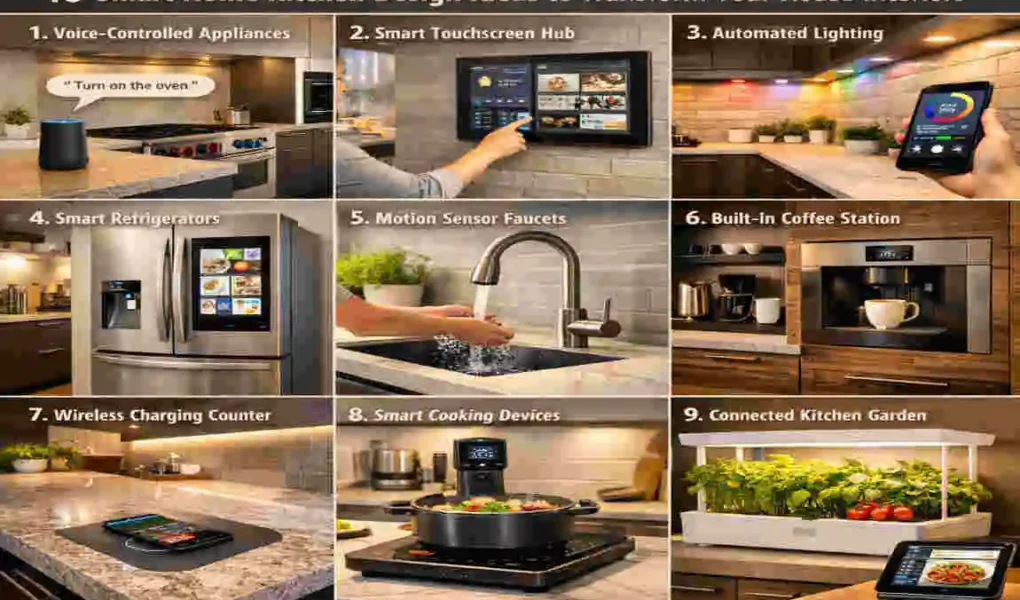
Now that you know why you need to upgrade, let’s dive into the 10 game-changing ideas that will revolutionize your space.
Voice-Activated Smart Appliances
Imagine your hands are covered in flour, and you realize you forgot to preheat the oven to 400 degrees. In a traditional kitchen, you have to stop what you are doing, wash your hands, set the dial, and wait. In a 2026 smart kitchen, you say, “Hey Google, preheat the oven to 400 degrees,” and keep kneading your dough.
Voice-activated smart appliances are the cornerstone of a modern kitchen. From Alexa-enabled ovens to smart refrigerators equipped with interior inventory cameras, these devices take the friction out of cooking.
Sleek and Hidden Aesthetics
The beauty of these modern appliances is how well they blend into your home. You do not have to sacrifice your minimalist house aesthetic for high-tech features. Today’s smart appliances are designed with sleek, hidden installations. Control panels fade to black when not in use, and many voice-activated features require zero physical buttons.
IoT Lighting and Mood Ambiance
Lighting completely dictates a room’s mood. Traditional on/off switches are a thing of the past. Today, IoT (Internet of Things) lighting systems like Philips Hue or Nanoleaf can completely transform your kitchen’s atmosphere with a single tap on your phone or a quick voice command.
Custom Zones for Every Activity
Your kitchen serves multiple purposes, and your lighting should reflect that. A smart home kitchen design allows you to create custom lighting zones.
- Prep Time: When you are chopping vegetables or reading a recipe, you need bright, cool-toned task lighting over the counters.
- Dining Time: When it is time to eat, your system can automatically dim the overhead lights and switch to a warm, inviting amber glow over the dining island.
Many of these smart kitchen lighting ideas also sync directly with your cooking apps. If your smart oven timer goes off, your overhead lights can gently pulse to let you know dinner is ready. Furthermore, installing motion sensors underneath your cabinets provides a hands-free, energy-saving glow when you sneak in for a midnight snack.
Automated Cabinetry and Storage
When we talk about smart home kitchen design, we often focus on appliances. But the cabinetry itself is getting a massive high-tech upgrade in 2026.
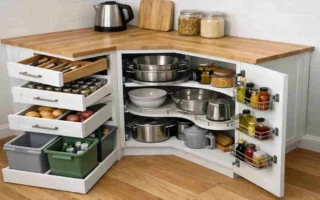
Say goodbye to losing Tupperware lids in the dark corners of your cupboards. We are now seeing the rise of automated cabinetry and highly intelligent storage solutions.
Weight Sensors and Auto-Inventory
Imagine pull-out smart drawers equipped with subtle weight sensors. These sensors know exactly how much flour, sugar, or coffee beans you have left in your designated storage containers. When the weight drops below a certain level, the drawer automatically pings your phone or adds the item to your digital grocery list.
This space-maximizing trend is especially popular for urban houses where storage is limited. Knowing exactly what you have helps you avoid overbuying and cluttering your valuable cabinet space. These smart home kitchen design storage hacks keep your space incredibly organized and efficient.
Touchless Faucets and Sinks
If the past few years have taught us anything, it is the importance of hygiene. The kitchen sink is notorious for harboring germs, especially when you handle raw meat and then touch the faucet handles to wash your hands.
Touchless faucets and sinks are the ultimate post-pandemic must-have for your home.
Precision Control via App
These aren’t the frustrating, laggy motion-sensor taps you find in public restrooms. The 2026 models are incredibly precise. With a simple wave of your hand or a voice command, the water flows instantly.
Even better, you can set water temperature presets via your smart home app. If you have a baby, you can say, “Turn on the sink to formula temperature,” ensuring water is perfectly warm every time. If you need to boil pasta quickly, you can command the faucet to dispense water at its absolute hottest setting. When you pair these touchless systems with smart dishwashers that monitor water hardness and soil levels, you create an incredibly hygienic, efficient cleaning zone.
AI-Powered Recipe Hubs
Cookbooks are beautiful, but they take up counter space and stain easily. Tablets are great, but their screens turn off right when you need to read the next step. Enter the AI-powered recipe hub.
Large, wall-mounted or fridge-mounted screens, like the Samsung Family Hub, act as the brain of your kitchen.
Generative AI for Meal Prep
Here is where the 2026 tech truly shines. These smart kitchen recipe displays do not just show you static recipes. They use generative AI to customize meals based on what you already have in your house.
The hub communicates with your smart fridge cameras and your automated pantry drawers. It sees that you have chicken, heavy cream, and spinach that is about to expire. The AI instantly generates three different, step-by-step recipe options utilizing exactly those ingredients. It reduces food waste, saves you money, and answers the dreaded daily question: “What is for dinner?”
Sustainable Smart Counters
We all want to do our part for the environment, and an eco-friendly smart home kitchen design makes sustainability effortless. The surfaces you cook on are evolving from simple stone to highly interactive, energy-saving tools.
Heat Mapping and Recycled Materials
Induction cooktops are becoming the standard, completely replacing gas and traditional electric stoves. These cooktops use magnetic fields to heat your pots and pans directly, meaning zero energy is wasted heating the air around the pan. In 2026, these surfaces feature advanced heat-mapping technology, allowing you to place a pot anywhere on the counter, and the surface will detect its size and heat only that specific area.
Furthermore, these smart counters are increasingly made from recycled quartz and glass and are embedded with sensors. They tie perfectly into greenhouse transformations, proving that you do not have to sacrifice cutting-edge technology to maintain an eco-friendly lifestyle.
Multi-Functional Islands with Charging Zones
The kitchen island has always been the social gathering point of the house. It is where kids do homework, where guests drink wine, and where families catch up on the day. Now, it is also a powerful technological hub.
Hidden Tech for a Clean Flow
Nobody likes messy, tangled cords ruining the look of their beautiful countertops. Multi-functional islands in 2026 feature hidden, wireless charging surfaces built directly into the stone or wood. You set your phone or tablet down on a designated spot, and it charges seamlessly.
For appliances that do require plugs, sleek pop-up outlets rise from the counter with a simple press and hide away completely flush when not in use. We are even seeing islands with integrated, flush-mounted digital scales so that you can weigh baking ingredients directly on the counter without a separate clunky gadget. This keeps the house flow completely uninterrupted and visually clean.
Smart Waste Management Systems
Taking out the trash is not the most glamorous part of cooking. Still, smart home kitchen design is making it significantly easier and far more environmentally friendly. The push towards zero-waste kitchens in 2026 is driving incredible innovations in how we handle our garbage.
Auto-Sorting and Compost Tracking
Imagine a waste bin that does the sorting for you. Smart bins use internal cameras and sensors to determine if an item is trash, plastic recycling, or glass, and automatically route it to the correct internal compartment.
For the eco-conscious homeowner, compost trackers are a game-changer. These small, odorless countertop composters break down your food scraps in a matter of hours, turning them into nutrient-rich garden soil. The bin connects to your grocery app, tracks which foods you throw away most often, and helps you adjust your future shopping habits to reduce waste.
Personalized Climate Control
Have you ever noticed how your kitchen becomes unbearably hot when the oven is on, even while the rest of the house is freezing? Or how baking bread is impossible on a humid day?
Personalized climate control solves this entirely. Smart kitchen ventilation systems and zoned HVAC (Heating, Ventilation, and Air Conditioning) are standard in top-tier kitchen remodels.
Humidity Sensors for Baking Perfection
By installing specialized climate zones in your kitchen, the room automatically adjusts its temperature based on what appliances are running. If the smart oven is roaring at 450 degrees, the HVAC system automatically directs more cool air into the kitchen to keep the chef comfortable.
Furthermore, integrated humidity sensors can monitor air moisture. If you are baking sensitive pastries or proofing dough, the system can slightly adjust the ambient humidity to ensure you get perfect, bakery-quality results every single time.
Seamless App Ecosystems
We mentioned earlier that app fatigue is a major pitfall. You do not want a kitchen where the lights, fridge, faucet, and oven all require different apps to function.
The most crucial element of a 2026 smart home kitchen design is a seamless app ecosystem.
The Magic of the Matter Protocol
In 2026, future-proofing your home means ensuring it is compatible with the Matter protocol. This is a universal language that allows smart devices from different brands (such as Apple HomeKit, Google Home, and Amazon Alexa) to communicate seamlessly with one another.
Instead of juggling multiple apps, you control your entire kitchen through a single unified dashboard on your phone or an AI recipe hub. You can create a single routine called “Good Morning.” With one tap, your blinds open, your smart lights fade on, your coffee brews, and your daily schedule displays on your fridge. It is absolute, effortless harmony.
Implementation Guide: Bringing Smart Home Kitchen Design to Life
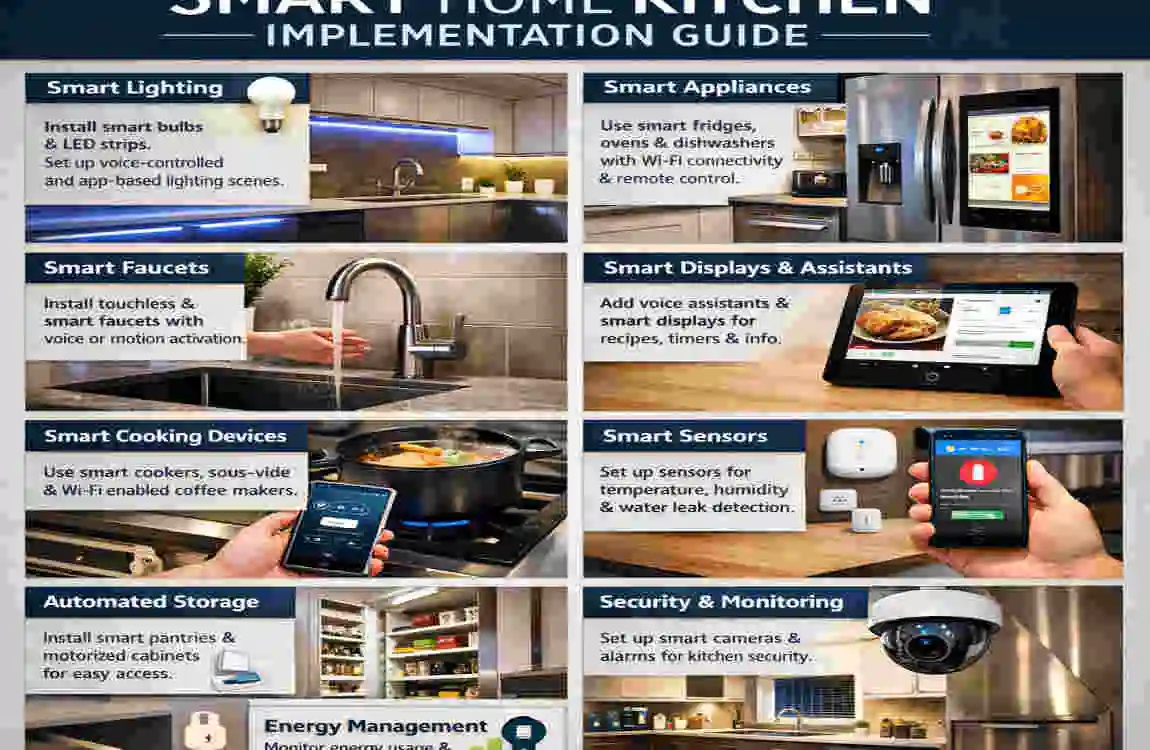
Reading about these features is exciting, but how do you actually make them a reality in your own house? Transitioning from a standard kitchen to a fully integrated smart kitchen requires some planning.
Step-by-Step Implementation
- Assess Your Internet Connection: Before buying a single appliance, upgrade your home’s Wi-Fi router. A smart kitchen requires a robust, stable internet connection to handle dozens of devices communicating simultaneously.
- Check Compatibility: Ensure that every device you purchase operates on the same ecosystem (like Google Home or Apple HomeKit) or is Matter-certified.
- Hire the Right Pros: You are not just hiring a carpenter; you need electricians and tech-savvy contractors who understand IoT integration.
Budgeting for Your Smart Kitchen
Costs can vary wildly depending on the scale of your remodel. Here is a quick breakdown to help you plan:
Project Scope, Estimated Cost, and Included Features
Basic Upgrade $5,000 – $10,000 Voice-activated lights, a smart faucet, and one major smart appliance (like a fridge).
Mid-Range Remodel $15,000 – $30,000 Multiple smart appliances, integrated charging islands, and AI recipe hubs.
Luxury Transformation $35,000 – $50,000+ Full automated cabinetry, zoned climate control, smart waste systems, and custom eco-counters.
Smart Home Kitchen Design – FAQs
What is a smart home kitchen?
A smart home kitchen uses connected devices and automation (like smart appliances, lighting, and voice assistants) to make cooking and daily tasks easier and more efficient.
What are the must-have smart kitchen features?
Key features include:
- Smart refrigerators
- Voice-controlled assistants
- Smart lighting systems
- Automated faucets
- Wi-Fi-enabled ovens
Are smart kitchens expensive to build?
Smart kitchens can be budget-friendly or high-end depending on the devices you choose. You can start small and upgrade over time.
How does a smart kitchen save time?
It saves time by allowing remote control, automation, and scheduling, such as preheating ovens or managing grocery lists automatically.
Is a smart kitchen energy efficient?
Yes, most smart appliances are designed to reduce energy usage, helping lower electricity bills and environmental impact.
Can I control my smart kitchen with my phone?
Yes, most smart kitchen devices connect to mobile apps, allowing full control from anywhere.
What voice assistants work in smart kitchens?
Popular options include:
- Amazon Alexa
- Google Assistant
- Apple Siri
Is it difficult to install a smart kitchen system?
No, many devices are easy to install and do not require major renovation. Some advanced setups may need professional help.
Are smart kitchens safe?
Yes, they often include safety features like automatic shut-off, alerts, and monitoring systems.
Can I upgrade my existing kitchen into a smart kitchen?
Absolutely! You can gradually add smart devices without redesigning your entire kitchen.