
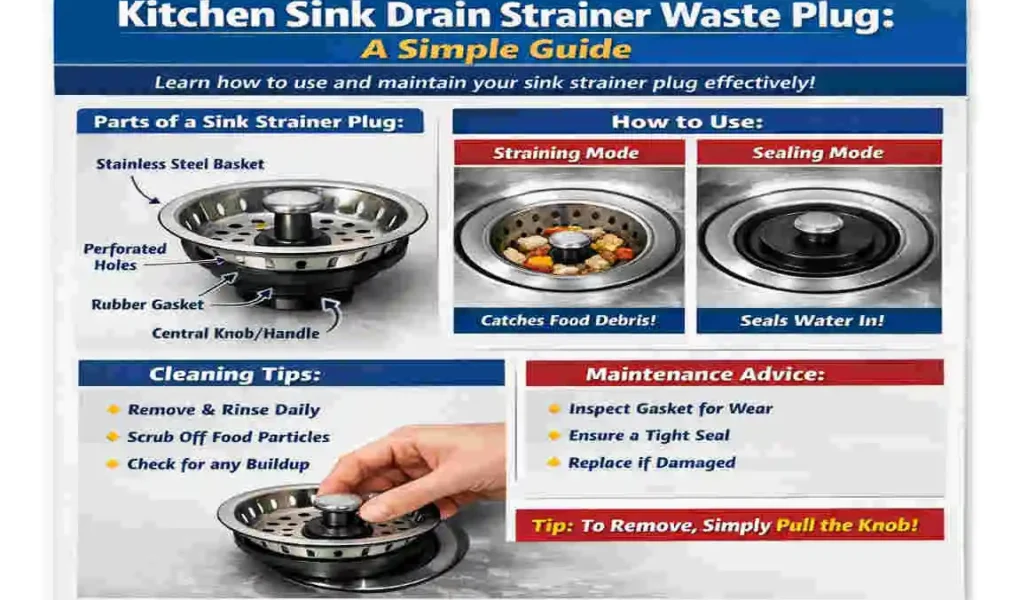
A kitchen sink drain strainer waste plug is a small fitting, but it plays a big role in your kitchen. It helps prevent food scraps, peels, and other small debris from going down the drain while still allowing water to flow smoothly.
If you have ever dealt with a clogged sink, you already know how annoying it can be. A good strainer and waste plug can help you avoid that problem. It keeps your kitchen cleaner, protects your plumbing, and saves you from extra repair costs.
What Is a Kitchen Sink Drain Strainer Waste Plug?
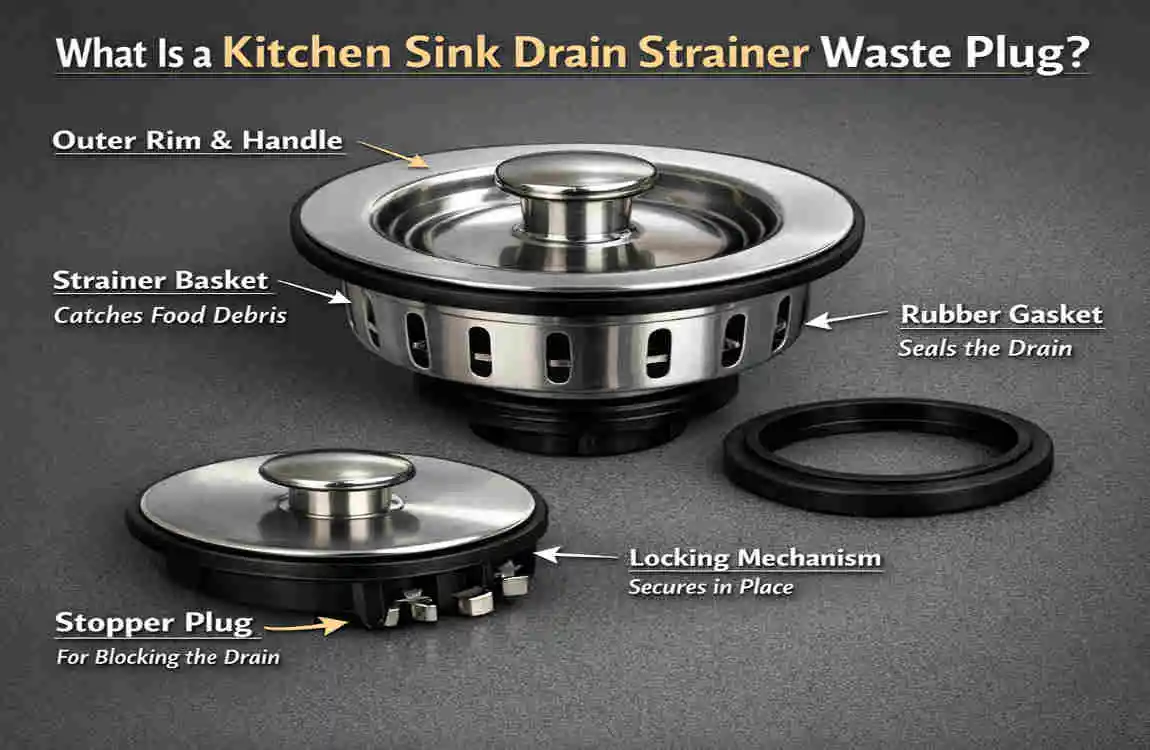
Simple Meaning
A drain strainer is a small basket or mesh-like fitting that catches food particles before they enter the drain. A waste plug is the part that can block the drain when you want to fill the sink with water.
How They Work Together
These two parts often work as a pair. The strainer prevents debris from entering the pipe, and the plug helps seal the sink when needed. Together, they make kitchen cleaning easier and safer for your plumbing.
Common Materials
Most drain strainers and waste plugs are made from:
- Stainless steel
- Plastic
- Rubber
- Silicone
- Brass or metal blends
Stainless steel is often the best choice because it lasts longer and resists rust.
Why Does Every House Need a Kitchen Sink Drain Strainer Waste Plug?
Helps Prevent Blockages
Food waste is one of the main reasons kitchen sinks get clogged. A strainer catches small pieces before they move into the drain pipe. This simple step can save you from a lot of trouble later.
Keeps Plumbing Cleaner
When less waste goes into the pipe, the plumbing stays cleaner. That means fewer bad smells, less grease buildup, and fewer slow-drain problems.
Reduces Repair Costs
A blocked drain can lead to plumber visits, chemical cleaners, or even pipe damage. A small fitting like this helps lower those risks. For many homes, it is a very smart and low-cost solution.
Types of Kitchen Sink Drain Strainer Waste Plugs
Standard Basket Strainers
These are the most common type. They sit in the drain and catch food debris in a basket shape. They are easy to remove and clean.
Pop-Up Waste Plugs
These plugs open and close with a simple push. They are useful when you want a cleaner sink look and easy water control.
Rubber and Silicone Plugs
These are flexible and easy to use. They are often simple, affordable, and suitable for temporary or light use.
Metal Drain Strainers
Metal strainers are strong and long-lasting. They often look better in modern kitchens and hold up well with regular use.
Combination Designs
Some products combine the strainer and plug into one unit. These are convenient because they save space and make using the sink easier.
How to Choose the Right Kitchen Sink Drain Strainer Waste Plug for House
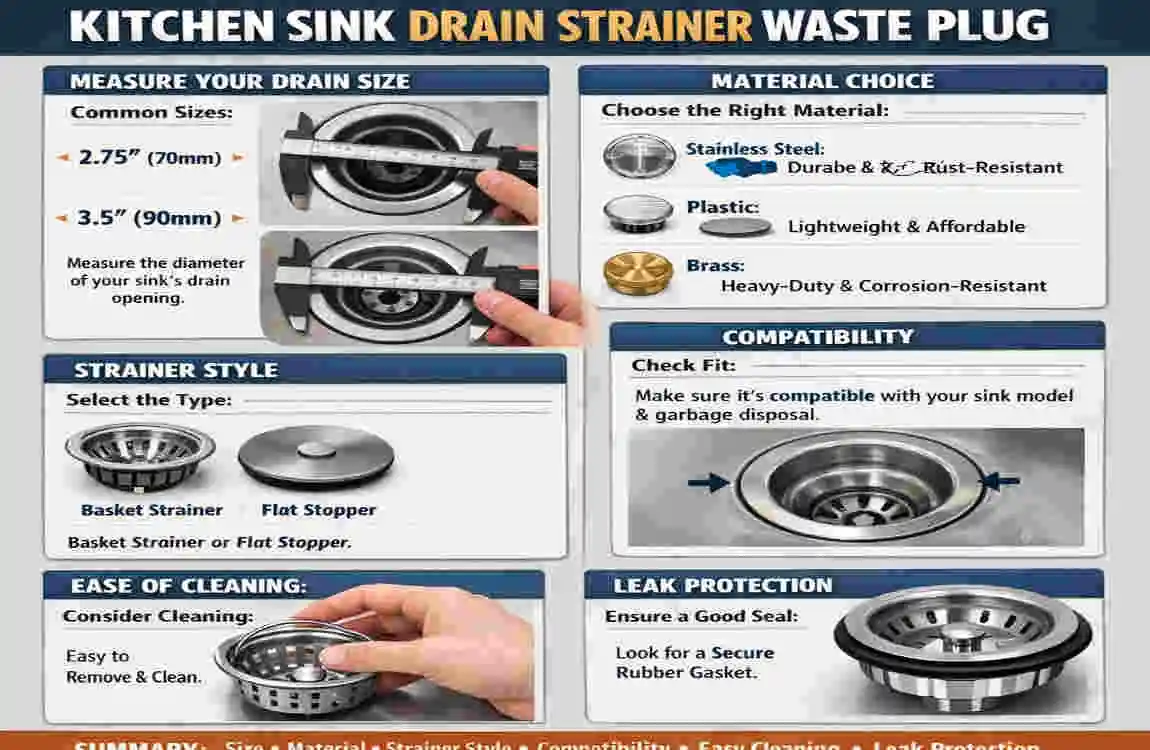
Measure the Sink Drain Opening
Before buying, always check the size of your drain opening. Even a small size mismatch can cause leaking or poor fitting.
Choose Durable Material
If you want something that lasts, go for stainless steel or strong metal. These materials resist rust and are easier to clean.
Check Sink Compatibility
Not all strainers fit every sink. Some are made for single bowls, while others suit double sinks or specific drain styles. Make sure the product matches your sink type.
Think About Cleaning
A good strainer should be easy to remove and wash. If cleaning feels difficult, you may stop using it properly, which defeats the purpose.
Match Your Kitchen Needs
If your kitchen gets heavy daily use, choose a stronger design. If you want simple water sealing for light use, a basic plug may be enough.
How to Install a Kitchen Sink Drain Strainer Waste Plug
Gather the Needed Tools
You may need a wrench, plumber’s putty, a cleaning cloth, and a bucket. Keeping everything ready makes the job easier.
Remove the Old Fitting
If there is an old strainer or plug, remove it carefully. Check for old seal material, dirt, or grease around the drain opening.
Clean the Drain Area
Before fitting the new part, clean the sink drain opening properly. A clean surface helps create a better seal and reduces the chance of leaks.
Fit the New Strainer
Place the strainer in the opening and secure it tightly. Make sure it sits correctly and does not wobble.
Install the Waste Plug
Insert the plug according to the design. If it is a pop-up type, test the opening and closing action once or twice.
Test for Leaks
Run some water and watch carefully. If water drips under the sink, tighten the fitting or check the seal again.
Cleaning and Maintaining Your Kitchen Sink Strainer
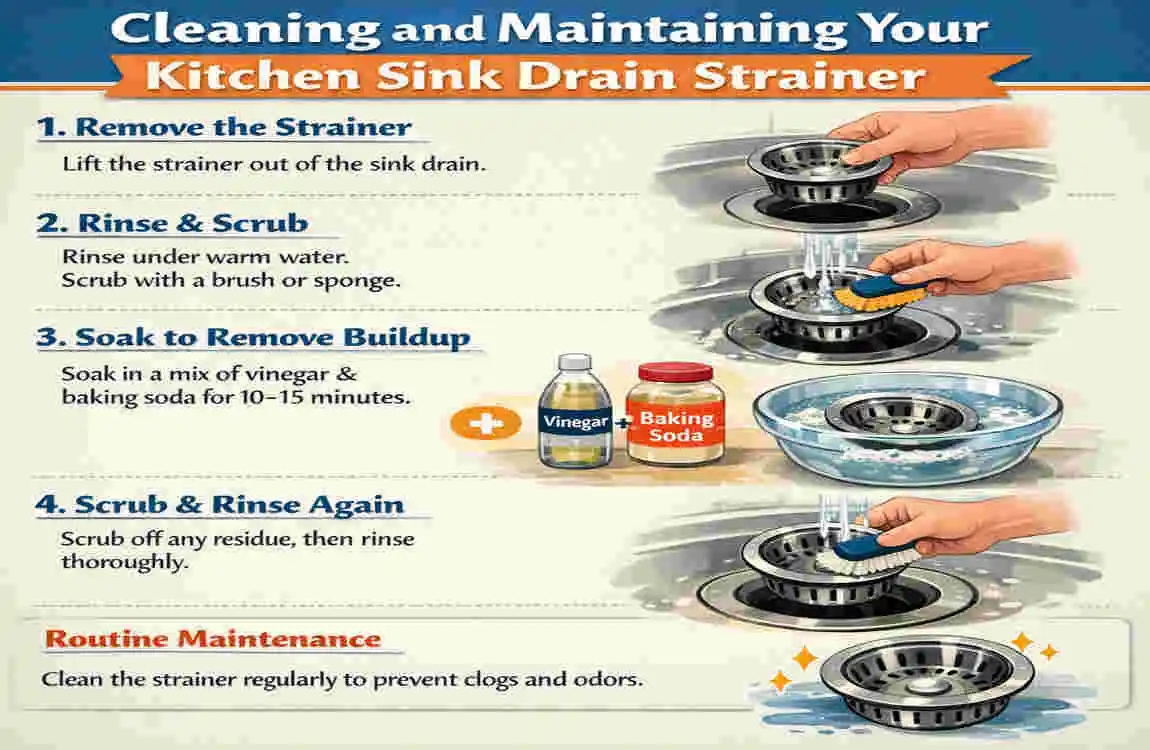
Remove Waste Daily
Do not let food waste stay in the strainer for too long. Empty it after use so it does not smell or block water flow.
Wash with Warm Water
Warm water helps loosen grease and food residue. A quick wash keeps the strainer fresh and usable.
Remove Grease and Residue
Grease can stick to the strainer, reducing water flow. Use mild soap and a brush or sponge to clean it properly.
Check for Damage
Look at the plug and strainer from time to time. If you see cracks, rust, or loosened parts, replace them early.
Replace Worn Parts
Even the best drain fitting will wear out eventually. Replacing damaged parts on time helps prevent bigger plumbing issues.
Simple Cleaning Routine
- Remove leftover food after each use
- Rinse the strainer with warm water
- Clean it with mild soap once a week
- Check the plug for wear or damage
- Replace old parts when needed
Common Problems and Simple Solutions
Slow Drainage
If water drains slowly, the strainer may be blocked with food waste. Clean it first before looking for deeper pipe issues.
Water Leakage
Leakage often occurs due to a loose seal or poor fit. Tighten the parts and check if the rubber ring is in good condition.
Bad Odors
Bad smells usually come from trapped food and grease. Clean the strainer regularly and rinse it well after use.
Loose Waste Plug
A loose plug may not seal the sink properly. If needed, replace worn rubber parts or buy a better-fitting plug.
Poor Water Flow
If water still flows badly after cleaning the strainer, the problem may be deeper inside the drain pipe. In that case, you may need extra cleaning or professional help.
FAQ
What is a kitchen sink drain strainer waste plug?
It is a drain accessory that helps filter food particles and other debris while also allowing the sink drain to be sealed when needed.
How often should I clean my kitchen sink strainer?
For best results, remove food waste daily and give the strainer a deeper clean once a week.
Are kitchen sink drain strainers available in different sizes?
Yes. Drain strainers and waste plugs come in different sizes, so always measure your sink drain before buying one.
Can a kitchen sink strainer prevent clogged drains?
Yes. It can catch food particles and other debris before they enter the plumbing system.
| Feature | Information |
|---|---|
| Purpose | Catches food waste and debris before they enter the drain. |
| Drain Strainer | Helps prevent clogs by filtering solid particles. |
| Waste Plug | Blocks the drain to hold water in the kitchen sink. |
| Common Materials | Stainless steel, plastic, silicone, and rubber. |
| Benefits | Reduces blockages and keeps plumbing cleaner. |
| Cleaning | Remove food waste and wash regularly with warm water. |
| Replacement | Replace the strainer or plug if it becomes damaged or loose. |