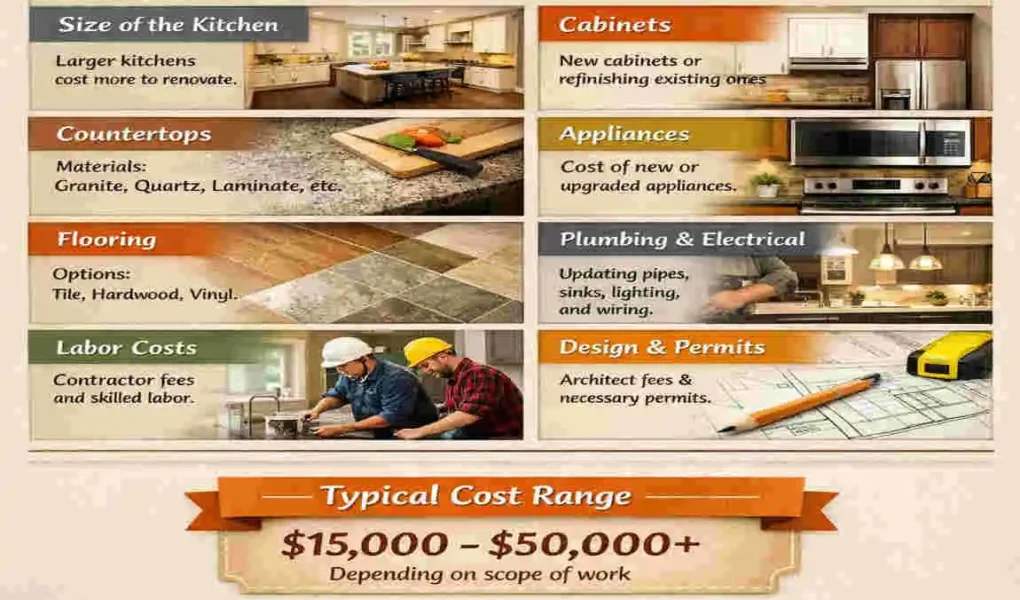
Redoing a kitchen can be exciting, but it can also feel expensive fast. The final price depends on many things, like the size of the kitchen, the materials you choose, and how much work the layout needs.
When people ask how much it costs to redo a kitchen, there isn’t one fixed answer. A small refresh costs much less than a full renovation. A project that keeps the same layout also usually costs less than one that moves plumbing or walls.
A kitchen redo can mean many different things. For some homeowners, it means new paint, cabinets, and countertops. For others, it means a full teardown with new flooring, lights, appliances, and plumbing.
Average Cost to Redo a Kitchen

Typical Cost Ranges
A kitchen redo can cost a few thousand dollars or well over $50,000, depending on the scope. Small updates stay on the lower end, while full remodels with custom materials reach much higher.
Here is a simple cost guide:
Project Type Typical Cost Range
Small update $5,000–$15,000
Mid-range remodel $15,000–$40,000
High-end renovation $40,000–$100,000+
Small, Medium, and Large Kitchens
A small kitchen usually costs less because it needs fewer materials and less labor. A medium kitchen often lands in the middle range. A large kitchen costs more because cabinets, flooring, countertops, and installation all increase with size.
Labor vs. Materials
Labor often takes a big share of the budget. Materials matter too, but skilled work like cabinet installation, plumbing, and electrical upgrades can quickly raise the total.
Cost per Square Foot
Some homeowners use square foot pricing to estimate costs. This can help, but it is only a rough guide. A simple kitchen with budget materials may cost far less than a high-end kitchen of the same size.
Location Matters
Local labor rates also affect the final price. In some areas, contractors charge more because demand is high or skilled labor is harder to find.
Major Factors That Affect Kitchen Remodeling Costs
Kitchen Size and Layout
The bigger the kitchen, the more everything costs. More square footage means more flooring, paint, cabinets, and time.
The layout matters too. Keeping the same layout saves money. If you move the sink, stove, or fridge, costs usually rise.
Cabinets and Countertops
Cabinets are often one of the biggest expenses. Countertops can also make a big difference, especially if you choose premium stone.
Flooring, Backsplash, and Appliances
Flooring can be affordable or expensive depending on the material. The same is true for backsplash tile and appliances. A basic kitchen appliance package costs less than a high-end one with smart features.
Plumbing, Electrical, and Lighting
These are the hidden cost areas many homeowners forget. If you need new wiring, new outlets, updated plumbing, or better lighting, the budget can climb fast.
Structural Changes
Removing walls, changing the footprint, or adding windows can create a beautiful kitchen. Still, those changes also raise labor, permit, and material costs.
Permits and Professional Fees
If the project is large enough, you may need permits. You may also need an architect, designer, or specialist contractor.
Kitchen Cabinets, Countertops, and Appliances
Cabinets
Cabinets usually eat up a large part of the budget. You can choose:
- Stock cabinets: cheapest
- Semi-custom cabinets: middle range
- Custom cabinets: highest cost
If your existing cabinets are in good shape, refacing or repainting them can save money.
Countertops
Countertops vary a lot in price. Common options include:
- Laminate: budget-friendly
- Quartz: popular and durable
- Granite: natural and premium
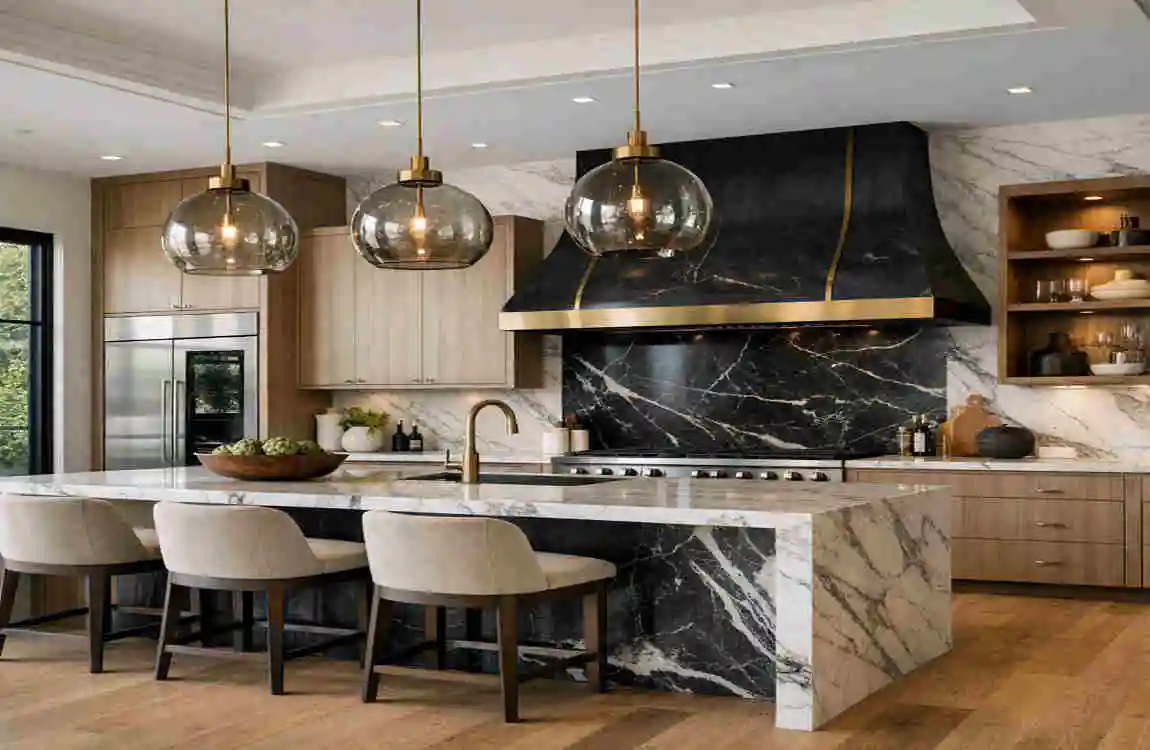
- Marble: beautiful but often more expensive and higher maintenance
Quartz is a favorite because it looks polished and holds up well.
Appliances
Appliances can also quickly change the budget. Basic models cost less, while energy-efficient and smart appliances cost more.
If you want to save, focus on replacing the appliances that are old or not working well. You do not always need the most expensive option.
Labor, Plumbing, Electrical, and Installation Costs
Why Labor Adds Up
Professional labor is not cheap, but it is often worth it. Good work lasts longer and reduces problems later.
Labor may include:
- Demolition
- Cabinet installation
- Countertop installation
- Flooring installation
- Plumbing work
- Electrical upgrades
- Painting
- Finish work
Hidden Labor Costs
Some costs surprise homeowners. For example, once contractors open walls, they may find old wiring, water damage, or uneven floors. These issues cost extra to fix.
Multiple Estimates Matter
Always compare several contractor quotes. This helps you understand the market and avoid overpaying.
Ways to Redo a Kitchen on a Budget
Budget-Saving Tips
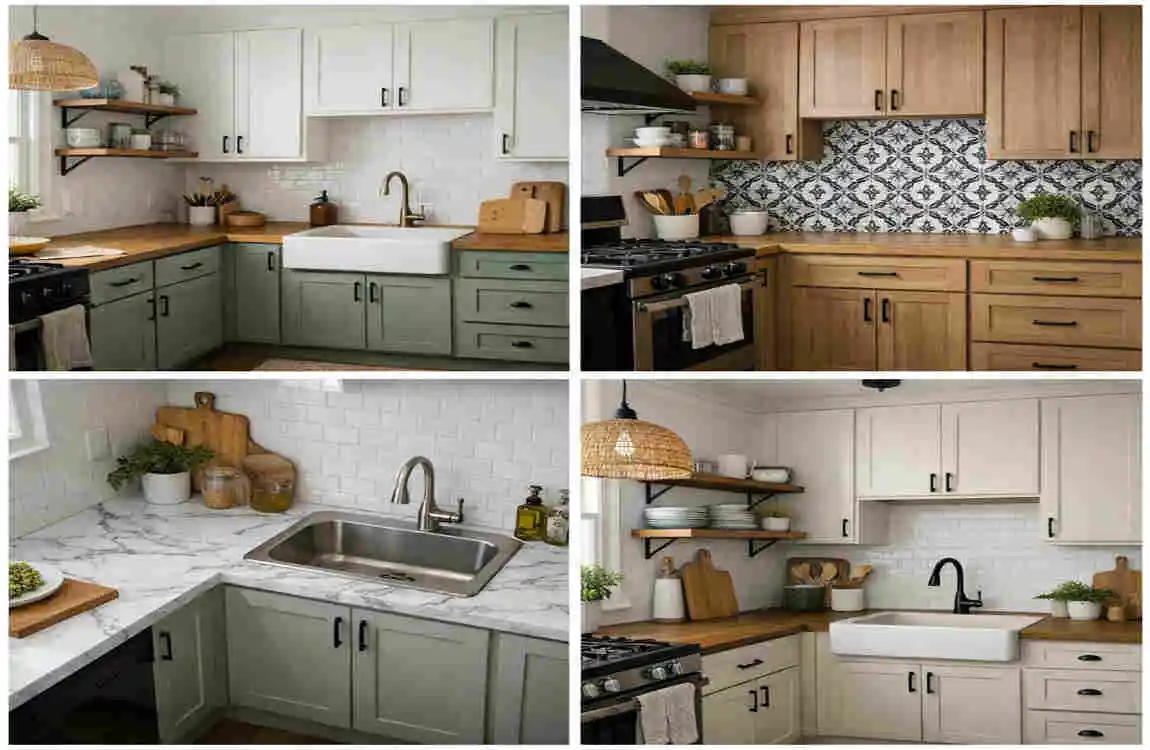
- Keep the same layout if you can.
- Refinish cabinets instead of replacing them.
- Choose affordable materials for countertops and backsplash.
- Upgrade lighting for a quick visual refresh.
- Replace hardware to make cabinets look newer.
Use a Contingency Fund
A smart budget includes a 10–20% contingency fund. That extra money helps cover surprises.
Avoid Costly Mistakes
Don’t overspend on features you won’t use. Also, do not choose cheap materials that wear out quickly. The goal is to balance appearance, durability, and budget.
FAQ About How Much It Costs to Redo a Kitchen
How much does it cost to redo a kitchen?
It can range from $5,000 to $100,000+, depending on size, materials, and labor.
What is the cheapest way to redo a kitchen?
Keep the layout, repaint cabinets, replace hardware, and use budget-friendly materials.
How much does it cost to redo a small kitchen?
A small kitchen may cost $5,000–$15,000 for a basic update.
Is it cheaper to remodel or completely replace a kitchen?
A remodel is usually cheaper if you keep the existing layout and cabinets.
How much should I budget for kitchen cabinets?
Cabinets can range from a few thousand dollars to much more for custom work.
How long does it take to redo a kitchen?
Most projects take a few weeks to several months, depending on the scope.
What kitchen upgrades add the most value?
Cabinets, countertops, appliances, lighting, and a clean layout usually add strong value.
| Factor | Short Information |
|---|---|
| Kitchen Size | Small kitchens usually cost less; larger spaces require more materials and labor. |
| Cabinets | One of the biggest expenses; costs depend on material, style, and customization. |
| Countertops | Popular options include laminate, quartz, granite, and marble. |
| Flooring | Tile, vinyl, laminate, and hardwood can suit different budgets and styles. |
| Appliances | Budget for a refrigerator, oven, cooktop, dishwasher, and range hood if needed. |
| Plumbing | Moving sinks or water lines can increase renovation costs. |
| Electrical Work | New outlets, lighting, and appliance connections may require additional work. |
| Lighting | Pendant, recessed, under-cabinet, and ceiling lights improve functionality. |