Wooden kitchen cabinets make a kitchen look warm, classic, and welcoming. But they also collect dust, grease, fingerprints, food splashes, and sticky stains very quickly. If you clean them the wrong way, you can damage the finish, dull the shine, or even weaken the wood over time.
That is why learning how to clean wooden kitchen cabinets safely matters so much. The good news is that you do not need harsh chemicals or heavy scrubbing. In most cases, a gentle routine works best.
Why Proper Cleaning Matters for Wooden Cabinets
Protecting the Wood Finish
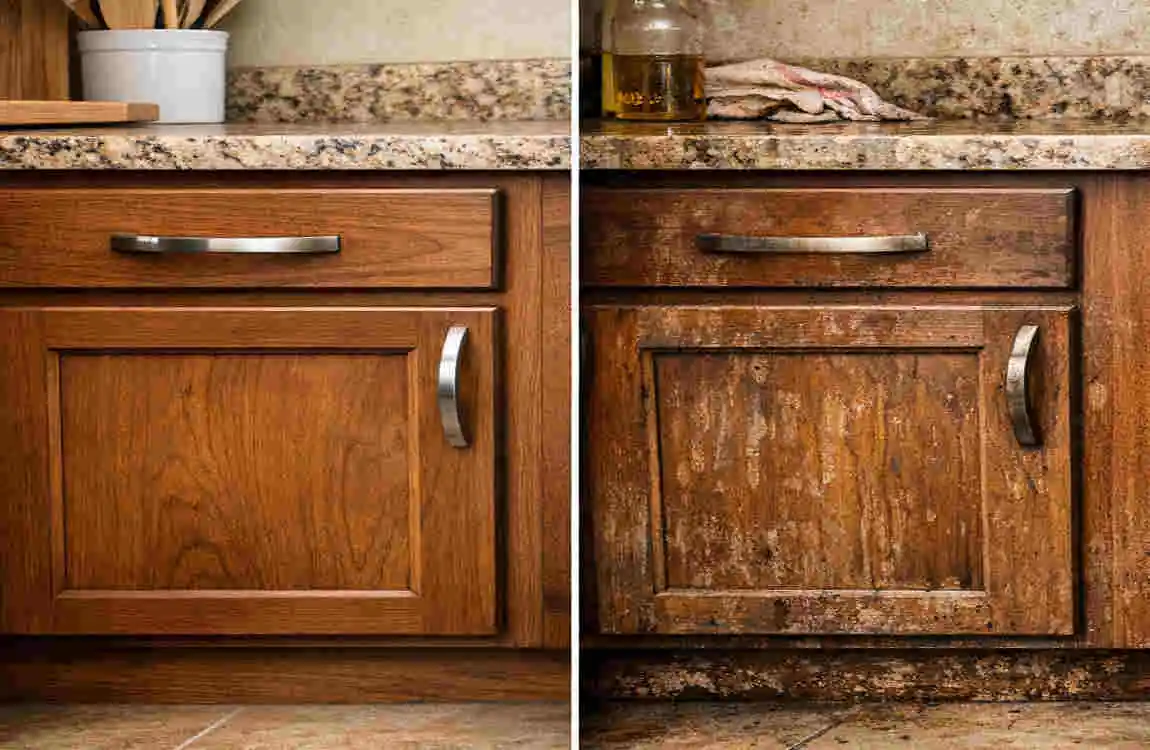
Wood cabinets often have a protective layer such as varnish, paint, stain, or sealant. Strong cleaners can strip that layer, leaving the surface dull or patchy. Gentle cleaning helps protect the finish and keeps the cabinets looking smooth and fresh.
Preventing Grease and Dirt Buildup
Kitchen grease becomes sticky over time, especially near the stove. Dust clings to it, and the problem gets worse if you wait too long. Regular cleaning makes the job much easier and helps prevent thick buildup.
Extending Cabinet Life
When you clean wooden cabinets carefully, they last longer and stay attractive. The biggest enemy is usually too much moisture. Water can seep into edges, joints, and seams, which may lead to swelling or warping.
What You Need to Clean Wooden Kitchen Cabinets
Basic Supplies
Supply Why You Need It
Soft microfiber cloths Safe for wiping without scratching
Warm water Helps loosen dirt gently
Mild dish soap Good for everyday grease
Small bowl or bucket For mixing your cleaning solution
Soft sponge Useful for light cleaning
Dry towel Helps prevent water damage
Soft toothbrush or detailing brush Cleans corners, grooves, and hardware
Optional Supplies for Tougher Grime
- Wood-safe cabinet cleaner
- Baking soda for very stubborn spots, used carefully
- Vacuum with a soft brush attachment for loose dust
Products to Avoid
Do not use these on wooden cabinets:
- Bleach
- Abrasive powders
- Steel wool
- Strong solvents
- Harsh ammonia-based cleaners
- Rough scrubbers
These products can scratch, dull, discolor, or weaken the finish.
How to Clean Wooden Kitchen Cabinets Step by Step
Remove Dust and Loose Dirt
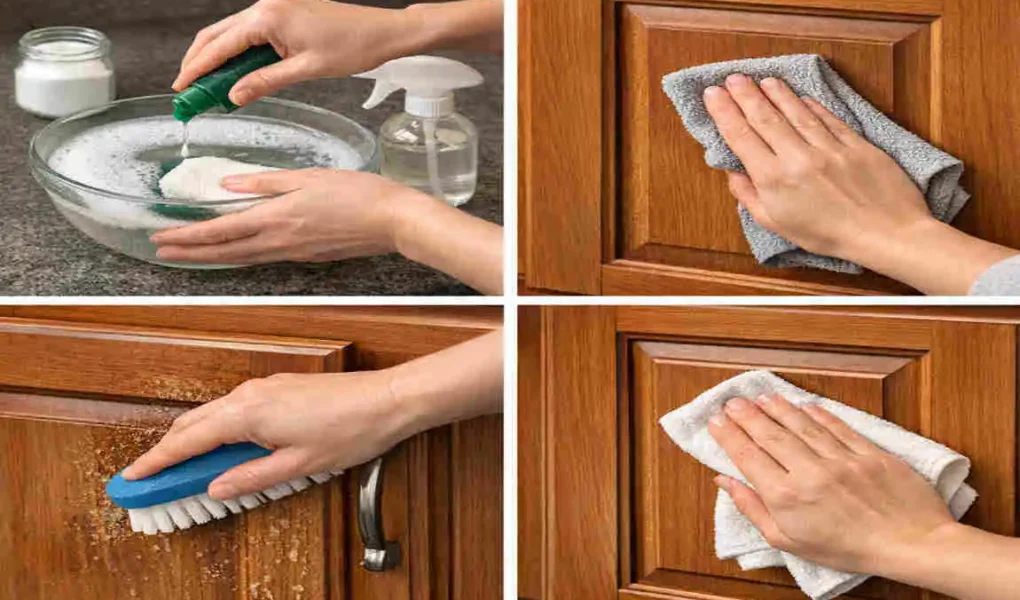
Start by wiping the cabinets with a dry microfiber cloth. Clean the doors, frames, handles, and corners. This step matters because dust and grit can scratch the surface if you rub them around with water later.
Prepare a Gentle Cleaning Solution
Mix warm water with a small amount of mild dish soap. The solution should be lightly soapy, not heavy or bubbly. Too much soap can leave a sticky film behind.
Test the Cleaner First
Before cleaning the full cabinet, test the solution in a hidden area, such as inside a door or on a lower edge. Wait a few minutes and check for discoloration, swelling, or any change in texture.
Wipe the Cabinet Surfaces
Lightly dampen a microfiber cloth, then wipe the wood gently. Try to follow the direction of the grain when possible. Do not soak the cloth until it drips. The goal is to clean the surface, not wet the wood.
Clean Handles and Edges
Handles, edges, and corners collect the most grime because they are touched often. Use a soft cloth or a small brush to remove grease and fingerprints from these spots.
Dry the Cabinets Immediately
After wiping, use a clean, dry towel to remove all moisture. This is one of the most important steps. Standing water can damage the finish, cause swelling, or lead to warping.
How to Remove Grease From Wooden Kitchen Cabinets
Start With Mild Soap
For everyday grease, a mild soap-and-water solution is usually enough. Work in small sections so the cleaner does not sit on the wood for too long.
Use Gentle Circular Wiping
If the grease does not come off right away, keep wiping gently instead of scrubbing hard. Repeating a soft motion is safer than using force.
Handle Stubborn Grease Carefully
For thicker grease buildup, let the damp cloth rest on the area for a few seconds. Then wipe again and dry right away. If you use a wood-safe cleaner, test it on a small area before treating the whole cabinet.
How to Remove Food Stains and Sticky Spots
Fresh Spills
Clean spills as soon as you notice them. Blot gently instead of rubbing hard, because rubbing can spread the mess or damage the finish.
Dried-On Food
Use a slightly damp cloth to soften the residue. Once it loosens, wipe it away slowly. Avoid scraping with sharp tools, since that can leave marks.
Stubborn Marks
If a stain stays after gentle cleaning, use a cabinet-safe cleaner made for that finish. Always follow the product directions carefully.
Common Mistakes That Can Damage Wooden Cabinets
Here are the biggest mistakes to avoid:
- Using too much water
- Water can seep into joints and edges.
- Scrubbing too hard
- Strong pressure can scratch or wear down the finish.
- Using harsh chemicals
- Strong cleaners may strip paint, stain, or sealant.
- Ignoring hardware
- Knobs, pulls, and hinges can collect sticky grime.
- Skipping drying
- Even a little leftover moisture can cause long-term damage.
How Often Should You Clean Wooden Kitchen Cabinets?
Daily or As Needed
Wipe up spills right away. Clean up fingerprints or splashes as soon as you notice them, especially near the stove and sink.
Weekly Cleaning
Once a week, dust the cabinet fronts and give them a light wipe. This keeps dirt from building up.
Monthly Deep Cleaning
About once a month, clean the doors, frames, handles, and corners a little more carefully. Check for grease, stains, or finish problems.
Cleaning Different Types of Wooden Cabinets
Finished Wood Cabinets
Finished or sealed cabinets usually handle gentle damp cleaning better than unfinished wood. Still, do not over-wet them.
Painted Wood Cabinets
Painted cabinets can scratch or chip more easily, so use soft cloths and light pressure only.
Stained Wood Cabinets
Stained cabinets need gentle care to protect the color and shine. Always dry them quickly after cleaning.
Unfinished Wood Cabinets
Unfinished wood absorbs moisture more easily, so you need to be extra careful. Use very little water and avoid soaking the surface.
How to Clean Cabinet Hardware
Metal Handles and Knobs
Wipe metal hardware with a soft cloth and mild cleaner. Dry it well so water does not leave marks.
Wooden Knobs
Use as little moisture as possible. Wipe and dry them immediately.
Hinges and Crevices
Use a soft toothbrush or detailing brush to reach small spaces. Do not flood hinges with water.
How to Keep Wooden Kitchen Cabinets Looking New
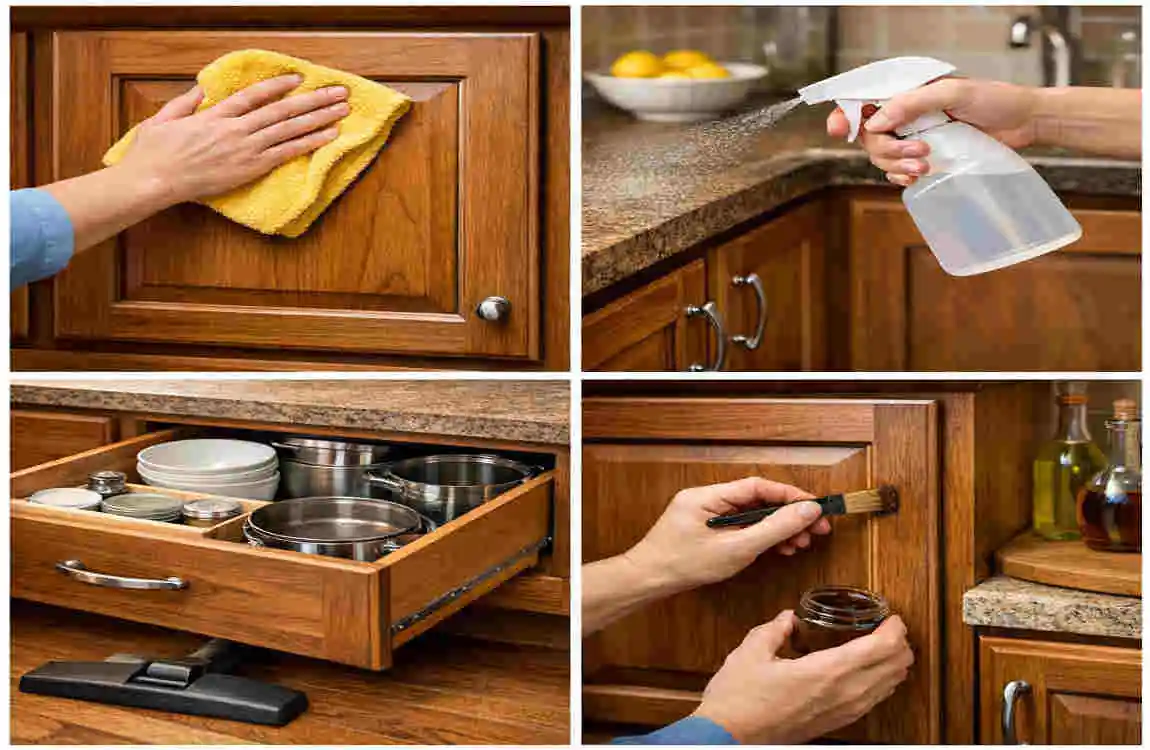
A few simple habits can make a big difference:
- Clean spills right away
- Use gentle, cabinet-safe products
- Keep moisture away from edges
- Turn on the exhaust fan while cooking
- Do not hang wet towels on cabinet doors
- Check the finish from time to time
- Follow the cabinet maker’s care advice
FAQ: How to Clean Wooden Kitchen Cabinets
Can I use vinegar to clean wooden kitchen cabinets?
Vinegar may not be safe for every finish. It can be too strong for some surfaces, so test it first or avoid it if you are unsure.
What is the best cleaner for wooden kitchen cabinets?
A mild soap-and-water solution is often the safest choice for routine cleaning, as long as it works well with the cabinet finish.
Can I use dish soap on wooden cabinets?
Yes, a small amount of mild dish soap mixed with water is useful for everyday grease. Just do not saturate the wood.
How do I clean greasy wooden kitchen cabinets?
Start with mild soapy water, wipe gently, and dry right away. For heavy buildup, use a cleaner made to be safe for that cabinet finish.
Can I use baking soda on wooden cabinets?
Baking soda can be mildly abrasive, so use it carefully. Avoid scrubbing hard, and choose a cabinet-safe cleaner when possible.
How do I clean wooden cabinets without removing the finish?
Use soft cloths, limited moisture, gentle pressure, and mild cleaners. Always test new products first.
| Cleaning Step | What to Do | Avoid Damage By |
|---|---|---|
| Dust First | Wipe cabinets with a soft microfiber cloth. | Avoid rough scrubbers. |
| Use Mild Cleaner | Mix warm water with a small amount of mild dish soap. | Avoid harsh chemicals and bleach. |
| Wipe Gently | Clean in the direction of the wood grain. | Do not soak the wood. |
| Remove Residue | Wipe again with a clean, slightly damp cloth. | Don’t leave soap on the surface. |
| Dry Completely | Use a dry microfiber cloth immediately. | Prevent moisture from sitting on the wood. |
| Handle Grease | Use a gentle degreasing solution for stubborn spots. | Test cleaners on a hidden area first. |
| Protect the Finish | Consider a suitable wood cabinet polish when needed. | Avoid excessive polish buildup. |