
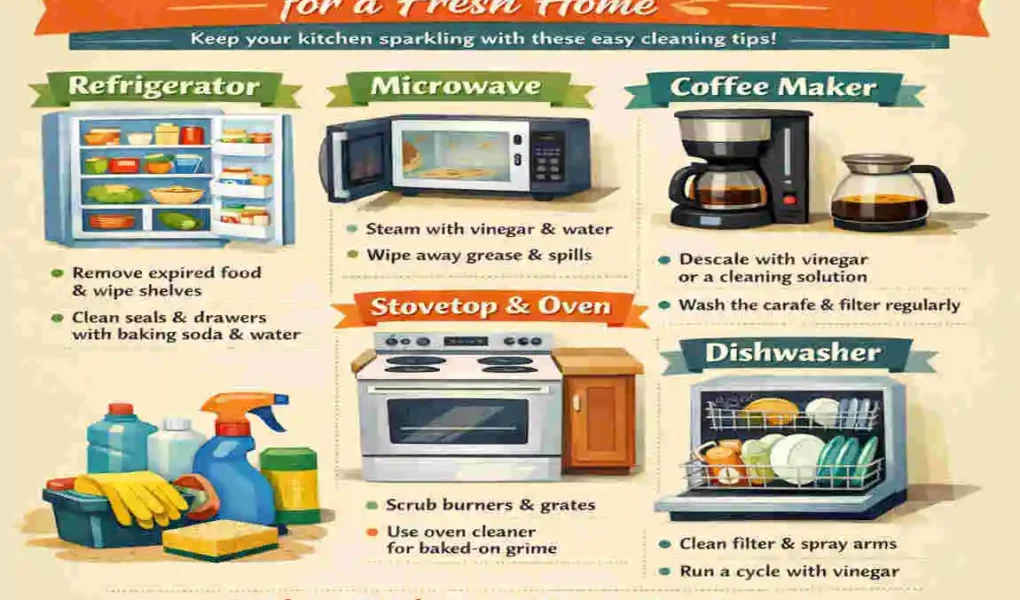
Keeping your kitchen clean isn’t just about shiny counters. Your appliances also need regular care. Grease, crumbs, food spills, dust, and moisture can build up fast. Over time, this can cause bad smells, poor performance, and even shorter appliance life.
If you want a fresher kitchen, learning how to clean kitchen appliances the right way is a smart place to start. The good news is that most cleaning tasks are simple. You just need the right supplies, a safe method, and a routine.
Why Regular Kitchen Appliance Cleaning Matters
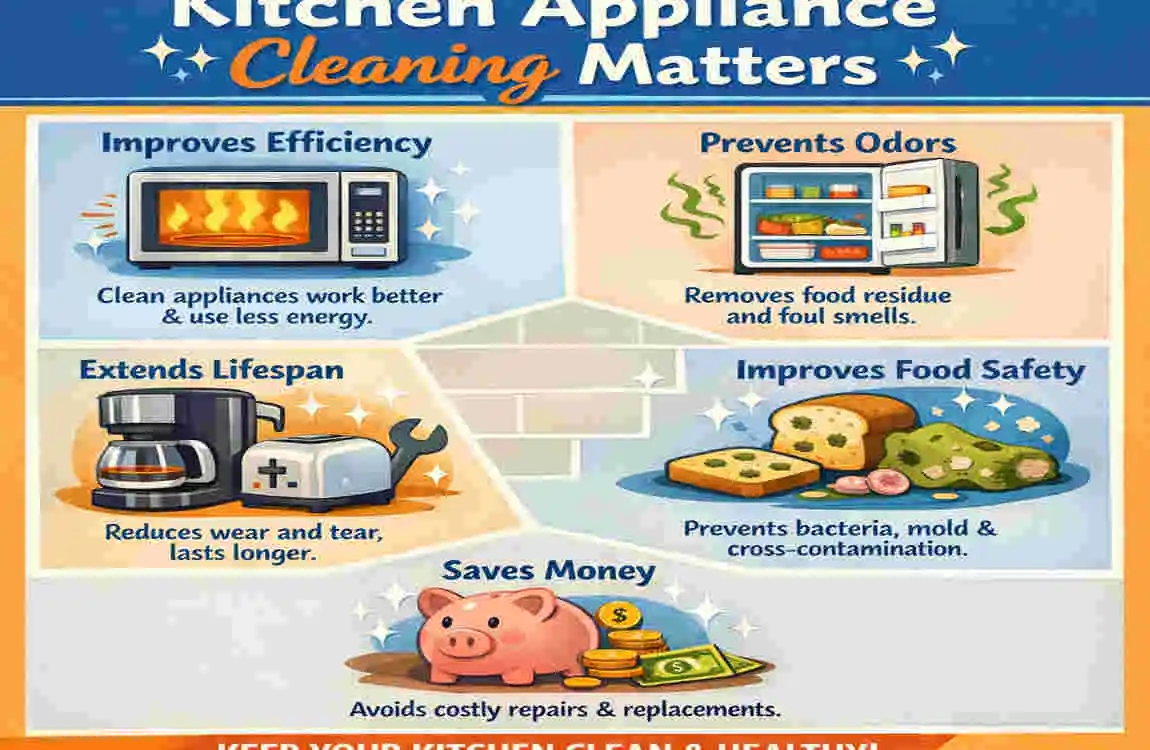
Helps Keep the Kitchen Hygienic
Dirty appliances can hold germs, grease, and old food bits. That can affect the cleanliness of your whole kitchen. Cleaning often reduces mess before it becomes a bigger problem.
Prevents Bad Smells
Leftover food and moisture can create unpleasant odours. This is common in fridges, microwaves, dishwashers, and trash-adjacent appliances. Regular cleaning helps keep your kitchen smelling fresh.
Supports Better Performance
Dust, grease, and buildup can make appliances work harder. A clean appliance usually runs more smoothly and may last longer. That means less stress and fewer repair issues.
Makes Deep Cleaning Easier
If you wipe appliances often, you do not need to scrub as much later. A simple daily and weekly routine can save you time and effort.
Best Cleaning Supplies for Kitchen Appliances
Before you start, gather a few basic items. You do not need harsh products for most jobs.
- Microfiber cloths
- Warm water and mild dish soap
- Baking soda
- White vinegar
- Soft sponge or brush
- Spray bottle
- Paper towels
Use gentle cleaners on most surfaces. Avoid rough scrubbers on glass, stainless steel, or coated finishes. Always check the appliance instructions if you are unsure.
How Often Should Kitchen Appliances Be Cleaned?
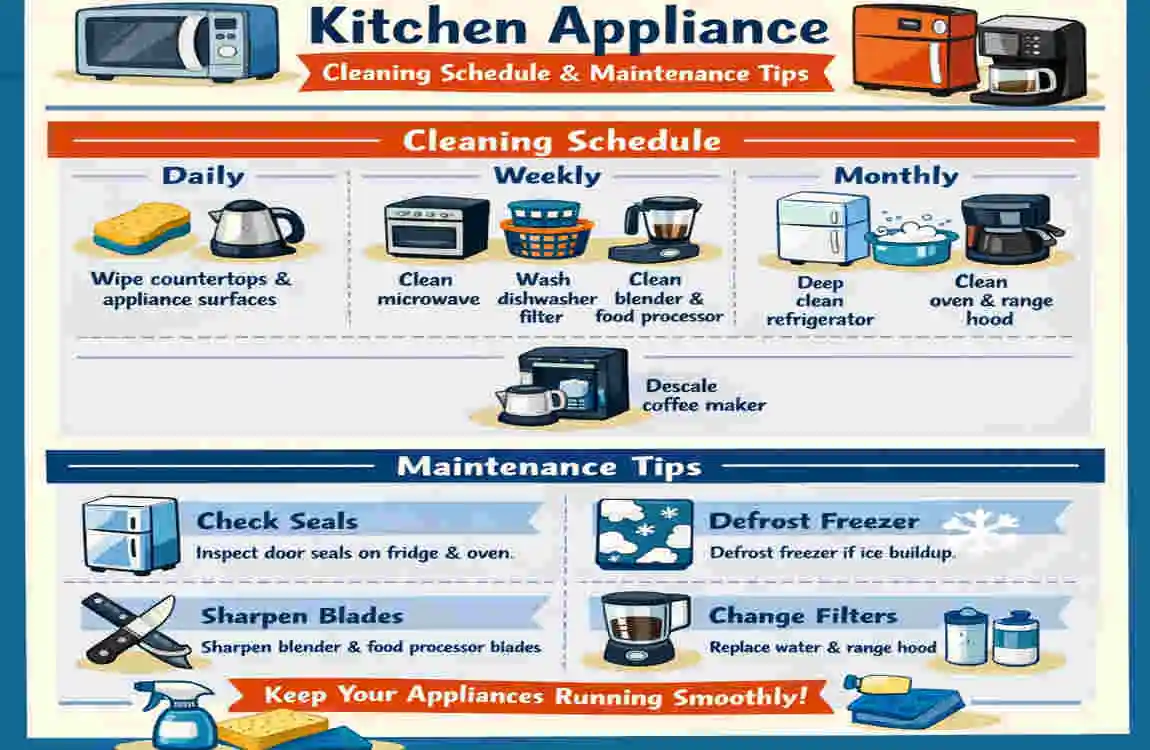
Daily Tasks
Wipe spills, crumbs, and fingerprints. Clean surfaces after cooking. Empty crumbs or food bits from easy-to-reach areas.
Weekly Tasks
Do a more complete clean of the refrigerator, microwave, stovetop, and dishwasher door. Also wipe handles, knobs, and control panels.
Monthly Tasks
Deep-clean the oven, dishwasher filter, range hood, toaster tray, and small appliances. This helps prevent buildup and odours.
How to Clean Major Kitchen Appliances
How to Clean a Refrigerator
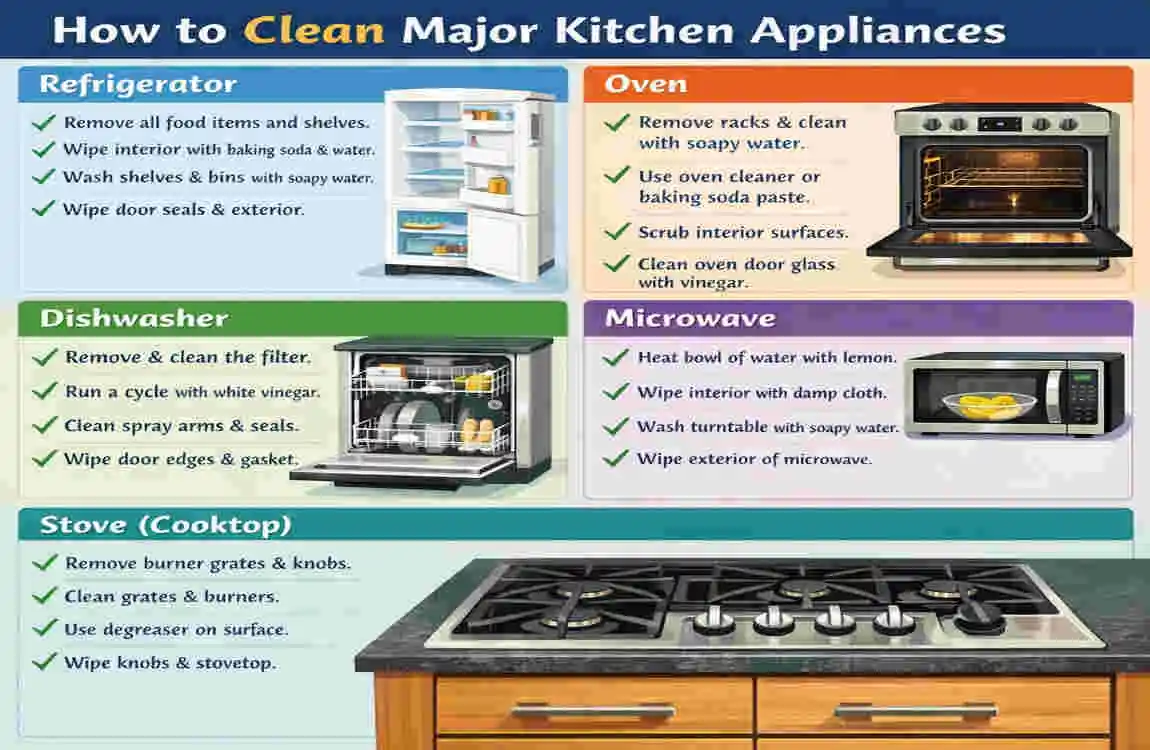
Start by removing old food. Take out shelves and drawers if they can be removed safely. Wash them with warm water and mild soap.
Wipe the inside walls, door edges, and seals. Pay close attention to spills and sticky spots. Clean the handles and outside surface too.
For odours, place an open box of baking soda inside or wipe the interior with a mild baking soda solution. Keep food covered and throw away expired items regularly.
How to Clean an Oven
First, remove racks and trays. Soak them in warm soapy water if needed. For baked-on grease, use a baking soda paste, let it sit, then wipe it off.
Gently clean the oven door and glass. Do not let water touch heating parts. If your oven has a self-clean function, follow the manual closely.
How to Clean a Microwave
Put a bowl of water inside and heat it briefly to loosen dried food. Then wipe the inside with a soft cloth.
Remove and wash the turntable. Clean the door, buttons, and outside surface. If odours remain, wipe the inside with a baking soda solution.
How to Clean a Dishwasher
Take out the bottom rack and clean the filter. Remove food bits from the door edges and spray arms.
Wipe the seals and run an empty cleaning cycle if needed. This helps remove smell, grease, and hidden buildup.
How to Clean a Stovetop and Cooktop
Let the surface cool first. Remove grates or burners if possible. Wash them separately with warm soapy water.
For glass or ceramic cooktops, use a soft cloth and gentle cleaner. Avoid scraping tools that may leave marks. Clean knobs and control areas too.
How to Clean a Range Hood
Remove the grease filters and wash them carefully. Wipe the hood surface with a degreasing cleaner or warm soapy water.
Grease can build up quickly here, so do not ignore it. A clean hood helps keep your kitchen air fresher.
How to Clean Small Kitchen Appliances Safely
How to Clean a Toaster
Always unplug it first. Shake out crumbs and empty the crumb tray. Wipe the outside with a slightly damp cloth, but do not soak it.
How to Clean a Blender
Take apart removable pieces and wash them well. Be careful around sharp blades. Clean the base with a damp cloth, not under running water.
How to Clean an Air Fryer
Remove the basket and tray. Wash them with warm, soapy water. Wipe the inside and heating area carefully after the appliance cools down.
How to Clean a Coffee Maker
Clean the carafe, basket, and water reservoir. Use a descaling method if mineral buildup appears. Rinse well so no cleaner taste remains.
How to Clean an Electric Kettle
Fill it with a mix of water and vinegar or another safe descaling solution. Let it sit, then rinse several times. This helps remove limescale.
Common Cleaning Mistakes to Avoid
- Do not clean appliances while they are plugged in
- Do not use too much water near electrical parts
- Do not mix cleaning chemicals
- Do not use rough pads on delicate surfaces
- Do not forget seals, handles, filters, and buttons
- Do not leave cleaning residue behind
These mistakes can damage your appliances or make them unsafe. Gentle cleaning is usually the best choice.
Simple Tips to Keep Appliances Clean Longer
Clean Spills Right Away
Fresh spills are much easier to remove than dried ones. A quick wipe can save time later.
Keep Surfaces Dry
Moisture can cause stains, odours, and buildup—dry surfaces after cleaning.
Check Removable Parts Often
Look at filters, trays, seals, and racks. These areas collect dirt fast and need regular care.
Use Gentle Products
Mild soap, baking soda, and warm water work well for many tasks. Strong cleaners are not always better.
FAQ: How to Clean Kitchen Appliances
How often should you clean kitchen appliances?
Light cleaning should happen daily or weekly. Deep cleaning usually works best once a month, depending on how often you use them.
What is the best cleaner for kitchen appliances?
Mild dish soap and warm water are often the safest option. Some appliances also work well with baking soda or manufacturer-approved products.
Can I use vinegar to clean kitchen appliances?
Yes, in many cases. It can help with odour and mineral buildup, but avoid using it on surfaces the manual warns against.
How do I remove grease from appliances?
Use warm soapy water, baking soda, or a safe degreaser. Let the cleaner sit for a few minutes, then wipe clean.
| Kitchen Appliance | Cleaning Method | Recommended Frequency | Quick Tip |
|---|---|---|---|
| Refrigerator | Remove food, wipe shelves and drawers with mild soapy water | Weekly | Clean spills immediately |
| Microwave | Steam with water and lemon, then wipe the interior | Weekly | Avoid harsh abrasives |
| Oven | Remove racks and clean interior with a suitable oven cleaner | Monthly | Wipe grease after cooking |
| Dishwasher | Clean filter, door seal, and run an empty cleaning cycle | Monthly | Remove food debris regularly |
| Toaster | Unplug, empty crumbs, and wipe the exterior | Weekly | Never immerse in water |
| Coffee Maker | Clean removable parts and descale with a suitable solution | Monthly | Rinse thoroughly after cleaning |