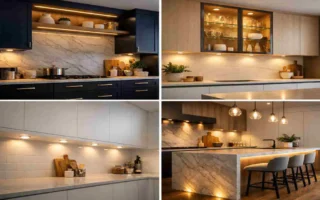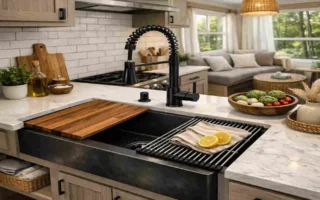
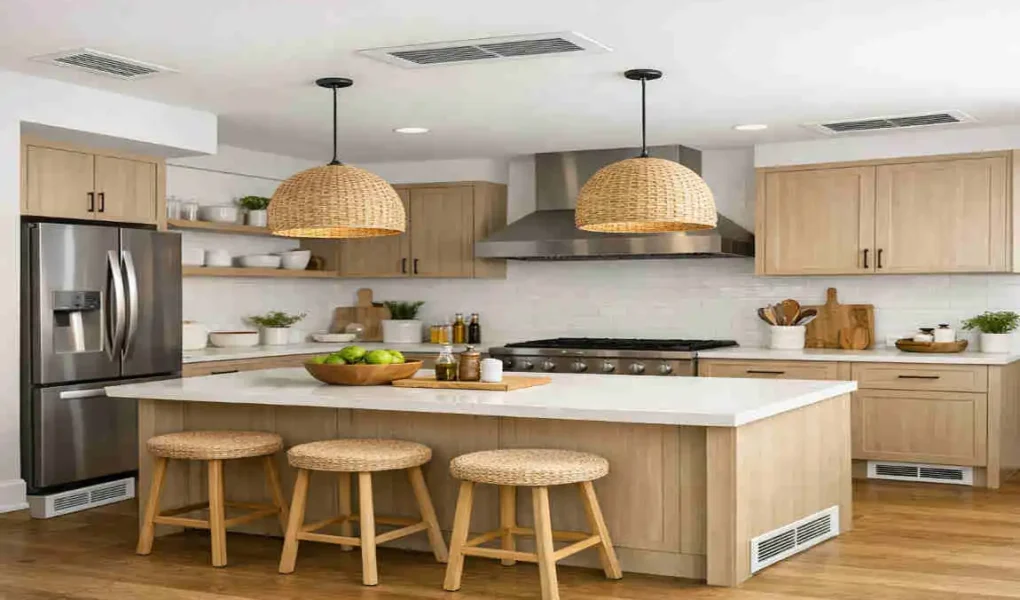
If you are wondering where to put AC vents in the kitchen, the short answer is this: place them where they can spread cool air evenly, but not where cooking heat, grease, steam, or cabinets will block them.
Kitchens are different from other rooms. They get hotter faster, feel stuffier, and need smart airflow planning. A good vent location can make the room feel cooler, reduce hot spots, and help your HVAC system work better.
Why AC Vent Placement Matters in a Kitchen
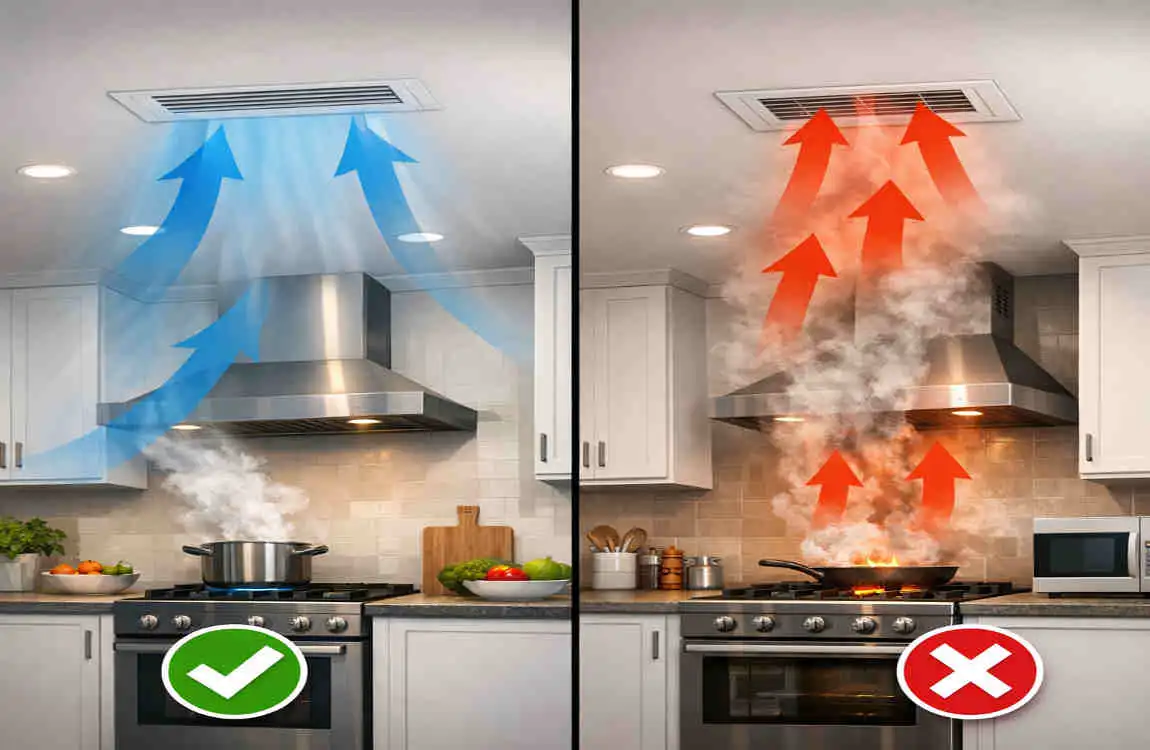
Kitchen comfort depends a lot on air movement. When vents are placed well, cool air can mix with warm air more smoothly. That helps the room stay more balanced.
Why kitchens heat up so quickly
Kitchens usually get warm because of:
- Stoves and ovens
- Sunlight through windows
- Steam from cooking
- People moving in and out
- Poor airflow around cabinets and corners
When airflow is weak, warm air stays trapped. That is why some kitchens have one area that feels too hot while another feels too cold.
AC vents vs. kitchen exhaust
AC vents and kitchen exhaust are not the same thing.
- AC vents bring cool air into the room.
- Range hoods and exhaust fans remove heat, smoke, grease, and odours.
So, an AC vent should never replace a kitchen exhaust system. Both are needed for a comfortable kitchen.
Where to Put AC Vents in Kitchen
The best kitchen AC vent placement depends on room size, layout, ceiling height, and where heat builds up.
Best ceiling vent locations
Ceiling vents are often the best choice for kitchens because they help spread air across the room without taking up wall space.
Good ceiling vent placement usually means:
- Keeping the vent away from the stove
- Placing it where air can move across the room
- Using more than one vent in a larger kitchen
This helps avoid direct cold air on the cooking area while still cooling the room evenly.
Best wall vent locations
Wall vents can work well in some kitchens, especially if the ceiling has lights or other fixtures that limit placement.
They are useful when:
- The wall has open space
- Cabinets do not block airflow
- The vent can blow air across the room, not into a corner
Wall vents are not always ideal, but they can be a smart option in compact kitchens.
Best floor vent locations
Floor vents can work in certain homes, but kitchens often make them harder to maintain.
Why they can be tricky:
- Cabinets may block airflow
- Dirt and crumbs can collect easily
- Islands and furniture may cover them
If you choose floor vents, they need to stay clear and easy to clean.
Best AC Vent Placement Based on Kitchen Layout
No single vent location works for every kitchen. The layout matters a lot.
Galley kitchen
A galley kitchen is narrow, so airflow needs to stay balanced on both sides.
Best approach:
- Place vents so air moves down the length of the kitchen
- Avoid blowing directly at the cooking line
- Keep airflow even so one side does not become colder than the other
L-shaped kitchen
An L-shaped kitchen often needs airflow that covers both sections.
A good setup should:
- Reach both legs of the “L”
- Avoid corners where air can get trapped
- Stay clear of tall cabinets or refrigerators
U-shaped kitchen
A U-shaped kitchen can trap heat because three sides are enclosed.
For this layout:
- Place vents where air can move into the centre
- Avoid blocked corners
- Use broader airflow if the kitchen is large
Kitchen with an island
An island changes how air moves in the room.
If you have one, think about:
- Avoiding vents directly above cooking or prep areas
- Keeping vents clear of pendant lights and island cabinets
- Making sure the air does not blow too hard on seating areas
An AC vent above a kitchen island may work in some designs, but only if it doesn’t interfere with lighting or daily use.
Open-concept kitchen
Open kitchens share space with dining or living areas, so airflow must stay balanced.
The goal is to:
- Cool the kitchen without overcooling nearby rooms
- Use zoning if needed
- Keep air distribution even across the open area
Kitchen Vent Placement Mistakes to Avoid
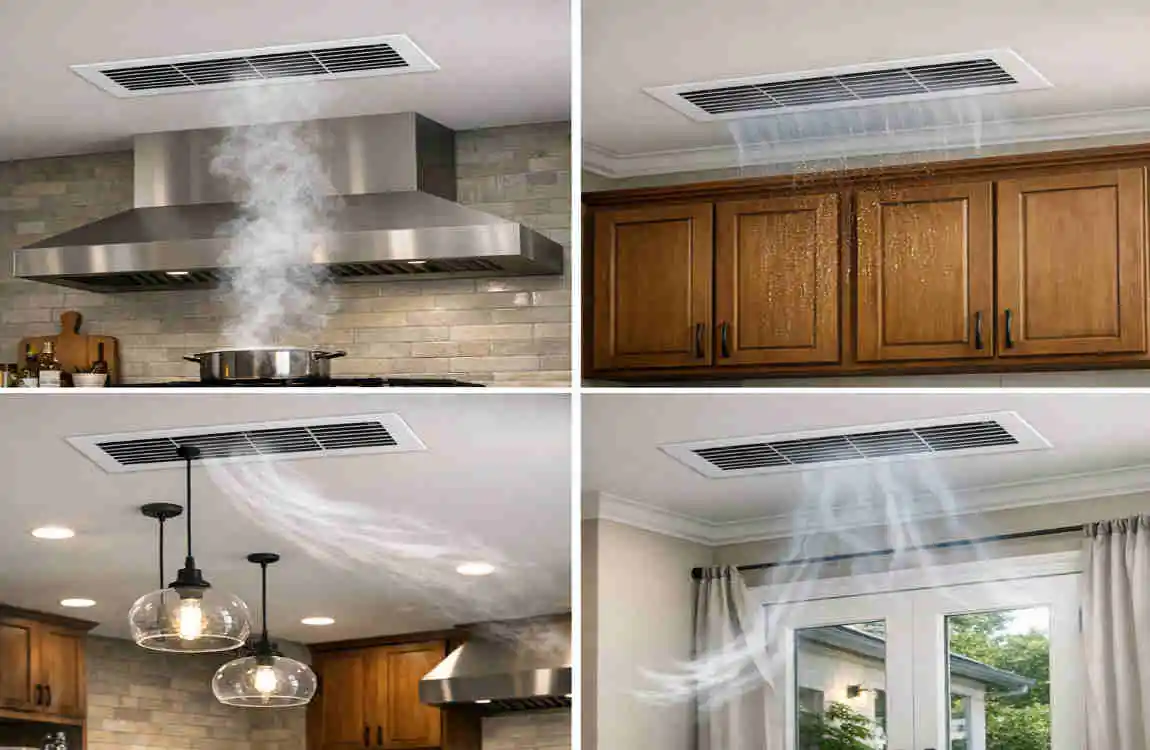
A few common mistakes can make your kitchen less comfortable.
Installing a vent directly over the stove
This is usually a bad idea because the stove area already gets heat, steam, and grease.
The range hood should handle cooking exhaust. The AC vent should focus on cooling the room, not sitting in the middle of heavy cooking activity.
Blocking vents with cabinets or appliances
Cabinets, refrigerators, and islands can block airflow. That reduces cooling and makes the system work harder.
Always plan HVAC vent placement before installing cabinets.
Pointing cold air directly at people
If the vent blows straight onto a person standing at the counter, the air may feel uncomfortable.
A better option is to direct airflow across the room, not straight down on one spot.
Ignoring the exhaust system
A kitchen needs both cooling and exhaust. If the exhaust is weak, the room may still feel hot and humid even with a good AC vent.
Installing too many or too few vents
Too few vents can leave hot spots. Too many vents can hurt system balance.
The right number depends on the kitchen size and duct design.
How to Plan AC Vent Placement During a Kitchen Remodel
A remodel is the best time to fix vent placement. Once cabinets, lights, and appliances are installed, changes become harder and more expensive.
What to plan around
Keep these items in mind:
- Cabinet sizes
- Island placement
- Lighting locations
- Window placement
- Stove and oven position
Simple planning tips
- Measure the room carefully
- Think about where heat builds up
- Leave vents open and easy to access
- Ask an HVAC professional to check duct size and airflow
That last step matters because even a well-placed vent will not help much if the duct system is not balanced.
Tips for Better Kitchen Cooling and Airflow
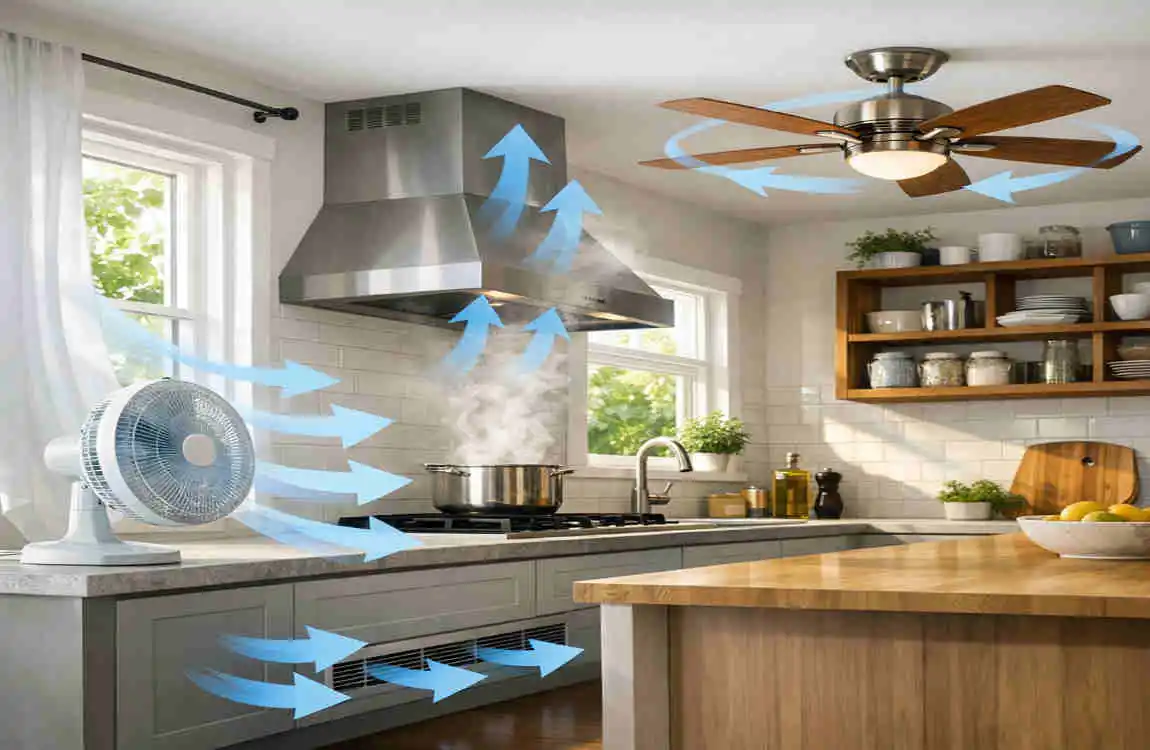
If you do not want to move a vent, small changes can still help.
Easy ways to improve airflow
- Keep registers clean
- Do not block vents with furniture or decor
- Use the range hood while cooking
- Check for dirty filters
- Make sure return-air grilles stay open
When moving a vent makes sense.
You may need to move a vent if:
- The kitchen always feels too hot
- Cabinets block the vent
- The vent is too close to the stove
- You are remodelling the space
- Airflow feels weak in one area
FAQ About Where to Put AC Vents in Kitchen
Where should AC vents be placed in a kitchen?
In general, place them where they can cool the room evenly without getting blocked. Ceiling locations often work best, but the layout should guide the final choice.
Should an AC vent be near the kitchen stove?
Usually, no. The stove area already produces heat and moisture. The range hood should handle cooking exhaust, not the AC vent.
Can you put an AC vent above a kitchen island?
Sometimes, but only if it doesn’t interfere with lighting, seating, or airflow. It depends on the room design.
Should kitchen AC vents be on the ceiling or wall?
Ceiling vents usually provide better full-room airflow. Wall vents can work in certain layouts. The right choice depends on your kitchen shape and HVAC design.
Can kitchen cabinets block an AC vent?
Yes, and they often do. That is why vent placement should be planned before cabinetry is installed.
| Kitchen AC Vent Location | Best Placement | Main Benefit | Important Tip |
|---|---|---|---|
| Ceiling Center | Near the middle of the kitchen | Provides balanced cooling | Keep clear of cabinets and lights |
| Near Dining Area | Between kitchen and dining space | Cools both areas | Avoid directing air toward the stove |
| Opposite Kitchen Entry | Across from the doorway | Improves airflow circulation | Maintain a clear air path |
| Near Cooking Zone | Slightly away from the stove | Helps remove heat | Never place directly above the cooktop |
| Near Sink Area | Above or nearby sink zone | Provides comfortable cooling | Avoid excessive moisture exposure |
| Kitchen Island | Above or near the island | Distributes air across the room | Coordinate with pendant lighting |