

An Indian kitchen can get dirty quickly because it is used so often and usually has a lot going on at once. Oil splashes, masala stains, smoke marks, grease on cabinets, and food residue can build up faster than you expect. That is why knowing how to properly deep-clean Indian kitchen spaces is so useful.
A deep clean is not just about making the kitchen look nice. It also helps keep the space cleaner, removes unpleasant odors, and makes daily cooking easier. When your kitchen is clean, fresh, and organized, you spend less time fighting mess and more time enjoying cooking.
Prepare Your Kitchen for Deep Cleaning
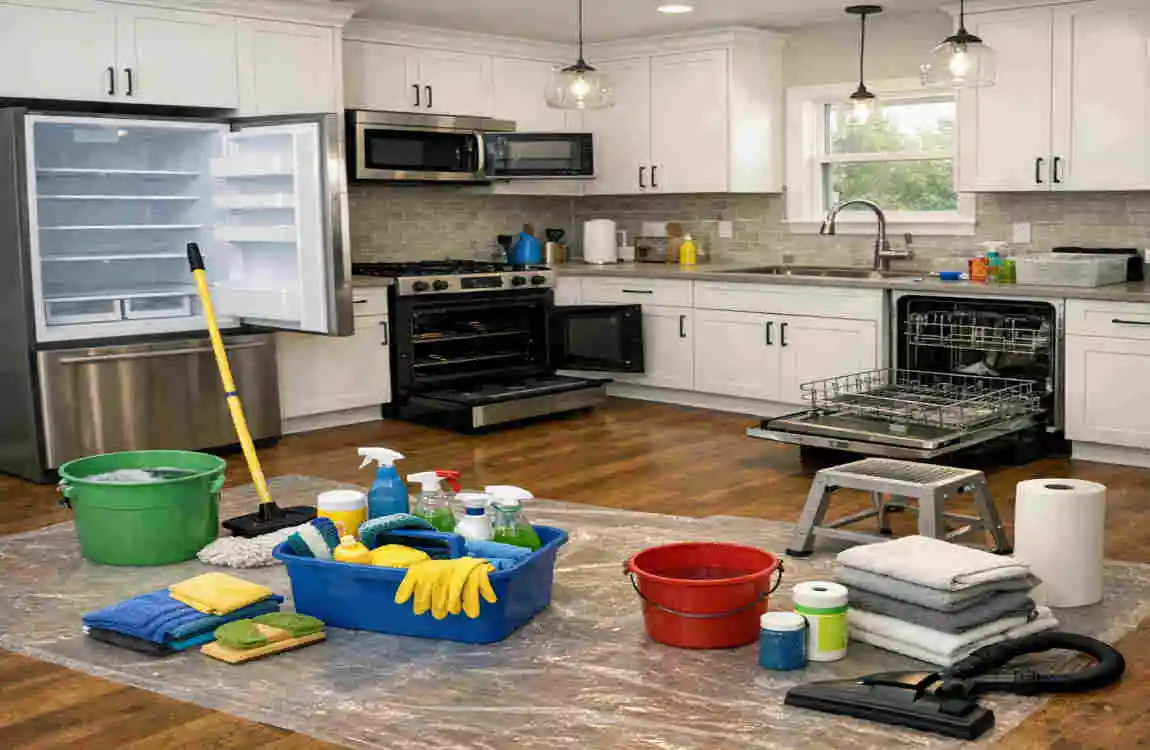
Clear the space first.
Before you start cleaning, remove anything that is in the way. Take out dishes, food packets, loose containers, and extra items sitting on the counters. The less clutter you have, the easier it is to clean every surface.
This step also helps you see the real condition of your kitchen. Once the space is clear, you can spot hidden grease, dust, and stains more easily.
Gather your cleaning tools.
You do not need fancy products to deep clean an Indian kitchen. A few simple cleaning items are usually enough.
You may want to keep these ready:
- Dish soap
- Baking soda
- Vinegar or mild kitchen cleaner
- Sponge and scrub brush
- Microfiber cloths
- Gloves
- Old toothbrush for corners
- Mop and bucket
Having everything nearby saves time and keeps the process smooth.
Open windows and improve airflow
Indian kitchens often hold smoke and strong cooking smells. So before you begin, open the windows and turn on the exhaust fan if you have one. Good airflow makes the space fresher and helps cleaning products work better.
It also makes the kitchen more comfortable while you clean, especially when you are working on grease-heavy areas.
How to Make Deep Clean Indian Kitchen Cabinets and Shelves
Empty the cabinets fully.
Start with the cabinets and shelves. Take everything out, one section at a time. This gives you a better chance to clean inside properly and also check what you actually use.
While removing items, throw away expired food, broken containers, and things you no longer need. It is easier to organize later when you begin with fewer items.
Remove dust, crumbs, and sticky buildup.
Cabinets often collect a mix of crumbs, dust, oil film, and old food bits. Wipe the shelves with a dry cloth first, then use a damp cloth with mild cleaner to remove the sticky layer.
Pay special attention to corners, edges, and the areas around shelf joints. These spots are easy to miss but often hold the most dirt.
Clean handles and outer surfaces
Cabinet handles get touched all the time so that they can become greasy and dull. Wipe them carefully with a soapy cloth, then dry them right away. The same goes for outer cabinet doors, especially near the stove.
If grease has built up over time, let the cleaner sit for a few minutes before wiping it off. That makes the job easier without using too much force.
Organize before putting items back.
Once the shelves are clean and dry, put the items back in an organized way. Keep daily-use items in easy-to-reach spots. Store similar items together, such as spices, grains, utensils, and snacks.
A neat cabinet is easier to maintain. It also helps you avoid buying extra items you already have.
Deep Clean the Indian Kitchen Stove and Chimney
Remove grease from the stove.
The stove is one of the most important parts of an Indian kitchen, and it usually gets dirty the fastest. Oil spills and food drips can build up around burners and knobs.
Wipe the stove surface with warm soapy water first. If there is heavy grease, use a baking soda paste or kitchen-safe degreaser. Let it sit briefly before scrubbing gently.
Clean burner parts carefully
Remove burner caps and grates if your stove allows it. Wash them in warm water with dish soap. Use a brush to clear off stuck food and grease.
Dry all parts fully before putting them back. This matters because moisture can affect how the burners work.
Wipe the chimney exterior.
The chimney often collects smoke, oil, and dust. Wipe the outside with a soft cloth and a mild cleaner. If the surface is stainless steel, use a non-scratch cloth to avoid leaving marks.
For heavy buildup, clean the chimney more slowly and carefully. A clean chimney not only looks better but also helps your kitchen feel less oily.
Check chimney filters
Filters trap grease and smoke particles so that they can get dirty very quickly. If your chimney has washable filters, remove and clean them according to the manufacturer’s instructions.
Dirty filters can make the kitchen smell stale and reduce chimney performance. Keeping them clean is a simple but important part of deep cleaning.
Safe cleaning tips for tough grease
For thick grease buildup, avoid using harsh tools that can scratch surfaces. Instead, use warm water, mild cleaner, and patience. Repeating a gentle cleaning step is usually safer than forcing the dirt off in one go.
Clean Kitchen Countertops, Tiles, and Backsplash
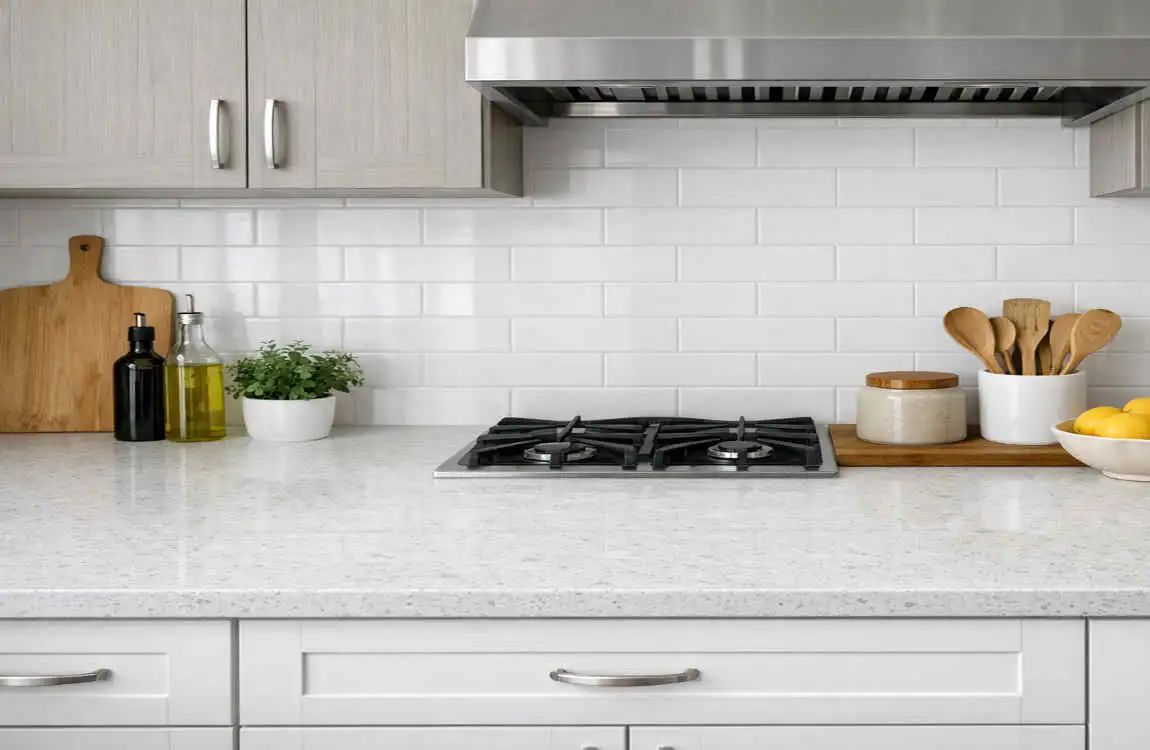
Remove masala stains and spills.
Indian cooking often leaves behind turmeric, chili, curry, and spice marks. These stains can set quickly if left too long. Wipe countertops after removing loose dust and crumbs.
If a stain is stubborn, use a soft sponge with a mild cleaning mix. Work gently so you do not damage the surface finish.
Clean oil splashes on tiles
Tiles near the stove usually get splashed with oil and gravy. These spots can become sticky over time, so do not ignore them. Use warm water and a grease-cutting cleaner to lift the buildup.
If the backsplash has texture, use a toothbrush or small scrub brush to reach into the grooves.
Disinfect the countertop
After removing visible dirt, wipe the countertop again with a clean, food-safe disinfectant or cleaner. This helps make the area more hygienic, especially where you prepare food.
Let the surface dry fully before using it again.
Pay attention to grout and corners.
Tile grout and tight corners often hold dirt that is hard to see. These small spots can make a kitchen look less clean even when the larger surfaces shine.
Use a toothbrush or small brush to clean these areas carefully. It takes a little extra effort, but it makes a big difference.
Deep Clean the Sink and Drain
Remove food waste and buildup.
The kitchen sink gets used all day, so it collects food bits, soap residue, and grease. First, remove any visible waste from the sink and drain area.
Then clean the basin with dish soap and warm water. For tougher stains, gently apply baking soda to the surface.
Freshen the drain
Bad smells often come from the drain. To reduce odor, flush the drain with warm water and a mild cleaning mix. You can also use baking soda and vinegar occasionally if your plumbing allows it.
Do not pour grease down the sink. That is one of the main causes of drain smell and blockages.
Disinfect taps and nearby areas
The faucet and sink edges get touched constantly, so they should be cleaned well. Wipe the tap, handles, and surrounding surfaces with a cleaner that removes germs and buildup.
Dry the area after cleaning to avoid water spots and mineral marks.
Keep the sink area tidy.
A clean sink looks better when the area around it is organized as well. Keep scrubbers, soap, and cleaning items in a neat place so the sink does not become cluttered again too quickly.
Clean Indian Kitchen Appliances and Storage Areas
Deep clean the refrigerator
The refrigerator can hold old spills, expired food, and unpleasant smells if it is not cleaned regularly. Remove the food, check expiration dates, and throw away anything spoiled.
Wipe shelves and drawers with a mild cleaner. Dry everything before placing food back inside. This is a good time to group items by category so they are easier to find later.
Clean the microwave
Microwaves often collect splatters from reheated food. A simple way to clean it is to heat a bowl of water briefly so the steam loosens any stuck marks. Then wipe the inside with a soft cloth.
Do not forget the door, buttons, and outer surface. These parts are touched often and can collect fingerprints and grease.
Wipe mixers, grinders, and small appliances.
Small appliances often sit out in the open and gather dust and oil film. Wipe them regularly with a dry or lightly damp cloth. Be careful around switches and electrical parts.
If you use a mixer or grinder often, clean the jars and lids thoroughly. Food residue can build up quickly and affect freshness.
Clean spice jars and containers
Indian kitchens usually have many spice containers, oil bottles, and storage jars. These items often get sticky from frequent use. Wipe the outside of each container and check the lids for dust or spills.
Remove expired dry food.
A deep clean is the perfect time to check your dry storage. Look through flour, lentils, rice, snacks, and other stored items. Throw away anything expired or damaged.
This helps reduce clutter and keeps pests away.
Keep Your Indian Kitchen Fresh After Deep Cleaning
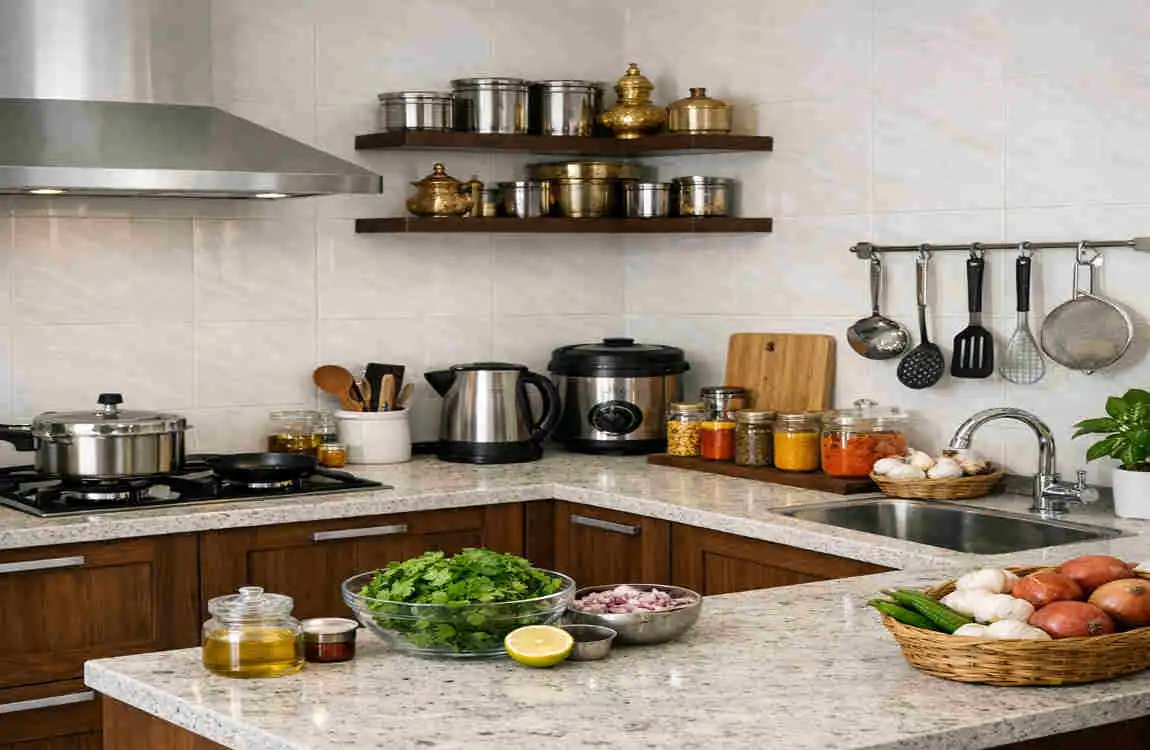
Create a simple daily routine.
A deep clean lasts longer when you follow a small daily habit. Wipe counters after cooking, wash dishes on time, and put items back where they belong. Small steps save you from bigger cleaning work later.
Clean spills right away
Oil and masala stains become harder to remove if you leave them for too long. Wiping spills quickly is one of the easiest ways to keep the kitchen fresh.
This also helps protect cabinets, tiles, and countertops from long-term damage.
Clean the stove regularly.
Instead of waiting for the stove to become very dirty, wipe it after use. Even a quick clean can prevent grease from building up.
If you cook often, this habit will save you a lot of effort later.
Empty kitchen waste daily
Kitchen waste can quickly create bad smells, especially in warm weather. Empty the trash every day, or more often if needed. Clean the bin regularly too.
A fresh waste area helps the whole kitchen smell cleaner.
Use a weekly and monthly routine.
Not every cleaning job needs to happen daily. Some tasks work better on a weekly or monthly schedule. That keeps the kitchen manageable and prevents deep dirt from returning too fast.
Frequently Asked Questions
How often should I deep clean an Indian kitchen?
A full deep clean is usually best once every few weeks or once a month, depending on how often you cook. Daily wiping and weekly cleaning help keep it under control.
What is the best way to remove grease from kitchen cabinets?
Use warm water, mild dish soap, or a kitchen-safe cleaner. Let the cleaner sit for a short time if the grease is thick, then wipe gently with a soft cloth.
How can I make my Indian kitchen smell fresh?
Clean the sink, drain, trash bin, fridge, and stove regularly. Open windows, let in fresh air, and remove expired food to prevent bad smells from building up.
How do I clean heavy oil stains from kitchen tiles?
Start with a grease-cutting cleaner or warm soapy water. For stubborn stains, use a baking soda paste and scrub gently with a soft brush.
Can natural cleaners be used for deep cleaning in an Indian kitchen?
Yes, natural cleaners like baking soda and vinegar can help with light grease and odor. For very heavy buildup, you may still need a stronger kitchen cleaner.
| Area | Deep Cleaning Task | Quick Tip |
|---|---|---|
| Gas Stove | Remove grease and food spills | Use warm soapy water and scrub gently |
| Chimney | Clean filters and oily buildup | Soak removable filters in hot water |
| Countertops | Wipe stains and sanitize surfaces | Use a kitchen-safe cleaner |
| Sink | Remove food residue and stains | Scrub with baking soda and rinse |
| Kitchen Cabinets | Clean grease, dust, and fingerprints | Wipe with a damp microfiber cloth |
| Floor | Sweep and mop thoroughly | Pay attention to corners and under appliances |
| Spice & Storage Area | Remove expired items and clean shelves | Organize containers after cleaning |