If you have ever finished washing dishes and then noticed a bad smell coming from the sink, you are not alone. Many people ask, “Why does my kitchen sink smell even when it looks clean?”
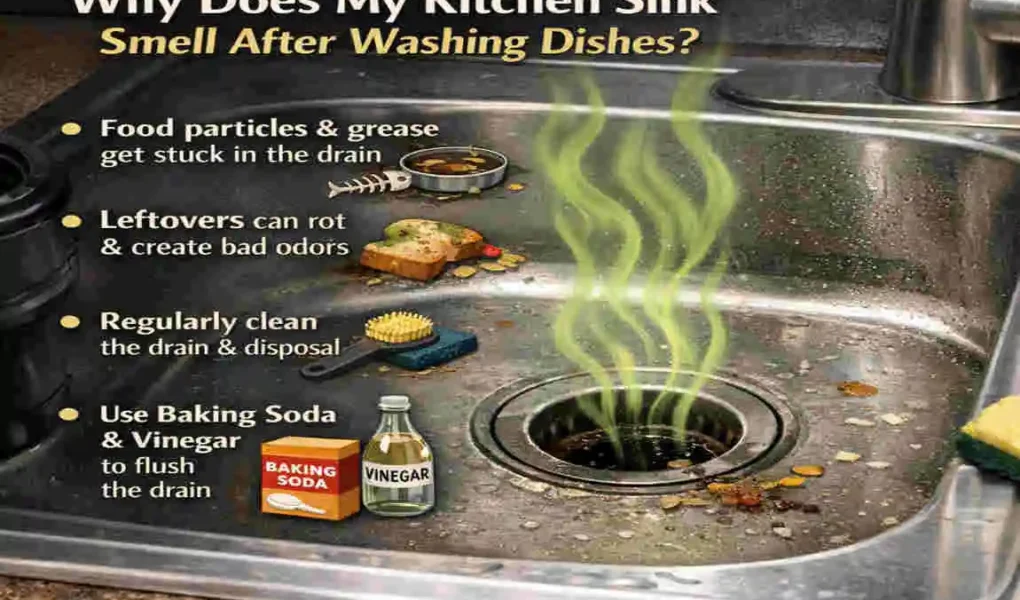
The answer is usually simple: food scraps, grease, soap residue, and bacteria can build up inside the drain. Over time, they create a smelly kitchen drain that keeps releasing odours whenever water runs through it.
Sometimes the smell is mild. Other times it can be sharp, sour, or even like rotten eggs. That is why it helps to know the cause before you try to fix it.
Common Reasons Why My Kitchen Sink Smells After Washing Dishes
Food Particles Trapped in the Drain
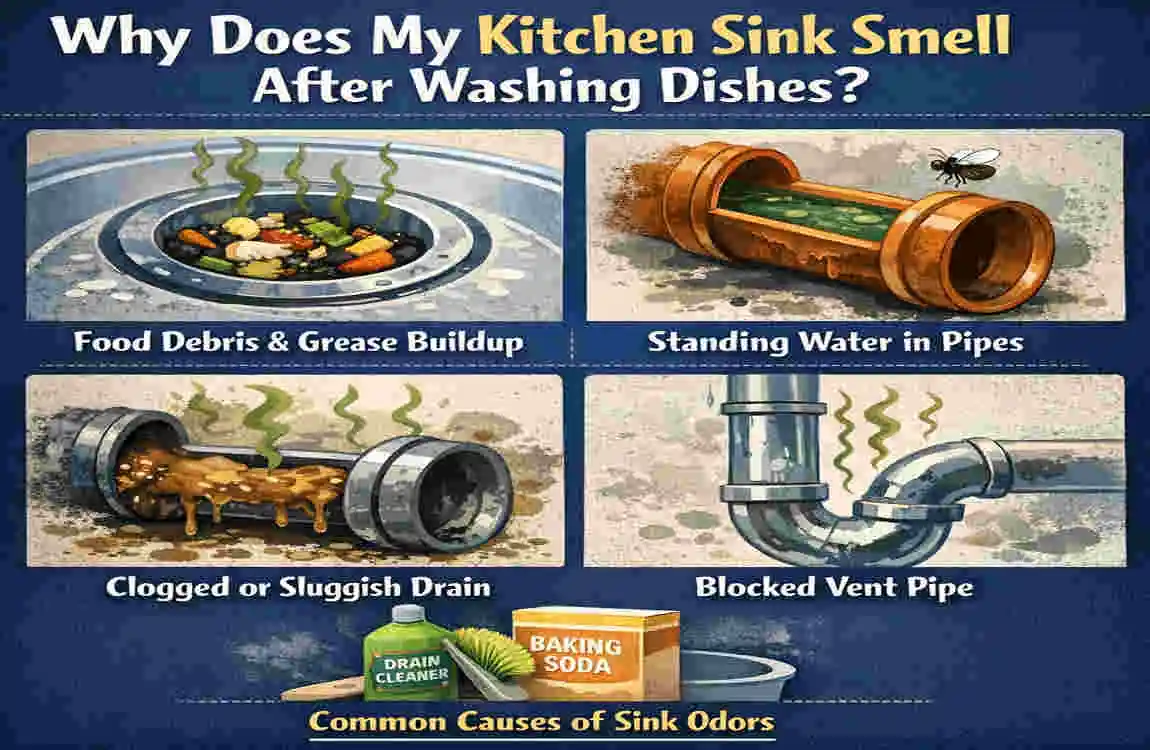
Small food bits often slide down the drain while you wash dishes. Even tiny pieces can get stuck inside the pipe and start to break down. As they rot, they release a bad odour.
If the smell gets stronger when you run water, food buildup is often the cause.
Grease and Oil Buildup
Cooking grease, butter, and oil can cling to the inside of your pipes. At first, it may not seem like much. But grease traps food and soap, and that buildup slowly creates an odour in your kitchen sink drain.
Pouring grease down the sink often leads to bigger plumbing problems later.
Bacteria and Biofilm
Bacteria grow well in dark, damp places like drains. They form a slimy layer called biofilm. This layer can hold odour and make the sink smell sour or musty.
Regular dish soap does not always remove this hidden buildup.
Dirty Sink Strainers and Disposal Parts
A dirty strainer can collect food, soap scum, and grease. If you have a garbage disposal, food can also hide under the rubber splash guard. That can create a strong garbage disposal smell.
Plumbing Problems That Can Cause Persistent Sink Smells
Dry or Faulty P-Trap
The curved pipe under your sink holds water that blocks sewer gases. If the trap is dry, leaking, or poorly installed, odours can rise into your kitchen.
Partial Clogs
A slow drain often means a partial blockage. When water cannot move freely, waste sits in the pipe longer and smells worse.
Vent or Seal Problems
If the plumbing vent is blocked or a pipe seal is damaged, sewer gas can escape. This is more serious than a food odour and usually requires a plumber.
Comparison Table: Smell, Cause, and Action
Smell TypePossible CauseWhat to Do
Sour or rotten food smell Food scraps in drain Clean drain and strainer
Greasy smell Oil and grease buildup Flush carefully and stop pouring grease down sink
Musty smell Biofilm or bacteria Scrub drain and disposal parts
Rotten egg smell Sewer gas or deep plumbing issue Call a plumber
Bad smell after running water Partial clog or trapped debris Check drainage and clean pipe area
How to Identify the Source of the Smell
Check the Sink and Drain Opening
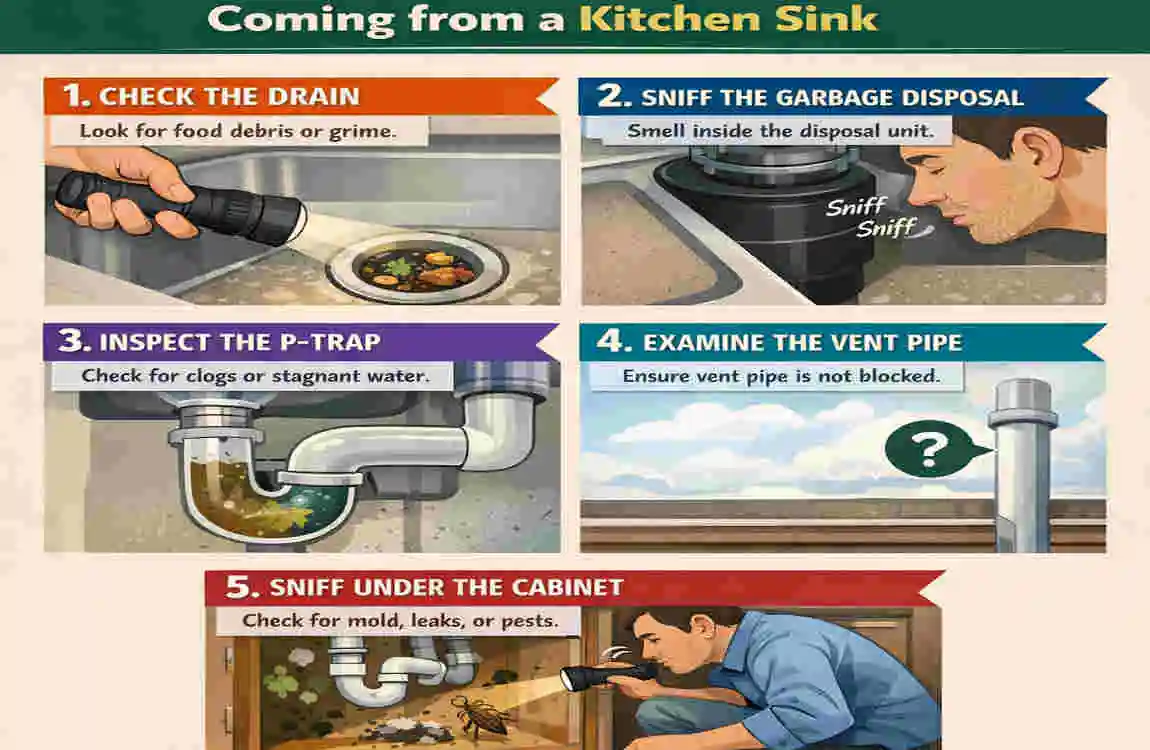
Start by looking at the drain strainer and the area around it. If you see grease, slime, or leftover food, that is likely the source.
Inspect the Garbage Disposal
Turn off the power first. Then check for food stuck under the splash guard. Do not put your hand inside the disposal.
Watch How the Water Drains
If water drains slowly, gurgles, or backs up, you may have a blockage deeper in the pipe.
Look Under the Sink
Check the cabinet for leaks, dampness, or loose connections. A hidden leak can also create odour.
Effective Ways to Get Rid of Kitchen Sink Smells
Clean the Drain and Strainer
Remove the strainer and wash it with warm water and dish soap. Then scrub around the drain opening with a small brush.
Flush With Hot Water
Run hot tap water through the drain to help loosen light grease and soap residue. Do not use boiling water on pipes that may be damaged by heat.
Use Baking Soda and Vinegar
This home method can help with light buildup. Pour baking soda into the drain first, then add vinegar. Let it sit, then flush with water.
This may help with surface odour, but it will not fix a serious clog.
Clean the Garbage Disposal
Run the disposal only when it’s safe and properly switched on. Clean the splash guard and any removable parts based on the manufacturer’s instructions.
Remove Grease the Right Way
Wipe oily pans before washing them. Put used grease in a container and throw it in the trash instead of pouring it down the sink.
Know When DIY Is Not Enough
If the smell keeps coming back or the drain is slow, the issue may run deeper than surface buildup. That is when professional help makes sense.
Preventive Maintenance Tips to Keep Your Kitchen Sink Fresh
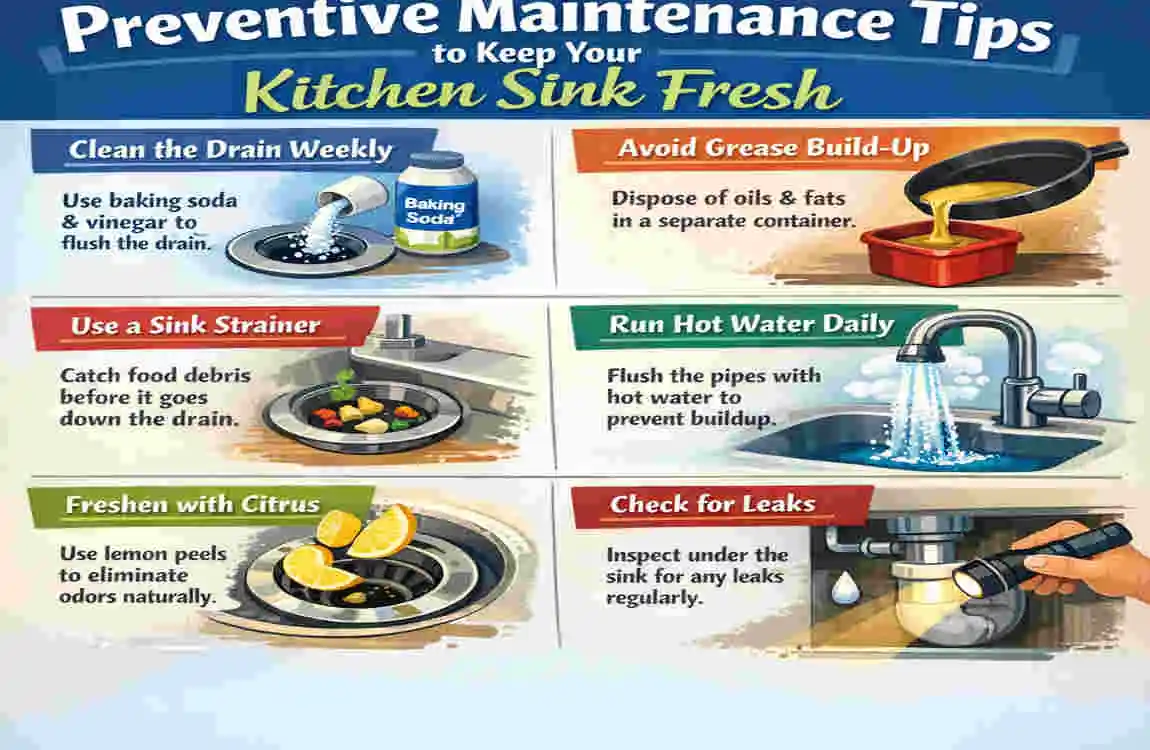
Good Habits That Help
- Scrape food into the trash before washing dishes
- Use a sink strainer
- Rinse the drain with warm water after greasy cleanup
- Clean the sink and disposal regularly
- Avoid pouring oil, fat, or coffee grounds down the drain
Watch for Early Warning Signs
If you notice slow draining, gurgling, or bad smells returning, act early. Small problems are easier to fix before they become bigger plumbing issues.
Frequently Asked Questions About Kitchen Sink Smells
Why does my kitchen sink smell after washing dishes?
Food bits, grease, soap residue, and bacteria often collect in the drain and create odour when water runs through it.
Why does my kitchen sink smell like rotten eggs?
That can point to sewer gas or rotting organic waste in the drain. If the smell stays, call a plumber.
Why does my kitchen sink smell even after cleaning?
Hidden buildup inside the pipe, garbage disposal, or P-trap may still be the cause.
Can a garbage disposal cause a bad smell?
Yes. Food can get stuck under the splash guard or inside the unit and create a strong odour.
Is baking soda and vinegar safe for the drain?
Yes, for light cleaning, but it won’t fix serious clogs. Never mix it with bleach or chemical drain cleaners.
When should I call a plumber?
Call one if the smell persists, drainage is slow, water backs up, or the odour smells like sewer gas.
| Cause | Why It Happens | Quick Solution |
|---|---|---|
| Food Scraps | Food particles collect in the drain. | Flush with hot water and dish soap. |
| Grease Buildup | Oil and grease stick to pipe walls. | Use dish soap and warm water. |
| Dirty Garbage Disposal | Food residue builds up inside the disposal. | Clean with a disposal-safe cleaner. |
| Dry P-Trap | Sewer odors enter through a dry drain trap. | Run water for 30–60 seconds. |
| Dirty Drain Strainer | Food and grease collect around the strainer. | Remove and scrub it with soap. |
| Bacteria Buildup | Organic waste creates unpleasant odors. | Clean the drain opening and stopper. |
| Clogged Drain | Trapped waste produces a persistent smell. | Remove debris or use a suitable drain cleaner. |
| Sewer Gas Leak | Damaged plumbing or a faulty trap may let sewer gas escape. | Contact a plumber if the smell persists. |