
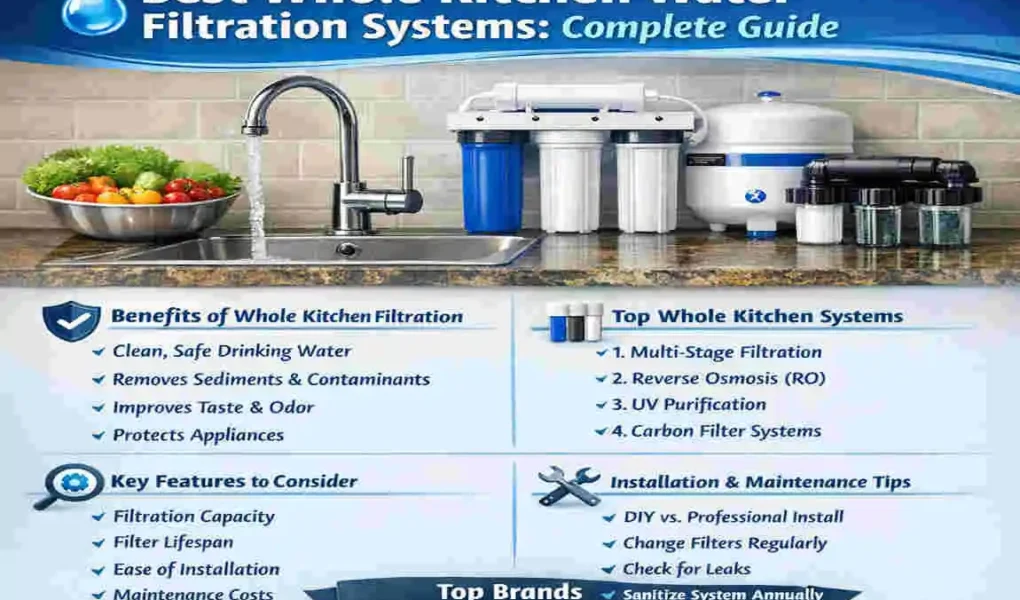
If you want cleaner, better-tasting water in your kitchen, choosing the best whole-home water filtration system is a smart place to start. These systems help improve water quality for drinking, cooking, washing produce, and even protecting kitchen fixtures.
Many homes deal with unwanted substances in tap water, such as chlorine, sediment, rust, bad taste, and odors. Some water also contains more serious concerns, such as lead, VOCs, or bacteria. That is why many homeowners now look for a kitchen filtration setup that can handle more than just one faucet.
What Are Whole Kitchen Water Filtration Systems?
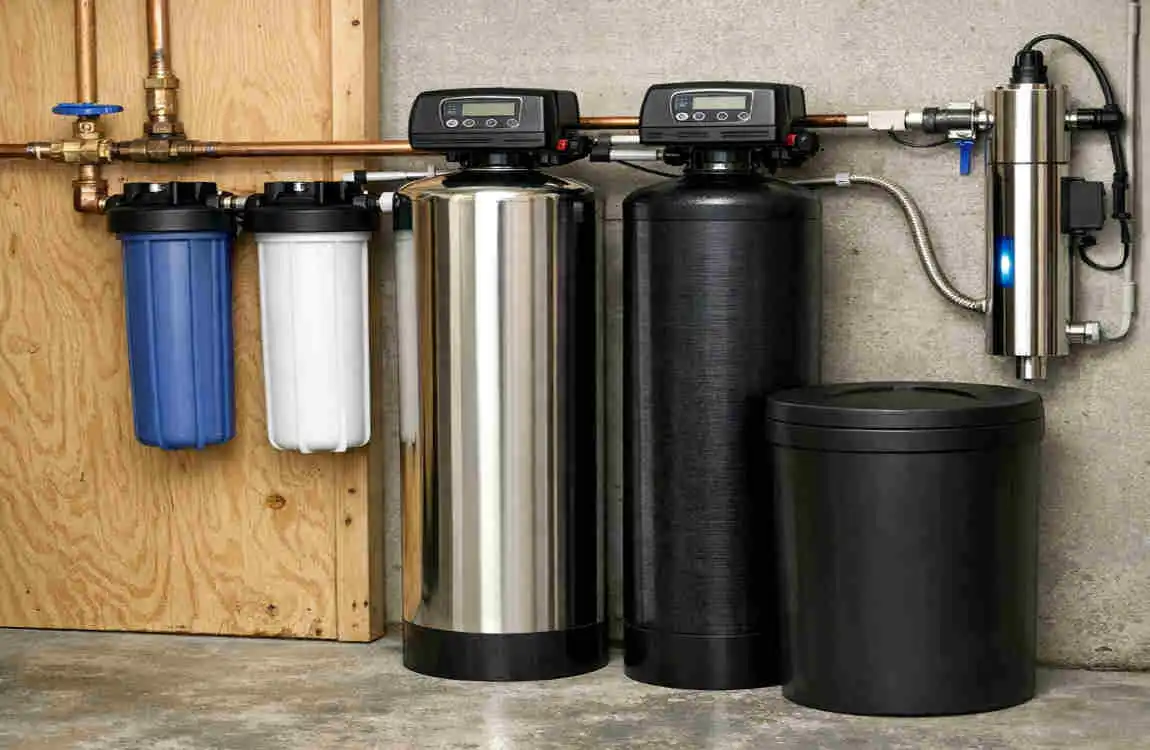
Definition and How They Work
A whole kitchen water filtration system is designed to treat the water that goes to your kitchen area. In simple terms, it cleans water before it reaches the faucet, the fridge line, or other kitchen points of use.
Most systems use one or more filters to trap or reduce unwanted particles. Some use carbon, some use membranes, and some use UV light. The exact method depends on the model.
Whole Kitchen Filter vs Under-Sink Filter
A whole-kitchen water filtration system filters water for the entire kitchen zone, while an under-sink filter usually serves only one faucet.
That means a whole-home water filtration system is better if you want filtered water in more than one place. On the other hand, an under-sink unit may be cheaper and easier if you only need drinking water at one tap.
Whole Kitchen Filter vs Whole House Filter
A whole house filter treats all the water entering the home. A whole kitchen filter focuses only on the kitchen.
If your main concern is drinking water, cooking water, and kitchen appliances, a kitchen-focused system may be enough. If you want cleaner water throughout the entire home, a whole-house system may be a better fit.
Who Should Install One?
You may want one if:
- Your tap water tastes bad
- You see sediment or discoloration
- You want safer water for cooking
- You prefer less bottled water use
- You want a practical upgrade for your kitchen
Benefits of the Best Whole Kitchen Water Filtration Systems
Improves Drinking Water Quality
One of the biggest benefits is simple: better water quality. Clean water tastes fresher and feels more pleasant to drink.
Removes Chlorine Taste and Odor
Many homeowners notice a strong chlorine smell or taste in tap water. A good filter can reduce this and make the water much more enjoyable.
Reduces Sediment and Rust
If your water carries small particles, a filter can help catch them. This can make the water look clearer and cleaner.
Helps Protect Kitchen Appliances
Filtered water can reduce buildup in appliances like coffee makers, kettles, and ice machines. That may help them last longer.
Better Water for Cooking
When you cook with filtered water, soups, rice, pasta, and drinks may taste better because the water itself is cleaner.
Eco-Friendly Alternative to Bottled Water
Using a home filtration system can reduce plastic bottle use. That is better for your budget and better for the environment.
Types of Whole Kitchen Water Filtration Systems
Carbon Block Filters
These are among the most common systems. They are great for reducing chlorine, odors, and some chemicals.
Reverse Osmosis Systems
Reverse osmosis, or RO, uses a fine membrane to remove many contaminants. It is often chosen for high water purity.
Ultrafiltration Systems
These systems use a very fine barrier to remove tiny particles and some microorganisms, relying less on chemical treatment.
Ceramic Water Filters
Ceramic filters are useful for trapping sediment and some impurities. They are often durable and easy to maintain.
Multi-Stage Filtration Systems
These combine several filtration methods into a single system. They are popular because they can address multiple water problems at once.
UV Water Purification Systems
UV systems use light to help control bacteria and other microorganisms. They are often paired with another filter for stronger protection.
What Contaminants Can These Systems Remove?
Here is a simple breakdown of common contaminants and how to remove them.
Contaminant Removed By Why It Matters
Chlorine Carbon Filter Better taste
Sediment Sediment Filter Cleaner water
Rust Sediment Filter Protects appliances
Lead RO System Health protection
VOCs Carbon Filter Better safety
Bacteria UV Filter Safe drinking water
Cysts Multi-stage Filter Improved quality
Not every system removes everything. That is why it is important to match the filter to your actual water problem.
How to Choose the Best Whole Kitchen Water Filtration Systems
Test Your Water Quality
Start with a water test if possible. This helps you understand what you are trying to remove instead of guessing.
Know Your Filtration Needs
Do you mainly want better taste, or do you need stronger protection? Your answer will help narrow the choice.
Flow Rate Requirements
Flow rate matters because you do not want water to come out too slowly. A good system should balance cleanliness with daily convenience.
Filter Lifespan
Some filters last longer than others. If you want less frequent maintenance, choose a system with a longer lifespan.
Maintenance Costs
The purchase price is only part of the story. You also need to think about replacement filters and routine care.
NSF Certifications
If possible, look for NSF-certified systems. This means the product has been tested for certain performance claims.
Installation Requirements
Some systems are easier to install than others. If you are not comfortable with plumbing, you may want professional help.
Budget Considerations
A basic system may cost less upfront, but a more advanced unit may save more over time. Think about both short-term and long-term value.
Features to Look for Before Buying
High Filtration Capacity
Choose a system that can handle your household water use without clogging too quickly.
Easy Filter Replacement
Simple filter changes save time and make maintenance less stressful.
Durable Housing
A strong outer body helps the unit last longer and resist damage.
Leak-Proof Design
Leaks can create costly problems, so this feature matters more than many people realize.
Long Warranty
A good warranty can give you peace of mind about the product’s quality.
Smart Filter Indicators
Some systems tell you when a filter needs changing. That can make upkeep much easier.
Installation Guide
DIY Installation
Some systems are designed for homeowners who want to install them themselves. If the setup is simple, this can save money.
Professional Installation
A plumber may be the better choice if the system is complex or your kitchen plumbing is not easily accessible.
Tools Required
You may need:
- Wrenches
- Plumbing tape
- Screws or mounting hardware
- A drill
- A bucket or towel for spills
Installation Time
Simple systems may take under an hour, while more advanced ones can take several hours.
Common Mistakes to Avoid
- Installing the wrong way
- Skipping leak checks
- Not flushing the system
- Ignoring water pressure needs
Maintenance Tips
To keep your system working well:
- Replace filters on time
- Sanitize the system when needed
- Inspect for leaks
- Monitor water pressure
- Keep maintenance records
These small steps help the system stay efficient and reliable.
Common Problems and Solutions
Low Water Pressure
This often happens when a filter is clogged or the system is not sized correctly. Replacing the filter may help.
Bad Taste After Installation
The system may need to be flushed, or the wrong filter type may be in use.
Filter Clogs Quickly
This usually means your water has a lot of sediment. A pre-filter may be useful.
Water Leaks
Leaks often come from loose fittings or poor installation. Check the connections carefully.
Strange Noises
Air in the line or pressure issues may cause noise. If it continues, the system should be checked.
Cost of Whole Kitchen Water Filtration Systems
The price depends on the type of system, the complexity of the installation, and how often you replace parts.
Expense Estimated Cost
System Purchase $150–$1,200
Professional Installation $100–$400
Replacement Filters $30–$200/year
Annual Maintenance $50–$250
Cost Factors to Keep in Mind
The main cost areas are:
- Initial purchase price
- Installation cost
- Annual maintenance
- Replacement filters
- Long-term savings from less bottled water and less appliance wear
Are Whole Kitchen Water Filtration Systems Worth It?
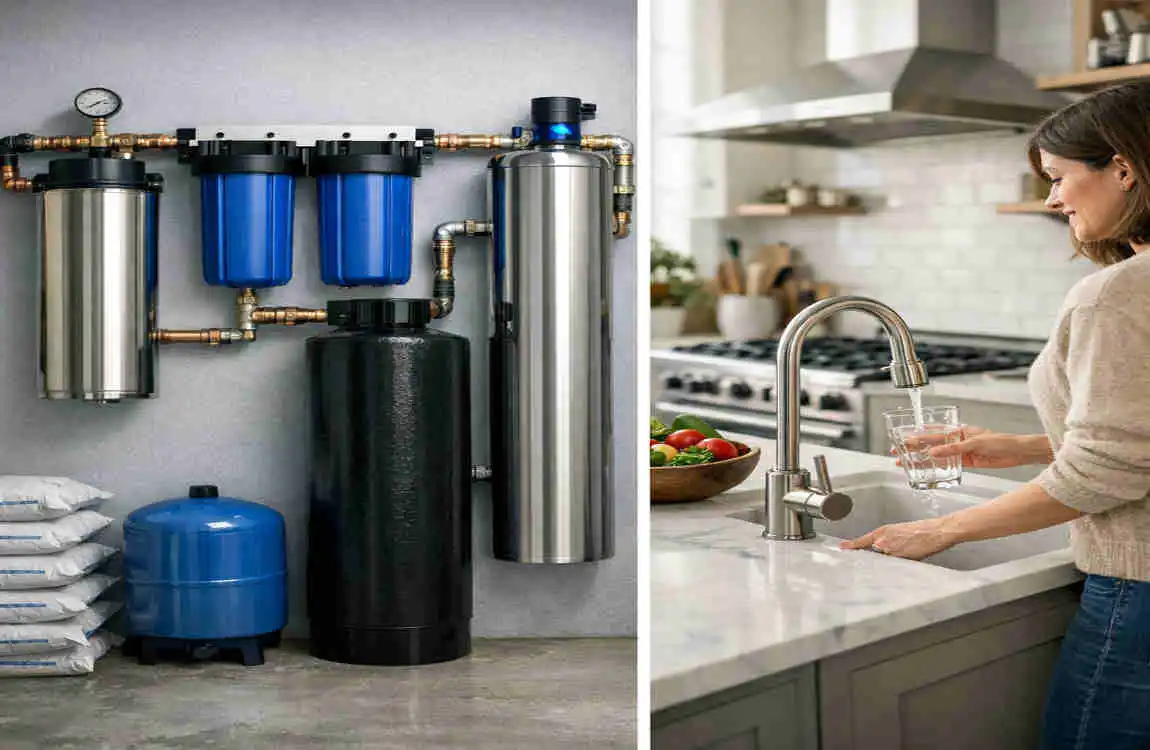
Health Benefits
Cleaner water gives you more confidence in what you drink and cook with every day.
Cost Savings
You may spend less on bottled water and possibly reduce wear on kitchen appliances.
Environmental Benefits
Using fewer plastic bottles is always a plus.
Convenience
Once installed, the system works quietly in the background.
Long-Term Value
If you want better water for years to come, the value can be very strong.
Best Practices for Getting the Most from Your Filtration System
- Replace filters regularly
- Test water annually
- Follow manufacturer recommendations
- Clean the system as scheduled
- Check water pressure periodically
These habits help protect both water quality and system life.
Frequently Asked Questions
What are the best whole kitchen water filtration systems?
The best systems depend on your water quality, budget, and needs. Multi-stage systems with NSF-certified filters are often a strong choice.
Do whole kitchen water filtration systems remove chlorine?
Yes, most carbon-based systems reduce chlorine and improve taste and smell.
How often should I replace water filters?
Many filters need replacement every 6–12 months, depending on the model and usage.
Can I install a whole kitchen water filtration system myself?
Yes, many are DIY-friendly. More complex systems may need a plumber.
Are whole kitchen filtration systems better than under-sink filters?
Whole-kitchen systems cover more kitchen points of use, while under-sink filters usually serve a single faucet.
How much do whole kitchen water filtration systems cost?
They usually range from $150 to $1,200, plus installation and maintenance.
| Feature | Details |
|---|---|
| Purpose | Removes contaminants from water used in the entire kitchen, including drinking, cooking, and food preparation. |
| Common Filter Types | Activated carbon, reverse osmosis (RO), ultrafiltration (UF), sediment filters, and multi-stage filtration systems. |
| Removes | Chlorine, sediment, rust, lead, VOCs, pesticides, unpleasant taste and odor, and some bacteria (depending on the system). |
| Best For | Homes with poor-tasting water, hard water concerns, city water, or well water requiring cleaner kitchen water. |
| Installation Location | Under the kitchen sink, at the main kitchen water line, or as a point-of-use filtration system. |
| Water Flow Rate | Typically ranges from 1–3 gallons per minute (GPM) depending on the filtration technology. |