
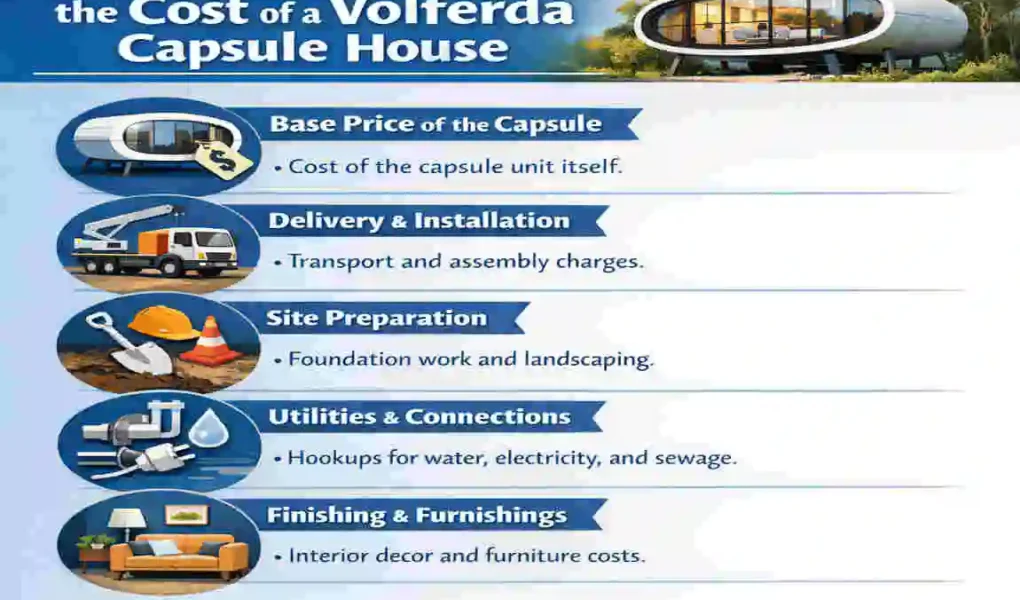
If you are thinking about buying a compact modern home, a Volferda capsule house may already be on your radar. These homes are part of a growing shift toward prefabricated living, where comfort, speed, and efficient use of space matter just as much as style. People like them because they look modern, take less time to install, and can often cost less than a traditional house.
That said, the price is not always simple. A capsule house may look small from the outside. Still, the final cost can vary widely depending on its size, interior finishes, shipping distance, foundation work, and the features you choose. This is why cost planning matters so much before you buy.
What Is a Volferda Capsule House?
A simple definition
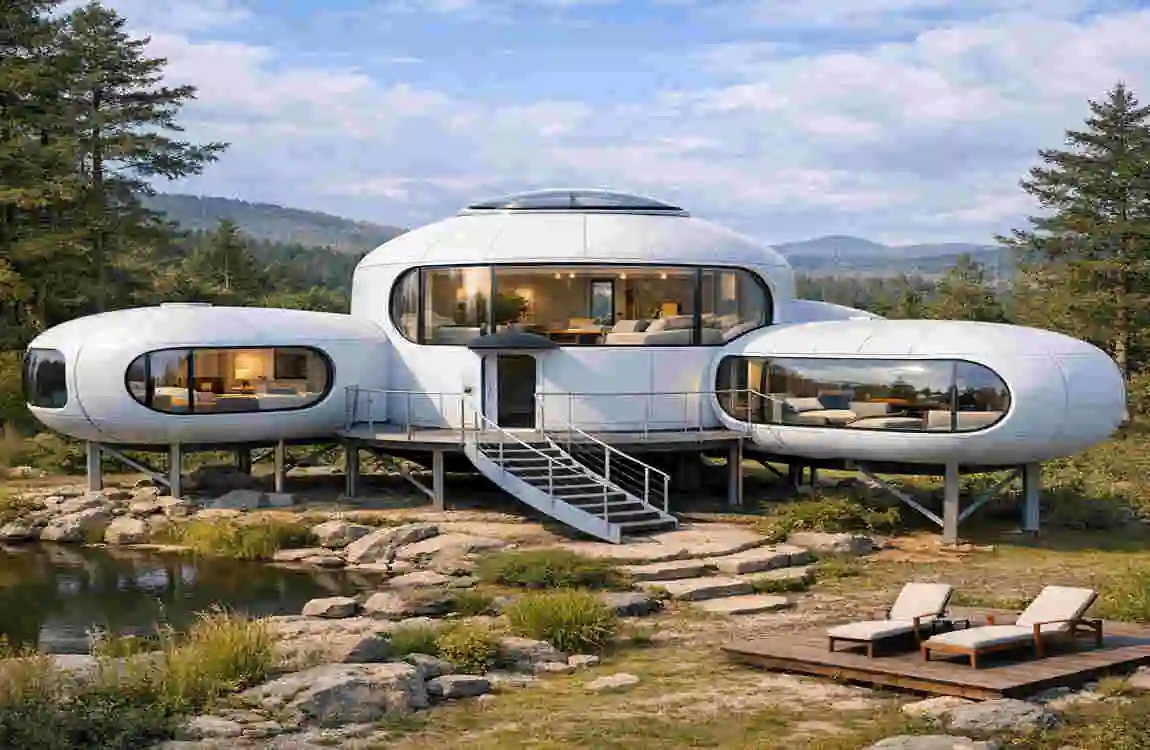
A Volferda capsule house is a compact, prefabricated living unit designed for practical modern living. It usually comes as a ready-made structure built in a factory and delivered to the site. Instead of building everything from scratch on land, most of the work is completed before the house arrives.
That factory-built approach is one of the biggest reasons people are interested in capsule houses. It helps reduce construction time, improves quality consistency, and often keeps labour costs lower than with traditional home building.
Main design features
Most capsule houses are built around three major ideas:
- Prefabricated structure: The house is produced in sections or as a complete unit before delivery.
- Compact living space: The design focuses on using every square foot wisely.
- Modular construction: Some units can be expanded or connected with other modules later.
This means the home can be small but still feel smart and usable. The layout usually includes a sleeping area, a small living space, a bathroom, and sometimes a compact kitchen. Some models are built for one person or a couple, while others are made for short-term stays, vacation use, or even small family living.
Common materials used
Volferda-style capsule houses often use strong and practical materials such as:
- Steel frames for support and durability
- Insulated panels for temperature control
- Glass walls or large windows for natural light and a modern look
- Aluminum or metal surfaces for a clean exterior finish
These materials are chosen for more than appearance. They also help with strength, weather resistance, and energy efficiency. A well-built capsule house should feel solid, protect against heat and cold, and require less maintenance over time.
How it differs from tiny homes and mobile homes
A capsule house is not the same as a tiny home or a mobile home, even though they may seem similar at first glance.
A tiny home is often built with a more residential feel and may be placed on wheels or on a fixed foundation. A mobile home is usually designed for easier transport and may be subject to different housing rules. A capsule house, on the other hand, tends to focus on a futuristic prefabricated design with a clean, compact layout and a stronger modular identity.
In simple words, a Volferda capsule house is usually more about modern prefabricated efficiency than about traditional home style.
Why this style is becoming popular
Volferda-style homes are trending globally because many people now want housing that is:
- faster to install
- easier to maintain
- more affordable than large houses
- flexible for different uses
- modern in appearance
This makes them attractive to people who want a vacation retreat, a backyard guest unit, a rental property, or a minimalist home with lower running costs.
Average Price Range of a Volferda Capsule House
A general idea of cost
So, how much does a Volferda capsule house cost? The answer can vary widely, but a basic estimate often falls into three broad tiers:
Price TierTypical RangeWhat You Usually Get
Basic model $15,000–$35,000 Simple structure, standard insulation, basic windows and doors
Mid-range model $35,000–$70,000 Better finishes, upgraded materials, more interior comfort
High-end model $70,000–$120,000+ Premium design, smart features, luxury finishes, custom layout
These are general estimate ranges, not fixed prices. Your actual cost may be higher or lower depending on the seller, your location, and the level of customisation.
What usually affects the baseline cost
The base price usually starts with the core unit itself. That means the cost of the structure, frame, walls, windows, doors, and basic insulation. From there, the price grows when you add more features.
The biggest baseline factors include:
- Size of the unit
- Level of interior finishing
- Smart home technology
- Exterior material quality
- Delivery and setup requirements
A small single capsule will naturally cost less than a larger model with more usable space. A plain interior will also cost less than a fully finished model with cabinets, lighting, flooring, and built-in appliances.
Why two similar-looking units may have very different prices
This surprises many buyers. Two houses may look almost the same on the outside, but one can cost much more because of what is hidden inside. For example, one may use thicker insulation, stronger glass, higher-grade steel, and upgraded electrical systems. Those improvements may not be obvious at first glance, but they can raise the price quite a bit.
That is why the phrase how much is a Volferda capsule house depends on several factors is so important. You cannot judge the price from the outside alone.
Transportation and installation matter too
A capsule house is not just bought and dropped onto land like a piece of furniture. It has to be shipped, unloaded, and installed properly. If the house is being shipped over a long distance or to a remote location, shipping can become a major part of the total budget.
Installation can also add cost if you need cranes, special equipment, or site preparation. A unit that seems affordable at the factory can become much more expensive once logistics are factored in.
Key Factors That Affect the Cost
Size and layout
Size is one of the clearest price drivers. A small single-capsule unit is usually cheaper than a larger model with extra rooms or extensions. Once you start adding more floor area, the cost of materials, labor, and shipping can rise quickly.
A compact layout is ideal if you want a simple space for one person or a couple. But if you want separate areas for sleeping, working, and relaxing, you may need a more advanced design. That extra layout flexibility can increase costs.
Compact vs. expandable models
A basic capsule house gives you the essentials in a small footprint. An expandable model may include fold-out sections, attached modules, or a larger shell that can be customized later. Expandable designs often provide greater comfort, but they also require more materials and more complex installation.
If your budget is limited, choosing a simple standard layout is one of the easiest ways to keep the price under control.
Materials and build quality
The quality of the materials makes a huge difference. A stronger steel frame may last longer and handle bad weather better, but it will usually cost more. Better insulation also improves comfort and reduces energy use, yet it adds to the upfront cost.
Glass is another important area. Standard glass is cheaper, but thermal-efficient glass can keep the home cooler in summer and warmer in winter. That can save money over time, but the initial cost is higher.
When comparing options, look closely at:
- steel grade
- panel thickness
- insulation rating
- window quality
- roof and exterior finish
A lower-priced model may seem attractive at first. Still, if it uses weak materials, you may pay more later in maintenance, heating, cooling, and repairs.
Customization options
Customization can turn a simple capsule house into a very personal space. But every extra upgrade adds to the final bill.
Common upgrades include:
- upgraded flooring
- custom wall finishes
- built-in storage
- premium bathroom fixtures
- kitchen cabinets
- lighting upgrades
- smart climate controls
- security systems
- furniture packages
Smart home features are especially popular. People like being able to control lights, temperature, and security from their phone. However, once you add automation, sensors, and connected devices, the price climbs.
Furniture can also change the budget more than people expect. If the house includes beds, tables, couches, or appliances, the base cost will likely be higher than an empty shell.
Manufacturing location
Where the unit is made can affect the price in several ways. Labor costs, material availability, and production standards may differ from one country or region to another. If the unit must be imported, shipping distance and customs charges can increase the total cost.
Import duties, taxes, and broker fees may all appear as added expenses. These are not always included in the first price quote, so it is smart to ask early.
If you are comparing suppliers, try to understand whether the quote includes:
- factory production
- local taxes
- export paperwork
- customs handling
- final delivery
A lower factory price can look attractive, but the total landed cost may tell a different story.
Foundation and installation
The house itself is only one part of the project. Before it can be used, the site needs to be ready. That may include land clearing, leveling, foundation work, and utility connections.
Some capsule houses can sit on simple support pads or a lightweight base. Others need a more solid foundation. The more complex the site work, the more you should budget.
Installation often involves:
- preparing the ground
- building or placing a foundation
- connecting electricity
- connecting water
- connecting sewage or waste systems
- final inspection and setup
If your land is uneven, far from utility lines, or difficult to access, installation may cost much more than expected.
Hidden Costs Buyers Often Forget
Transportation fees
Delivery is one of the most common hidden costs. A capsule house can be large, heavy, and difficult to move. If it needs special trucks, escorts, or long-distance transport, the fee can grow fast.
Crane installation charges
Many capsule houses cannot be placed by hand. They may need a crane or lifting equipment to move them safely into position. Crane service is often charged by the hour or by the job, and the price depends on access, weight, and site conditions.
Permits and legal approvals
Before installation, you may need permits, zoning approval, or land-use permission. Some buyers forget this step and focus only on the house itself. But legal approval can affect both your timeline and your total budget.
Land purchase or rent
The house is only useful if you have somewhere to put it. If you do not already own land, you will need to buy or rent a site. That can be a major part of the overall project cost.
Maintenance and repairs
Capsule houses are often efficient, but they still need care. Over time, you may need to repair seals, refresh coatings, service electrical systems, or replace worn parts. Even a strong prefabricated home requires long-term maintenance.
Insurance costs
Insurance is another item many buyers overlook. Depending on where you live, you may need coverage for weather damage, fire, theft, or liability. The cost may be modest compared to the house price, but it should still be part of your plan.
Quick list of hidden costs to include in your budget
- delivery and freight
- crane or lifting fees
- land preparation
- permit and paperwork charges
- utility connections
- insurance
- long-term repairs
If you only compare the sticker price, your final budget may fall short. Always look at the complete picture.
Cost Comparison With Other Housing Types
Capsule house vs. tiny home
A capsule house and a tiny home both focus on small-space living, but they are not identical. Tiny homes often have a warmer, more traditional residential feel. Capsule houses are usually more modern, more modular, and more factory-made.
In many cases, a capsule house can be cheaper to install quickly, especially if the basic structure is simple. Tiny homes may offer more customization in some markets. Still, they can also become expensive if built with high-end finishes.
Capsule house vs. mobile home
Mobile homes are designed with transport in mind, and they often follow a different set of housing rules. They can sometimes be more affordable upfront, but they may not offer the same modern design appeal or the sturdy, prefabricated build style of a capsule house.
A Volferda capsule house may feel more like a premium compact home. In contrast, a mobile home is often focused on function and mobility.
Capsule house vs. traditional house
This is where the price gap becomes easier to see. A traditional house usually requires more time, labour, materials, and on-site construction. That means higher costs in many cases.
A capsule house can offer a lower-entry alternative with less construction time and fewer labor demands. It may not replace every type of traditional home. Still, for many buyers, it can be a more practical and budget-friendly solution.
At-a-glance comparison
Housing TypeMain StrengthTypical Cost LevelBest For
Capsule house Fast setup, modern style Low to mid Minimalists, rentals, compact living
Tiny home Cozy feel, flexible design Low to mid Simple lifestyle, small households
Mobile home Mobility and affordability Low Budget-conscious buyers, temporary living
Traditional house Space and long-term familiarity Mid to high Families, long-term residence
Affordability pros and cons
The main advantage of a capsule house is that it can lower the entry cost into home ownership or property development. It also usually saves time. But it is not always the absolute cheapest choice once transport, foundation, and installation are added.
So, the real question is not only whether it is affordable. It is whether it is affordable for your specific site, needs, and goals.
How to Reduce the Cost of a Volferda Capsule House
Choose a standard model
One of the simplest ways to save money is to choose a standard design instead of a custom one. Standard models are usually cheaper because the manufacturer already knows how to produce them efficiently.
Buy directly from the manufacturer
When possible, buying directly can reduce middleman markup. A dealer or reseller may add convenience, but it can also raise the price. If you can compare factory quotes carefully, you may find a better deal.
Avoid unnecessary luxury upgrades
It is easy to get excited by premium finishes, but not every feature is necessary. Ask yourself what you truly need. Do you really need expensive lighting, built-in entertainment systems, or high-end furniture right away? If not, leave them out.
Use local installation teams
Local labor may be less expensive than bringing in a specialized crew from far away. It can also make the project easier to manage. Just make sure the installers understand capsule house setup and utility connections.
Plan logistics carefully
Good planning can save real money. If you prepare the site properly, coordinate delivery timing, and avoid last-minute changes, you can reduce delays and extra fees.
Best ways to save money
- pick a standard model
- keep the layout simple
- avoid unnecessary upgrades
- compare multiple quotes
- prepare the site in advance
- use local setup support
Even small choices can make a big difference in the final budget.
Is a Volferda Capsule House Worth the Price?
Value for money
For many buyers, the answer is yes. A Volferda capsule house can offer strong value if you want a compact home that is fast to install, stylish, and relatively efficient to run. The upfront cost may be lower than that of a traditional house, and the smaller size can also reduce ongoing energy use.
Long-term durability
Durability matters as much as price. A well-built capsule house with quality steel, good insulation, and proper installation can last a long time. If the structure is solid, the investment may make sense for years to come.
Energy efficiency benefits
Smaller homes often use less energy than larger houses. That can mean lower heating and cooling bills. If the capsule house is designed with efficient insulation and good windows, it may perform especially well in this area.
Who it fits best
A capsule house is often a strong match for:
- Minimalists who want less clutter and simpler living
- Vacation property owners who need a stylish compact unit
- Small families looking for a manageable second home or starter home
- Investors who want a rental or guest property with modern appeal
If your lifestyle matches the home’s scale, the value can be very good. If you need a large family home, it may feel too small.
Step-by-Step Cost Estimation Guide
Start by deciding what type of Volferda capsule house you want. Is it a basic single-unit, a mid-range model, or a larger, expanded design? This first choice sets the foundation for your estimate.
Calculate the base unit price
Ask the seller for the factory price of the unit itself. Make sure you understand exactly what is included. Does it cover just the shell, or does it also include insulation, windows, flooring, and bathroom fixtures?
Add customization costs
Next, list any upgrades you want. This may include smarter controls, better finishes, extra furniture, or a custom interior layout. Add each feature separately so the total stays clear.
Add transport and installation
Now include shipping, unloading, crane work, and labor for setup. These costs can be significant, especially if the unit is traveling far or going to a difficult site.
Add legal and utility setup
Do not forget permits, land preparation, electrical work, water connection, and sewage setup. These are often necessary before the house can be used safely and legally.
Build your final estimate
A simple way to estimate the total is:
Base unit price + customization + shipping + installation + permits + utility setup = total project cost
Example of a simple budgeting breakdown
- Base capsule house: $40,000
- Custom upgrades: $8,000
- Transport: $4,500
- Crane and installation: $3,500
- Permits and utility setup: $6,000
Estimated total: $62,000
This example is not a quote. It is only a sample of how the numbers can add up. Your actual total may vary significantly depending on location and design.
FAQ
How much is a Volferda capsule house on average?
Prices vary widely depending on size, materials, and features. Still, most fall somewhere between basic prefab pricing and luxury tiny home pricing.
What is included in the base price?
Usually the base price includes the structure, doors, windows, and basic insulation. Interior finishing and extra features may cost more.
Are Volferda capsule houses cheaper than traditional homes?
Yes, they are generally more affordable because they are prefabricated, compact, and faster to install than traditional houses.
How long does it take to install a capsule house?
Most installations take from a few days to a few weeks, depending on site readiness, delivery conditions, and utility setup.
Do capsule houses require building permits?
Yes, in most areas you will need permits, zoning approval, or land-use clearance before installation.
Can I customize my Volferda capsule house?
Yes, customization is usually available, but each upgrade can increase the final cost.
| Cost Factor | What It Includes | Estimated Impact on Total Cost |
|---|---|---|
| Base Unit Price | Factory-built capsule structure, frame, insulation, exterior shell | 40% – 60% of total cost |
| Size & Layout | Single capsule, multi-unit design, custom floor plans | Higher size = higher cost |
| Interior Finishing | Flooring, walls, ceiling design, kitchen, bathroom setup | 15% – 25% of total cost |
| Materials Quality | Steel grade, insulation type, glass quality, eco-friendly upgrades | Premium materials increase cost significantly |
| Transportation | Shipping from factory to site, distance, logistics handling | 5% – 15% of total cost |
| Installation & Assembly | On-site setup, crane service, labor costs | 10% – 20% of total cost |
| Utilities Connection | Plumbing, electricity, HVAC systems setup | Varies depending on location |
| Permits & Regulations | Local building approvals and legal requirements | Small to moderate cost depending on region |
| Custom Features | Smart home systems, solar panels, luxury upgrades | Can increase cost by 10% – 30%+ |