
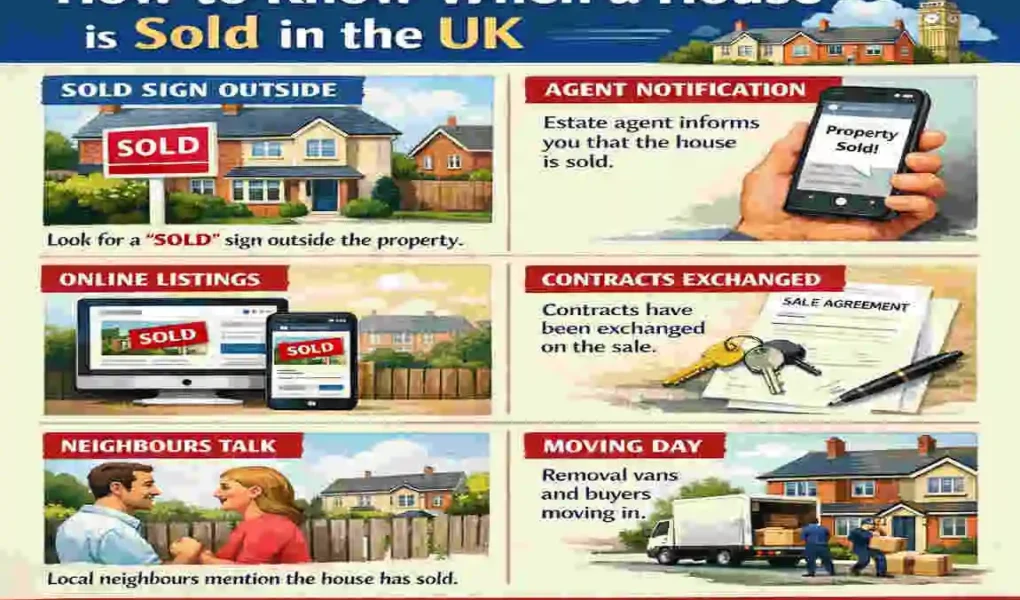
Buying or selling a home is a big moment, but the UK property process can feel confusing if you are not used to it. People often say a house is “sold” much earlier than it actually is, which can lead to misunderstandings, stress, and even disappointment.
If you have ever wondered when a house is considered sold in the UK, you are not alone. Many buyers and sellers assume that once an offer is accepted, the deal is done. In reality, that is not the full picture. In most cases, a house is not legally sold until contracts are exchanged. Before that, the sale is still moving forward, but it can still fall apart.
That is why it helps to understand the difference between offer accepted, sold STC, exchange of contracts, and completion day. These are not just words agents use. They mark important legal and practical steps in the process.
What Does “Sold” Mean in the UK Property Market?
 Property Market?
The word “sold” is often used casually in property listings, but in legal terms, it does not always mean the same thing. In everyday conversation, people may say a house is sold as soon as an offer is accepted. But in the UK property market, that is usually not the legal point of sale.
Sale Agreed vs Sold STC
When an estate agent marks a property as “Sale Agreed” or “Sold STC”, it means the seller has accepted an offer, but the legal paperwork is not finished yet.
Sold STC stands for Sold Subject to Contract. That phrase is important because it tells everyone that the sale is not final. The Buyer and seller have agreed in principle, but they have not yet signed the binding contract.
This stage is very common in England and Wales. It means the property is reserved in a practical sense, but not legally locked in. Either side can still change their mind before contracts are exchanged.
That is why “Sold STC” is helpful, but it should not be confused with a full legal ownership transfer.
Key misunderstanding among buyers and sellers
One of the biggest misunderstandings is thinking that a property marked as “sold” has already changed hands. That is not true in most cases.
A home may appear to be off the market, but the sale can still fall through. Maybe the Buyer’s mortgage is delayed. Maybe a survey reveals a serious issue. Maybe the property chain breaks. These problems happen more often than people expect.
This is why sellers are usually advised not to celebrate too early. A sale is still vulnerable until the legal steps are completed. Buyers also need to be careful not to assume they own the home just because the offer was accepted.
In simple terms, “sold” in the property market often means “in progress,” not “finished.”
When is a House Legally Considered Sold in the UK?
This is the key question for most people, and the answer matters. A house is legally considered sold when the transaction becomes binding under contract law. In England and Wales, that moment is usually the exchange of contracts.
Exchange of Contracts: The Legal Point of No Return
Exchange of contracts is the moment when both the Buyer and seller sign identical contracts, and their solicitors swap them. Once that happens, the deal becomes legally binding.
This is the point of no return.
Before the exchange, the Buyer can still walk away. The seller can still back out, too. There is no legal penalty for changing direction at that stage, even if everyone has spent time and money preparing for the sale.
After the exchange, things change. Both sides are now legally committed to the transaction. If either party tries to pull out without a valid legal reason, they can face serious consequences. The Buyer could lose their deposit. The seller could be forced to compensate the Buyer for losses.
That is why exchange is the real legal milestone in the process. It is the moment when the sale moves from being a discussion to being a contract.
Completion Day Explained
If exchange is the legal commitment, completion is the moment the property actually changes hands.
On completion day, the Buyer sends the final payment through their solicitor. Once the seller’s solicitor receives the money, ownership transfers to the Buyer. At that point, the Buyer can collect the keys and move in.
This is also the day when the seller must have moved out, unless another agreement has been made. It is the final step in the sale.
To put it simply:
- Exchange of contracts = the deal becomes legally binding
- Completion = the ownership officially transfers
These two stages are often close together, but they are not the same thing.
Answering the focus keyword
So, when is a house considered sold in the UK?
The clearest answer is this: a house is only legally sold after the exchange of contracts. Offer acceptance and sold STC are important steps, but they do not make the sale legally final.
If you want the shortest possible answer, remember this:
Accepted offer does not equal sold. Exchange of contracts equals a legal sale. Completion equals ownership transferred.
That simple distinction can save you from a lot of confusion.
Stages of Selling a House in the UK
Selling a house is not one single action. It is a process made up of several steps, and each step matters. Understanding the full journey helps you see why a home can be “almost sold” for weeks before the legal sale is complete.
Accepting an Offer
The process usually starts when a buyer makes an offer, and the seller accepts it.
This does not mean the house has been sold legally. It simply means both sides have agreed on a price and are willing to move forward.
Sometimes the Buyer offers the asking price. Sometimes there is room to negotiate. A seller may accept the first offer, reject it, or make a counteroffer. In a busy market, this part can move quickly. In a slower market, it may take longer to reach an agreement.
At this stage, the estate agent plays a big role. They help pass messages between the two sides and keep the process moving.
Sale Agreed (STC)
Once the seller accepts the offer, the property is usually marked Sale Agreed or Sold STC.
This stage is important because it shows serious progress. The Buyer is now the preferred Buyer, and the seller usually stops actively marketing the property. However, the sale is still not legally binding.
This is one of the reasons the term Sold STC can be misleading. It sounds final, but it really means “we have a deal in principle, but not a legal contract yet.”
Estate agents use this label to show that the property is no longer fully open to offers, although in some cases they may still accept backup interest.
Conveyancing Begins
Once the sale is agreed, the legal work begins. This is called conveyancing.
Conveyancing is the legal process of transferring property ownership from the seller to the Buyer. Both sides usually hire solicitors or licensed conveyancers to handle it.
During this stage, the solicitors do several important things:
- Check ownership details
- Review the contract
- Request and answer legal questions
- Prepare the transfer documents
- Work toward exchange and completion
This part of the process can feel slow because there are many documents to review. Buyers and sellers often get frustrated here, but it is a normal and necessary stage.
A careful conveyancing process helps prevent mistakes later on.
Searches and Surveys
The Buyer usually arranges searches and surveys while the legal work is ongoing.
Searches are checks made by the solicitor to find out more about the property and the surrounding area. These can include:
- Local authority searches: These show planning issues, road schemes, and local restrictions
- Water and drainage searches: These confirm public services and drainage connections
- Environmental checks: These may reveal flood risk or land contamination concerns
The Buyer may also arrange a property survey. A survey is a physical inspection of the property’s condition. It can reveal problems such as:
- Damp
- Roof damage
- Structural movement
- Old wiring
- Poor insulation
If the survey uncovers serious issues, the Buyer may ask for a price reduction, request repairs, or even decide not to continue. This is one reason why sales can still collapse before exchange.
Exchange of Contracts
This is the most important legal stage.
At the exchange, both solicitors confirm that the signed contracts are identical and complete. The Buyer usually pays a deposit, often 10% of the purchase price, unless another arrangement has been agreed.
Once contracts are exchanged, the sale becomes legally binding.
This means:
- The Buyer cannot simply change their mind
- The seller cannot accept another offer
- Both sides must complete the transaction
- There may be financial penalties if someone fails to proceed
For most sellers and buyers, exchange brings a huge sense of relief because the risk of collapse drops sharply after this point.
Completion
Completion is the final stage of the process.
On this day, the Buyer’s money is transferred to the seller’s solicitor. Once the funds clear, the seller is told to release the keys. The Buyer now owns the property.
Completion often happens one to two weeks after exchange, but it can also happen on the same day if both sides want a fast sale.
After completion:
- The Buyer receives the keys
- The seller is paid
- The ownership transfer is finished
- The Buyer can move in
This is the moment most people think of when they say a house has been sold. Legally and practically, it is the end of the process.
A simple timeline of the process
Here is a quick table to make the stages easier to follow:
Stage: What Happens Is the Sale Legally Binding?
Offer accepted Buyer and seller agree on a price No
Sold STC Property is taken off the market in practice No
Conveyancing Solicitors handle the legal work No
Searches and surveys Checks are carried out on the property No
Exchange of contracts Both sides sign and become legally committed Yes
Completion Money is paid, and keys are handed over Ownership transfers
This table shows why the answer to when a house is considered sold in the UK is tied to exchange, not the first accepted offer.
Can a House Sale Fall Through?
Yes, a house sale can fall through, and it happens more often than many people think.
The risk of a failed sale depends on the stage of the process. Some stages are much safer than others. That is why it helps to know where the biggest risks are.
Before Exchange
This is the most common stage for sales to fail.
Before the exchange, either party can still pull out. The Buyer may lose confidence, struggle to get a mortgage, or discover a problem in the survey. The seller may receive a better offer or change their plans.
Other common reasons for a fall-through include:
- Delays in solicitors’ work
- Problems in the property chain
- Mortgage issues
- Survey concerns
- Personal changes in circumstances
Because nothing is legally binding yet, the risk is still real.
After Exchange
After exchange, a sale can still go wrong, but this is much rarer.
At this point, the deal is legally binding. If someone backs out, they may face financial consequences. The Buyer could lose their deposit. The seller could be liable for losses caused by the delay or cancellation.
That is why exchange matters so much. It gives both sides legal protection and makes the final sale far more secure.
So yes, a sale can still fail, but the real danger is before the exchange.
How Long Does It Take to Officially Sell a House in the UK?
In many cases, the process from offer to completion takes around 8 to 12 weeks. Sometimes it is faster. Sometimes it takes much longer.
The timeline depends on a few things:
- How quickly solicitors respond
- Whether the Buyer has a mortgage
- How long searches take
- Whether the survey uncovers issues
- Whether there is a property chain
- Whether the Buyer and seller are ready to move
A chain-free buyer often speeds things up because there are fewer moving parts. A long chain can slow everything down because one delay affects everyone involved.
If you are asking when a house is considered sold in the UK, it is useful to remember that legal sale and completion are not instant. The process takes time because every step protects the people involved.
Common Misconceptions About House Sales
A lot of confusion comes from the way people use the word “sold.” Let’s clear up a few common myths.
“Sold board means legally sold”
This is not true.
A sold board outside a property usually means the house has a buyer and is moving through the process. It does not mean the legal sale is complete.
The board is a marketing signal, not a legal statement.
“Offer accepted means ownership transfer”
Also not true.
An accepted offer is only the start of the legal process. The Buyer does not own the property yet, and the seller is still free to withdraw before exchange.
“Completion and exchange are the same thing”
This is one of the biggest misunderstandings.
They are related, but they are not the same.
- Exchange = the contract becomes legally binding
- Completion = the ownership actually changes hands
If you remember only one thing, remember this difference. It is the key to understanding the whole process.
Tips to Avoid Delays in the Selling Process

The selling process can be stressful, but you can take steps to keep it moving. A few simple actions can make a big difference.
Practical ways to reduce delays
- Hire an experienced solicitor who knows the local property market
- Prepare documents early, such as title deeds, ID, and warranties
- Respond quickly to questions from your solicitor or the Buyer’s solicitor
- Keep communication open with the estate agent
- Choose a chain-free buyer if possible, since chains often cause delays
A little preparation at the start can save you a lot of time later. Many delays happen because people wait too long to send information or answer questions.
If you stay organized, you give the sale a much better chance of reaching exchange and completion smoothly.
FAQs
When is a house considered sold under UK law?
A house is legally considered sold only when contracts are exchanged, not when an offer is accepted.
Is a house sold at the offer accepted stage?
No. The sale is not legally binding until the exchange of contracts.
What happens between exchange and completion?
The Buyer arranges the final funds, the solicitor prepares the transfer, and both sides get ready for completion day.
Can a seller pull out after accepting an offer?
Yes. Until the exchange of contracts, either the Buyer or the seller can still withdraw.
How long after the exchange is the completion?
It can be the same day or usually 1–2 weeks later, depending on what both sides agree on.
Is Sold STC the same as sold?
No. Sold STC means the sale is in progress but is not yet legally final.
What is the safest point in the sales process?
The safest point is after the exchange of contracts, because both parties are then legally committed.
| Method | How It Works | Best For | Timeframe |
|---|---|---|---|
| HM Land Registry | Official records show when ownership is transferred and price paid | Confirming completed sales | 2–12 weeks after completion |
| Estate Agent Listings | Property marked as “Sold STC” or “Sold” on Rightmove/Zoopla | Tracking active market activity | Immediate–a few days |
| Property Alerts Services | Apps/websites notify when a property status changes | Monitoring specific homes | Real-time updates |
| Local Authority Records | Council tax updates can indicate new ownership | Checking occupancy changes | 1–3 months delay |
| Neighbours / Local Knowledge | Informal confirmation from area residents | Early awareness of sale completion | Varies |
| Solicitor/Conveyancer Updates | Legal confirmation during purchase process | Buyers/sellers involved in transaction | On completion day |